
Pressure Cooker Beef Stew
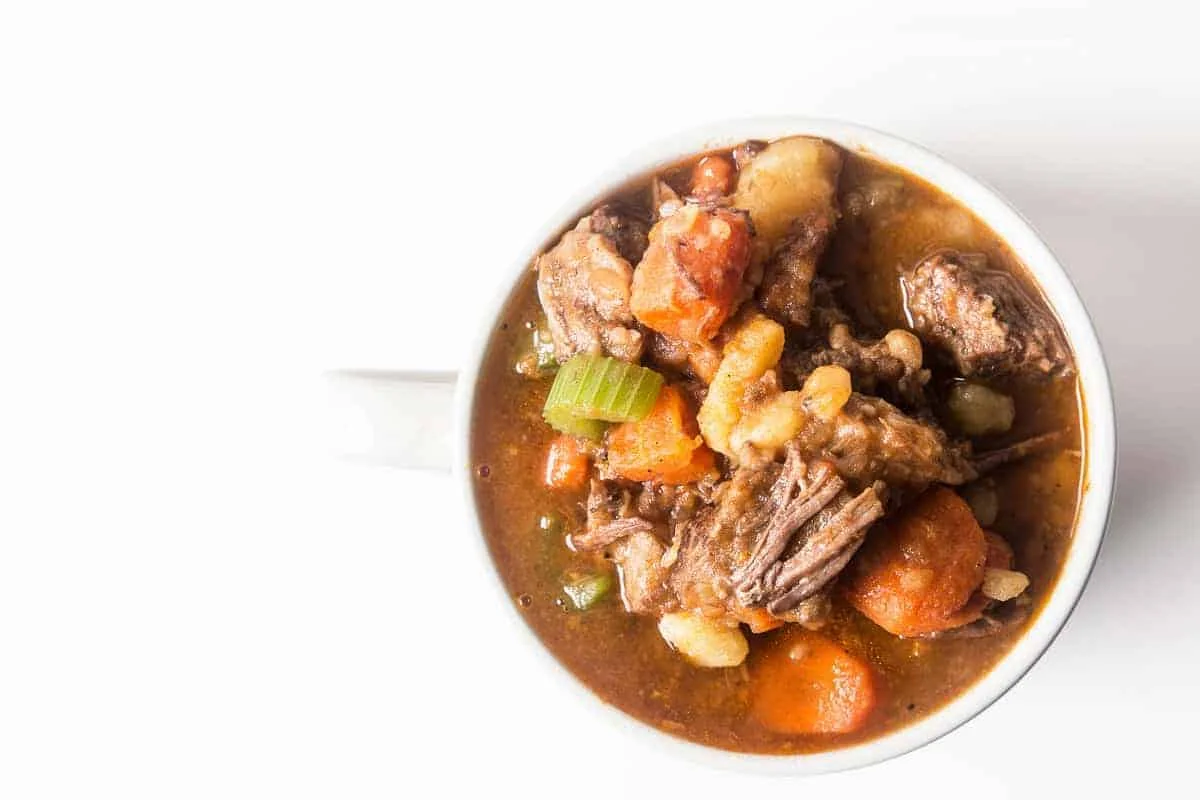
This American-style pressure cooker beef stew combines brisket, potatoes and vegetables in a savoury, tomato-rich broth. The pressure cooker makes the beef tender while keeping the hands-on preparation straightforward.
Ingredients
- 680 g (1½ lb)whole beef brisket
- to tastekosher salt and black pepper
- 30 ml, divided (2 tablespoons)olive oil
- 2 smallonions, finely chopped
- 3garlic cloves, crushed and chopped
- 2celery stalks, chopped
- 2carrots, chopped
- a dashsherry wine
- 8 g (1 tablespoon)flour
- 2bay leaves
- a few pinchesdried thyme
- 3russet or Yukon Gold potatoes, cubed
- 500 ml (2 cups)unsalted chicken stock
- 15 ml (1 tablespoon)Worcestershire sauce
- 15 ml (1 tablespoon)regular soy sauce
- 15 ml (1 tablespoon)fish sauce
- 50 ml (3 tablespoons)tomato paste
Instructions
- 1
Heat the cooker
Heat the pressure cooker over medium-high heat. For an Instant Pot, select Sauté and adjust to Sauté More; wait until the indicator reads HOT before adding anything.
- 2
Brown the brisket
Trim excess fat from the brisket and season it generously with kosher salt and pepper. Add 15 ml (1 tablespoon) of the olive oil, coating the bottom of the pot. Sear the brisket for about 5 minutes on each side without turning it repeatedly, then transfer it to a chopping board.
- 3
Mix the stock
While the brisket browns, combine the chicken stock, Worcestershire sauce, soy sauce, fish sauce and tomato paste in a medium bowl.
- 4
Cook the vegetables
Add the remaining 15 ml (1 tablespoon) olive oil to the pot, followed by the onion and some salt and pepper. Cook until the onion is tender and browned, then add the garlic and stir until fragrant. Add the celery, carrot and another pinch of salt and pepper; cook for 2 minutes.
- 5
Deglaze the pot
Pour in a dash of sherry and use a wooden spoon to loosen all the browned bits from the bottom of the pot. Let the wine reduce, then add the prepared stock mixture.
- 6
Cut the brisket
Cut the brisket into chunks 2.5–4 cm (1–1½ inches) across, then toss the pieces with the flour.
- 7
Pressure cook stew
Arrange the brisket pieces in the pot so they are spread out and can absorb the stock mixture; do not stir them. Add the bay leaves, rub the dried thyme between your fingers and sprinkle it over the stew, then place the potatoes on top. For an electric pressure cooker, cook at high pressure for 70 minutes; for a stovetop pressure cooker, cook at high pressure for 55 minutes. Allow the pressure to release naturally.
- 8
Season and serve
Taste and add salt and pepper as needed. Serve immediately with pasta or rice, or enjoy the stew on its own.
- 9
Add extra vegetables
For more texture, add extra parboiled potatoes, chopped carrots and chopped celery. Cook until the vegetables are tender.
What is pressure cooker beef stew?
Beef stew is a familiar American comfort dish built around tender meat, vegetables and a savoury broth. This version uses brisket and a pressure cooker to bring those elements together in a single pot.
The stock is flavoured with tomato paste, Worcestershire, soy and fish sauces, while sherry helps lift the browned bits from the base. Potatoes cook above the brisket and soak up the stew’s savoury juices.
Nutrition and macros by portion
The nutrition label shows one serving as written: 409 calories, 40g protein, 15g carbs, 20g fat.
| Portion | Adjustment | kcal | Protein | Carbs | Fat |
|---|---|---|---|---|---|
| Lighter | Smaller serving, extra vegetables | 286 kcal | 28g | 11g | 14g |
| This serving | As written | 409 kcal | 40g | 15g | 20g |
| Hungry | Serve over pasta or rice | 614 kcal | 60g | 23g | 30g |
The potatoes and flour contribute most of the carbohydrates, while olive oil and brisket provide much of the fat. Brisket is the main source of protein. Serve a portion with extra vegetables, or pair it with a modest serving of pasta or rice if you want a more substantial plate.
Choosing the brisket and potatoes
Brisket: Trim away excess fat before searing, but keep the pieces substantial when cutting so they hold together through the long pressure-cooking time.
Potatoes: Russet potatoes soften readily, while Yukon Gold potatoes tend to keep their shape better. Put them on top as directed so they cook in the steam and broth without stirring the flour into the liquid.
Build flavour before pressure cooking
Browning: Give the brisket about 5 minutes per side and resist moving it around. A good sear adds browned flavour to the pot that carries through to the broth.
Deglazing: Scrape the base thoroughly with a wooden spoon after adding the sherry. Clearing the browned residue helps it dissolve into the liquid rather than remain stuck to the pot.
How the broth comes together
Seasoning: The stock mixture combines several salty, savoury sauces with tomato paste. Add salt carefully at the end, tasting first, since the sauces and stock contribute seasoning as they cook.
Flour: Tossing it with the brisket gives the broth some body as the stew cooks. Leave the meat undisturbed once it is in the pot, as the method directs.
Pressure and natural release
Electric cooker: Cook at high pressure for 70 minutes, then let the pressure release naturally. For a stovetop pressure cooker, the listed high-pressure time is 55 minutes, followed by a natural release.
Natural release: Allowing the pressure to fall on its own is part of the recipe’s timing. Keep the cooker closed during this stage rather than trying to shorten it with a quick release.
Check the texture and serve
Vegetables: The potatoes are placed on top for the pressure-cooking stage. If you choose the optional extra vegetables, add them parboiled and cook until tender.
At the table: Serve the stew as it is, or spoon it over pasta or rice. Both make a filling base for the broth and tender pieces of brisket.
Recipe notes & tips
- Wait for the cooker to reach HOT before searing the brisket.
- Sear the meat in place rather than repeatedly turning it, so it has time to brown.
- Scrape the base carefully while deglazing to release all the browned bits.
- Taste the broth before adding the final salt, as the sauces are already savoury.
- Keep the brisket pieces spread out and avoid stirring them into the stock mixture.
- Use the cooker’s high-pressure setting and natural release for the method you are following.
Variations
- Extra vegetables: Add the optional parboiled potatoes, carrots and celery, then cook until tender.
- Yukon Gold potatoes: Use them instead of russets if you prefer potatoes that hold their shape.
- Russet potatoes: Choose these for a softer, more yielding potato in the stew.
- Serve with rice: Spoon the stew over rice to make it a more substantial meal.
- Serve with pasta: Ladle the brisket and broth over cooked pasta just before serving.
Common mistakes to avoid
- Moving the brisket too soon: Leave it undisturbed for about 5 minutes per side so it can brown.
- Skipping the deglaze: Scrape the pot thoroughly with a wooden spoon after adding the sherry.
- Stirring in the brisket: Arrange the pieces over the stock mixture without stirring, as the flour can cloud the liquid.
- Adding too much salt early: Season to taste at the end because the sauces add savoury saltiness.
- Using a quick release: Let the pressure release naturally as specified in the method.
How to store
Cool leftovers and refrigerate them in a covered container for up to 3 days. Reheat gently in a saucepan or microwave until piping hot throughout, adding a splash of stock or water if the broth has thickened.
Frequently asked questions
Can I use a different cut of beef?
This recipe is written for whole beef brisket. Another braising cut may cook differently, so follow the cooker’s guidance for that cut and check that the meat is tender before serving.
Can I use a stovetop pressure cooker?
Yes. The recipe specifies high pressure for 55 minutes in a stovetop pressure cooker, followed by a natural release.
How long do I cook it in an electric pressure cooker?
Cook at high pressure for 70 minutes, then allow the pressure to release naturally.
Should I stir the brisket into the broth?
No. Spread the floured brisket pieces out in the stock mixture without stirring, as directed.
What can I serve with the stew?
Serve it on its own or over pasta or rice. The broth also makes either a useful base for the tender meat and vegetables.
Can I add more vegetables?
Yes. The optional method suggests adding extra parboiled potatoes, chopped carrots and chopped celery, then cooking until tender.
Cook it from the original
This recipe comes from pressurecookrecipes.com. Their page has the author’s own photos, notes and tips — the best place to cook it from.
Open the recipe on pressurecookrecipes.com