
Lotus Root Chips
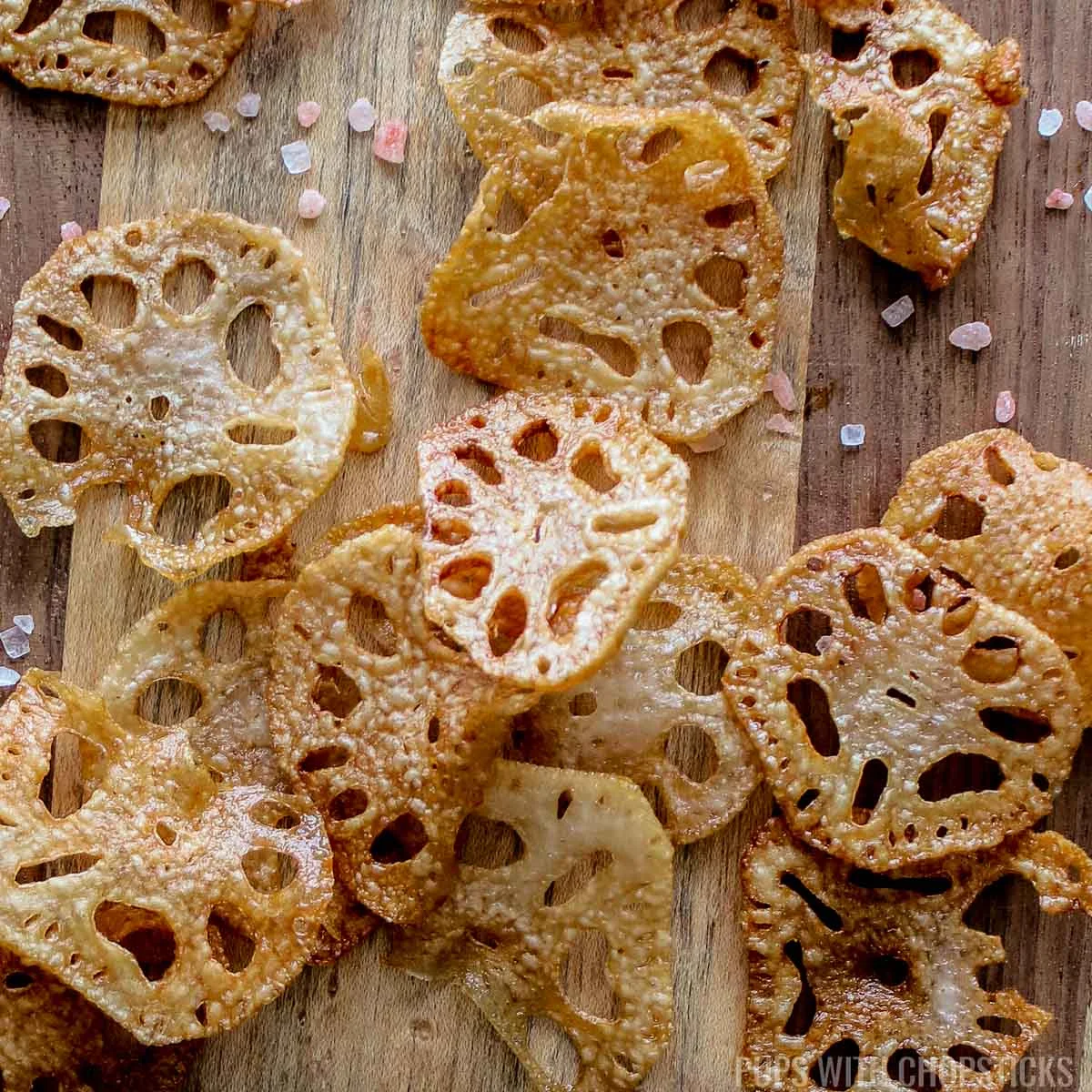
Thin slices of lotus root are salted, then fried or baked until golden for a crisp, lacy snack. They make a fun change from potato crisps and are best eaten soon after cooking.
Ingredients
- 1lotus root, sliced 3 mm thick
- to tastesalt
- to tasteoil
Instructions
- 1
Prepare the root
Peel the lotus root if you prefer, or leave the skin on. Trim off the ends, then slice it into 3 mm rounds using a mandoline or a very sharp knife.
- 2
Draw out moisture
Sprinkle the slices with salt and leave them for 10 minutes to draw out moisture. Pat them dry with kitchen paper.
- 3
Season the slices
Lightly salt the slices again. If you are baking them, coat them generously with oil.
- 4
Heat the frying oil
For a deep fryer, set it to 176°C. For the hob, pour about 1 cm of oil into a pan and heat it over medium heat.
- 5
Fry until golden
Fry the slices in small batches for 3 minutes, or until golden brown, taking care not to crowd the pan. They will continue to brown after they come out, so remove them before they become too dark.
- 6
Heat the oven
For the baking method, heat the oven to 204°C.
- 7
Arrange on tray
Oil a baking sheet and arrange the lotus root slices in a single layer.
- 8
Bake until golden
Bake for 10 minutes, or until golden brown, keeping a close eye on them because they can burn quickly. They may brown unevenly, so remove browned slices and return the rest to the oven.
- 9
Cool and serve
Let the chips cool briefly; they will crisp further as they cool. Serve straight away, as they are best fresh and do not taste as good the next day.
What are lotus root chips?
Lotus root chips are thin rounds of the edible rhizome of the lotus plant, cooked until crisp. Lotus root is used in Chinese cooking, and its distinctive holes give each slice a lacy look.
This simple version uses salt and oil, with frying or baking as options. Slicing the root thinly helps it cook through and show off its pattern.
Nutrition and macros by portion
The nutrition label shows one serving as written: 62 calories, 1g protein, 10g carbs, 2g fat.
| Portion | Adjustment | kcal | Protein | Carbs | Fat |
|---|---|---|---|---|---|
| Lighter | Use less oil | 43 kcal | 1g | 7g | 1g |
| This serving | As written | 62 kcal | 1g | 10g | 2g |
| Hungry | Make a larger batch | 93 kcal | 2g | 15g | 3g |
The lotus root supplies most of the carbohydrate, while the oil contributes fat; the dish provides little protein. To make a more balanced plate, serve the chips alongside a protein-rich main and vegetables.
Choosing and slicing the root
Fresh root: Choose a firm lotus root and peel it if you prefer a more uniform finish; the recipe also works with the skin left on.
Even rounds: Slice to about 3 mm with a mandoline or a very sharp knife. Consistent thickness helps the slices cook at a similar rate.
Why salt the slices first?
First salting: A 10-minute rest with salt draws moisture from the thin slices. Pat them dry with kitchen paper before cooking.
Final seasoning: The recipe calls for a light second salting, since some salt is removed along with the moisture. For baking, coat the slices generously with oil as directed.
Frying or baking
Frying: Use a deep fryer set to 176°C, or heat about 1 cm of oil in a pan over medium heat. Fry a few slices at a time so they are not crowded.
Baking: Arrange the oiled slices in a single layer on an oiled baking sheet and cook at 204°C. Check frequently, as the slices can brown unevenly and burn quickly.
When are they done?
Colour: Look for golden brown edges and remove fried slices before they become too dark, as they keep browning after they leave the oil.
Uneven trays: In the oven, take out slices that have browned and return the paler ones to cook further. A short rest after cooking helps the chips crisp up.
Serving and timing
Fresh is best: Let the chips cool slightly, then serve them straight away for the best crispness. The recipe gives both cooking methods, so use whichever suits your kitchen.
To serve: Offer them as a snack or alongside a meal. Their mild, salty flavour also works with a dipping sauce of your choice.
Recipe notes & tips
- Use a mandoline carefully to make evenly thin rounds.
- Dry the slices thoroughly after their 10-minute salted rest.
- Cook in small batches when frying to avoid crowding the pan.
- Watch the oven closely because the slices can burn quickly.
- Let the chips cool briefly before serving so they can crisp further.
Variations
- Extra seasoning: Add your preferred seasoning after cooking.
- Skin on: Leave the lotus root unpeeled for a less uniform finish.
- Oven-baked: Use the baking method for a tray-cooked version.
- Deep-fried: Use a deep fryer set to 176°C for the frying method.
- Dipping sauce: Serve with a dipping sauce of your choice.
Common mistakes to avoid
- Uneven slices: Cut the rounds to a consistent 3 mm thickness so they cook more evenly.
- Skipping the drying: Pat away moisture after the salted rest before cooking.
- Crowded frying pan: Cook a few slices at a time so they have room to fry.
- Over-browning: Remove fried slices while they are golden, as they continue to brown off the heat.
- Leaving the oven unattended: Check the tray often and remove browned slices before they burn.
How to store
These chips are best served fresh. They can be kept in an airtight container at room temperature, but they may lose their crispness and do not taste as good the next day.
Frequently asked questions
Do I have to peel the lotus root?
No. You can peel it or leave the skin on, depending on your preference.
How thin should I slice the lotus root?
Aim for slices about 3 mm thick. A mandoline or very sharp knife can help make them even.
Can I bake these instead of frying them?
Yes. Oil the slices and baking sheet, arrange the slices in one layer and bake at 204°C for about 10 minutes, checking closely.
Why do the chips brown unevenly in the oven?
The recipe notes that oven-baked slices may not crisp or brown evenly. Remove browned pieces and return the paler ones to the oven.
When should I take fried slices out of the oil?
Remove them when they are golden brown, before they look too dark. They continue to brown briefly after cooking.
Can I make lotus root chips ahead?
They are best served fresh and do not taste as good the next day, so make them shortly before serving.
Cook it from the original
This recipe comes from pupswithchopsticks.com. Their page has the author’s own photos, notes and tips — the best place to cook it from.
Open the recipe on pupswithchopsticks.com