
Red Pork | Moo Dang | หมูแดง
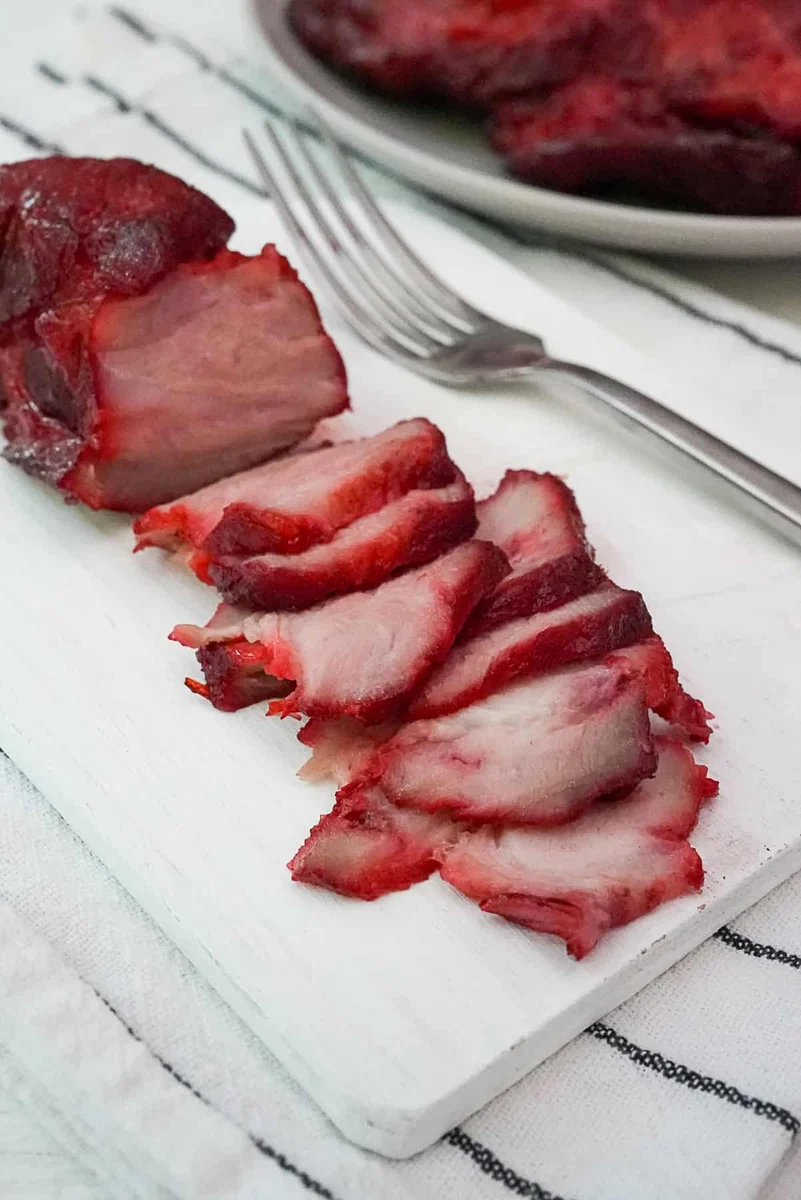
Moo dang is Thai-style red pork, marinated with garlic, coriander root, soy, oyster sauce and five-spice before being oven-roasted. It is a good make-ahead dish: most of the work is done while the pork marinates, leaving a short cooking and resting time.
Ingredients
- 907 g (2 pounds)pork tenderloin or another cut of pork
- 6garlic cloves
- 2coriander roots (or 30 ml (2 tablespoons) coriander stems)
- 5 ml (1 teaspoon)ground white pepper
- 45 ml (3 tablespoons)thin soy sauce
- 30 ml (2 tablespoons)oyster sauce
- 15 ml (1 tablespoon)five-spice powder
- 45 ml (3 tablespoons)palm sugar
- 15 ml (1 tablespoon)sesame oil
- 2.5 ml (½ teaspoon)red food colouring
Instructions
- 1
Make the marinade
Pound the garlic and coriander roots together in a mortar until smooth. Add the paste to the remaining marinade ingredients and stir until combined.
- 2
Marinate the pork
Cut the pork into long pieces about 7.5 cm wide and 2.5–5 cm tall. Pour the marinade over the pork, cover the bowl with cling film or transfer everything to a sealable bag, and refrigerate for 24–28 hours.
- 3
Roast the pork
Heat the oven to 200°C (400°F). Set the marinated pork on the grill rack of a baking pan and bake for 30 minutes. Rest the pork for 10 minutes, then slice thinly to serve.
What is moo dang?
Moo dang means red pork and is a Thai take on the Chinese-style char siu tradition. This version uses a long marinade to flavour pork with garlic, coriander root, soy, oyster sauce and five-spice.
The red colouring gives the pork its familiar appearance, while the sweet-savoury marinade and oven roasting make it practical to prepare at home.
Nutrition and macros by portion
The nutrition label shows one serving as written: 180 calories, 25g protein, 6g carbs, 6g fat.
| Portion | Adjustment | kcal | Protein | Carbs | Fat |
|---|---|---|---|---|---|
| Lighter | More vegetables, less pork | 126 kcal | 18g | 4g | 4g |
| This serving | As written | 180 kcal | 25g | 6g | 6g |
| Hungry | Larger pork portion | 270 kcal | 38g | 9g | 9g |
The pork supplies most of the protein, while palm sugar and the sauces contribute carbohydrates. Pork and sesame oil provide most of the fat. To balance the plate, serve a portion with vegetables and rice, adjusting the rice to suit your meal.
The marinade’s flavour
Aromatics: Pounding the garlic and coriander root into a paste helps distribute their flavour through the marinade. If coriander roots are unavailable, the recipe gives coriander stems as an alternative.
Sweet and savoury: Palm sugar balances the soy and oyster sauces, while five-spice and white pepper bring warmth. Sesame oil rounds out the mixture.
Why the long marinating time matters
The pork rests in the marinade for 24–28 hours, so plan ahead rather than treating this as a last-minute meal. Keep it covered or sealed in the refrigerator throughout.
Turn or rearrange the pieces once if some are not well coated, taking care to keep the raw pork and its marinade contained.
Cutting the pork
Piece size: The recipe calls for long segments about 7.5 cm wide and 2.5–5 cm tall. Keeping the pieces reasonably similar in size helps them cook at a similar rate.
Cutting: Use a sharp knife and trim the pork into manageable lengths before marinating. The pieces are sliced thinly after cooking and resting.
Roasting and resting
Rack setup: Set the pork on the grill rack in a baking pan so it is raised during roasting. Arrange the pieces with space between them rather than piling them together.
Doneness: Roast at 200°C for 30 minutes, as directed, then rest for 10 minutes before slicing. For a reliable safety check, use a food thermometer and follow current guidance for the cut of pork you are using.
Serving the pork
Slice the rested pork thinly and serve it with rice and vegetables for a straightforward meal. Crisp or lightly dressed vegetables can add freshness alongside the sweet, savoury meat.
The pork also works as part of a larger spread with other Thai-inspired dishes; keep any extra sauce or accompaniments separate until serving.
Recipe notes & tips
- Crush the garlic and coriander roots thoroughly so the marinade has an even texture.
- Keep the pork refrigerated for the full marinating time.
- Use a sealable bag if you want to coat the pork without taking up much fridge space.
- Arrange the pork in a single layer on the rack for more even roasting.
- Let the pork rest for the full 10 minutes before slicing.
- Slice across the grain where its direction is visible for more tender-looking pieces.
Variations
- Use coriander stems: Swap them for the two coriander roots as suggested in the recipe.
- Choose another cut: Use a different cut of pork, allowing for differences in thickness and cooking time.
- Skip the colouring: Leave out the red food colouring for pork without the traditional red appearance.
- Serve with rice: Add steamed rice and vegetables to make the pork part of a full meal.
Common mistakes to avoid
- Short marinating: The flavour has less time to develop; allow the full 24–28 hours in the refrigerator.
- Uneven pieces: Pieces of very different sizes may cook at different rates; cut them to similar dimensions.
- Crowded rack: Overlapping pieces can roast unevenly; spread them out on the rack.
- Slicing immediately: Cutting before the 10-minute rest can lose juices; rest the pork first.
- Relying only on colour: Colour does not confirm doneness; check with a food thermometer and current safety guidance.
How to store
Refrigerate cooked pork in a covered container within two hours of cooking and use within 3–4 days. Reheat until steaming hot, taking care not to overcook it; cooked pork can also be frozen for longer storage.
Frequently asked questions
Can I marinate the pork for longer than 28 hours?
The recipe specifies 24–28 hours. For best results, follow that window and keep the pork refrigerated.
Can I use coriander stems instead of roots?
Yes. The recipe lists 30 ml (2 tablespoons) of coriander stems as an alternative to two roots.
Is the red food colouring necessary?
No; it gives the pork its red appearance. You can omit it, although the finished colour will be different.
Can I use a cut other than tenderloin?
Yes, the recipe allows another cut of pork. Since thickness and cooking time can vary, check that the pork is safely cooked rather than relying on the stated time alone.
How should I slice moo dang?
Rest it for 10 minutes after roasting, then cut it into thin slices. Where possible, slice across the grain.
Cook it from the original
This recipe comes from rachelcooksthai.com. Their page has the author’s own photos, notes and tips — the best place to cook it from.
Open the recipe on rachelcooksthai.com