
Instant Pot Mango Sticky Rice
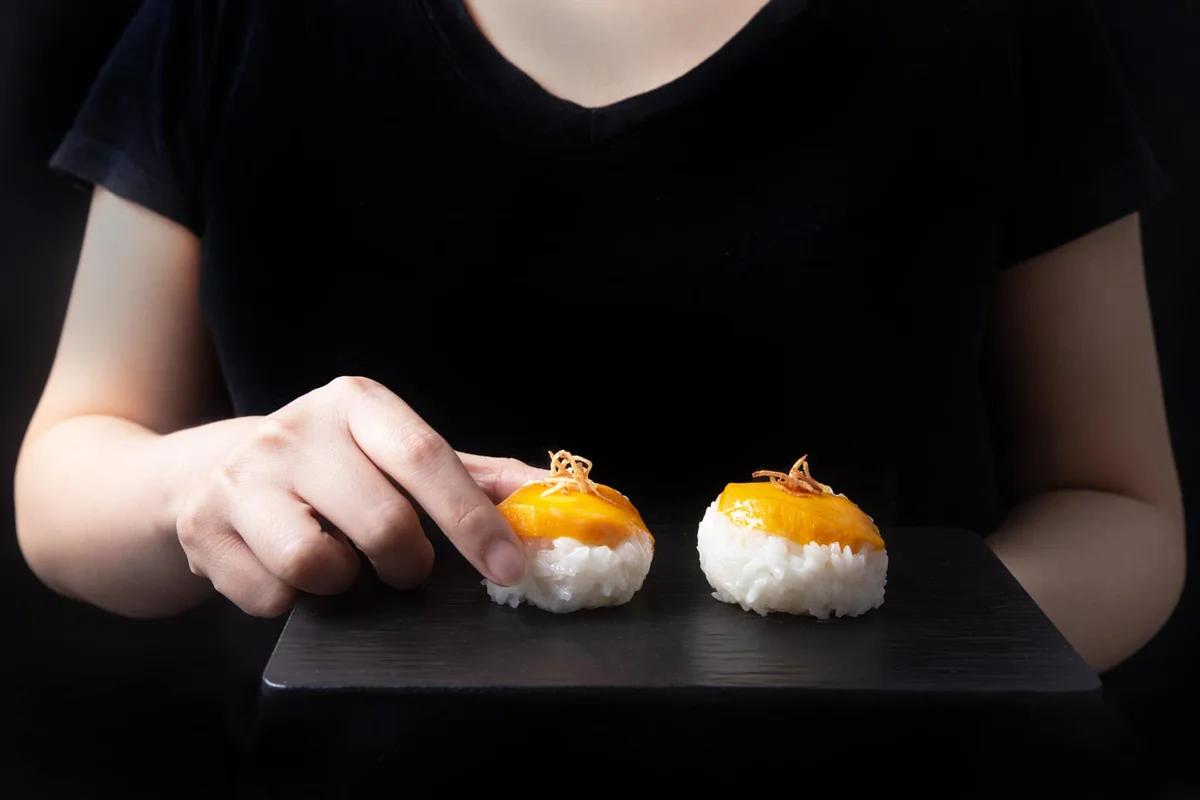
This Thai-inspired dessert pairs coconut-scented glutinous rice with ripe mango, a pourable coconut sauce and toasted coconut flakes. The pressure cooker makes the rice without soaking, while shaping it into small bites makes it easy to serve.
Ingredients
- 200 g (1 cup)glutinous rice
- 167 ml (⅔ cup)cold water
- 167 ml (⅔ cup)coconut milk
- 62.5 g (¼ cup plus 1 tablespoon)sugar
- 1 pinchsalt
- 1 mango (309 g), peeled and thinly slicedmango
- 11 g (2 tablespoons)coconut flakes
- 125 ml (½ cup)coconut milk
- 25 g (2 tablespoons)sugar
- 10 g (1 tablespoon)cornstarch
- 2 pinchessalt
Instructions
- 1
Pressure cook rice
Pour 250 ml cold water into the Instant Pot and add a steamer basket. In a stainless-steel bowl, combine the glutinous rice with 167 ml cold water, making sure the rice is submerged. Set the bowl on the basket. Cook at high pressure for 12 minutes, then allow a 12-minute natural release.
- 2
Season the rice
During the natural release, warm 167 ml coconut milk with 62.5 g sugar and a pinch of salt in a saucepan over medium-low heat, just until the sugar dissolves. Take it off the heat and pour it over the rice. Gently fluff and combine, then leave for about 30–60 minutes, until the coconut mixture has been absorbed.
- 3
Toast the coconut
Toast the coconut flakes in a dry skillet over medium heat for about 2–3 minutes, stirring occasionally, until golden. Remove from the heat and set aside.
- 4
Make coconut sauce
In a mixing bowl, stir 30 ml coconut milk with the cornstarch. In the saucepan, bring 125 ml coconut milk, 25 g sugar and two pinches of salt to a simmer over medium heat. Slowly stir in the cornstarch mixture to thicken the sauce, then turn off the heat.
- 5
Slice the mango
Peel the mango and cut off its ends. Run a knife along the seed to cut the flesh into thin slices.
- 6
Shape and serve
Lay mango slices on plastic food wrap and drizzle with a little coconut sauce. Add one heaped tablespoon (about 40–45 g) of coconut sticky rice, shape into a temari-style bite as shown in the recipe photo, and finish with a pinch of toasted coconut flakes.
What is mango sticky rice?
Khao niao ma muang is a Thai dessert built around glutinous rice, coconut milk and ripe mango. It is a familiar combination in Thai food stalls and restaurants, where sweet, creamy rice meets bright, juicy fruit.
This version uses an Instant Pot to cook the rice without a soaking step, then rests it with sweetened coconut milk so the grains can absorb the flavour. Small mango-and-rice bites, coconut sauce and toasted flakes make each serving easy to assemble.
Nutrition and macros by portion
The nutrition label shows one serving as written: 159 calories, 1g protein, 26g carbs, 5g fat.
| Portion | Adjustment | kcal | Protein | Carbs | Fat |
|---|---|---|---|---|---|
| Lighter | Use less coconut sauce | 111 kcal | 1g | 18g | 4g |
| This serving | As written | 159 kcal | 1g | 26g | 5g |
| Hungry | Serve a larger portion | 239 kcal | 2g | 39g | 8g |
The recipe's carbohydrates mainly come from the glutinous rice, sugar and mango; coconut milk and flakes contribute most of the fat, while the rice and fruit provide a little protein. For a more balanced plate, serve a measured portion after a meal with a source of protein and vegetables.
Choosing the ingredients
Glutinous rice: This short-grain rice becomes sticky and cohesive when cooked; ordinary long-grain rice will not give the same texture.
Mango: Choose a ripe fruit that gives slightly when pressed but is still firm enough to slice neatly.
Coconut milk: Use coconut milk for both the rice and sauce. The first portion flavours the grains, while the second makes a separate topping.
Cooking rice in the pressure cooker
Water bath: The method places the rice and its measured water in a stainless-steel bowl above water in the Instant Pot, rather than cooking the rice directly in the pot.
Natural release: Leave the pressure to release naturally for the full 12 minutes. This gives the rice time to settle after cooking and avoids rushing the transition to the coconut mixture.
Let the rice absorb the coconut
Warm mixture: Heat the coconut milk gently, only until the sugar dissolves; it does not need to boil.
Rest: Fold the mixture through the rice without crushing the grains, then leave it for 30–60 minutes. The rice is ready for shaping when the liquid has been absorbed and it holds together.
Getting the sauce right
Cornstarch slurry: Stir the cornstarch into the smaller amount of coconut milk before adding it to the simmering sauce. This helps it blend in smoothly rather than forming lumps.
Slow addition: Pour in the slurry gradually while stirring. Stop once the sauce thickens enough to drizzle over the mango and rice.
Texture and timing cues
Rice: After pressure cooking and resting, it should be tender and sticky, not crunchy or watery. The recipe takes 45 minutes overall, though the rice's 30–60-minute coconut soak is an important texture cue; allow for it when planning the serving time.
Coconut flakes: Keep them moving in the skillet and take them off the heat once golden, as they can continue darkening in the hot pan.
Serving the bites
Assembly: The plastic wrap helps shape the rice and mango into the temari-style bites described in the method. Use a heaped tablespoon of rice for each bite and handle it gently.
To serve: Add the sauce and toasted flakes just before serving, so the topping stays distinct. These bites work as a dessert on their own or alongside extra fresh mango.
Recipe notes & tips
- Make sure the rice is submerged in its measured cooking water in the stainless-steel bowl.
- Warm the coconut milk gently so the sugar dissolves without boiling the mixture.
- Fluff the rice carefully when adding the coconut mixture to help keep the grains intact.
- Stir the cornstarch into the coconut milk until smooth before adding it to the simmering sauce.
- Toast the coconut flakes over medium heat and stir often to prevent scorching.
- Use ripe but firm mango so the slices hold their shape when wrapped around the rice.
Variations
- Serve as a bowl: Spoon the coconut rice beside sliced mango and drizzle the sauce over the top.
- Add sesame: Sprinkle toasted sesame seeds over the finished bites for a nutty accent.
- Use extra mango: Add more fresh mango slices alongside the shaped portions.
- Adjust the sauce: Make it thinner by adding a small splash of coconut milk after thickening.
- Skip the shaping: Serve the rice, mango and sauce separately for a simpler presentation.
Common mistakes to avoid
- Using the wrong rice: Choose glutinous rice, as other varieties may not become sticky enough to shape.
- Skipping the natural release: Keep the full 12-minute release so the rice can settle after pressure cooking.
- Rushing the rice rest: Give it 30–60 minutes to absorb the coconut mixture before forming bites.
- Adding dry cornstarch: Mix it with coconut milk first to avoid lumps in the sauce.
- Over-toasting coconut: Remove the flakes as soon as they turn golden, since residual heat can darken them.
- Using overripe mango: Choose fruit firm enough to slice and handle during assembly.
How to store
Store the rice, mango and coconut sauce separately in covered containers in the fridge and use within 2 days for best texture. Reheat the rice gently until warm, adding a little coconut milk if it has firmed up; serve with the mango and sauce once assembled.
Frequently asked questions
Do I need to soak the rice first?
No. This method cooks the glutinous rice in the Instant Pot without a preliminary soaking step.
Can I use regular rice?
Glutinous rice is recommended because it becomes sticky enough to hold the shaped bites together. Regular long-grain rice will have a different texture.
How do I know the rice is ready to shape?
After resting with the coconut mixture for about 30–60 minutes, it should have absorbed the liquid and hold together when gently pressed.
Can I make the components ahead?
Yes. Prepare the rice and sauce in advance and keep them covered in the fridge, storing the sliced mango separately. Warm the rice gently and assemble shortly before serving.
How can I thicken the coconut sauce if it is too thin?
Stir the cornstarch mixture into the simmering coconut milk gradually, then keep stirring until the sauce thickens. Avoid adding dry cornstarch directly.
Can I serve this without shaping individual bites?
Yes. Spoon the coconut rice into bowls, add sliced mango, and drizzle with sauce and toasted coconut.
Cook it from the original
This recipe comes from pressurecookrecipes.com. Their page has the author’s own photos, notes and tips — the best place to cook it from.
Open the recipe on pressurecookrecipes.com