
Beef Panang Curry
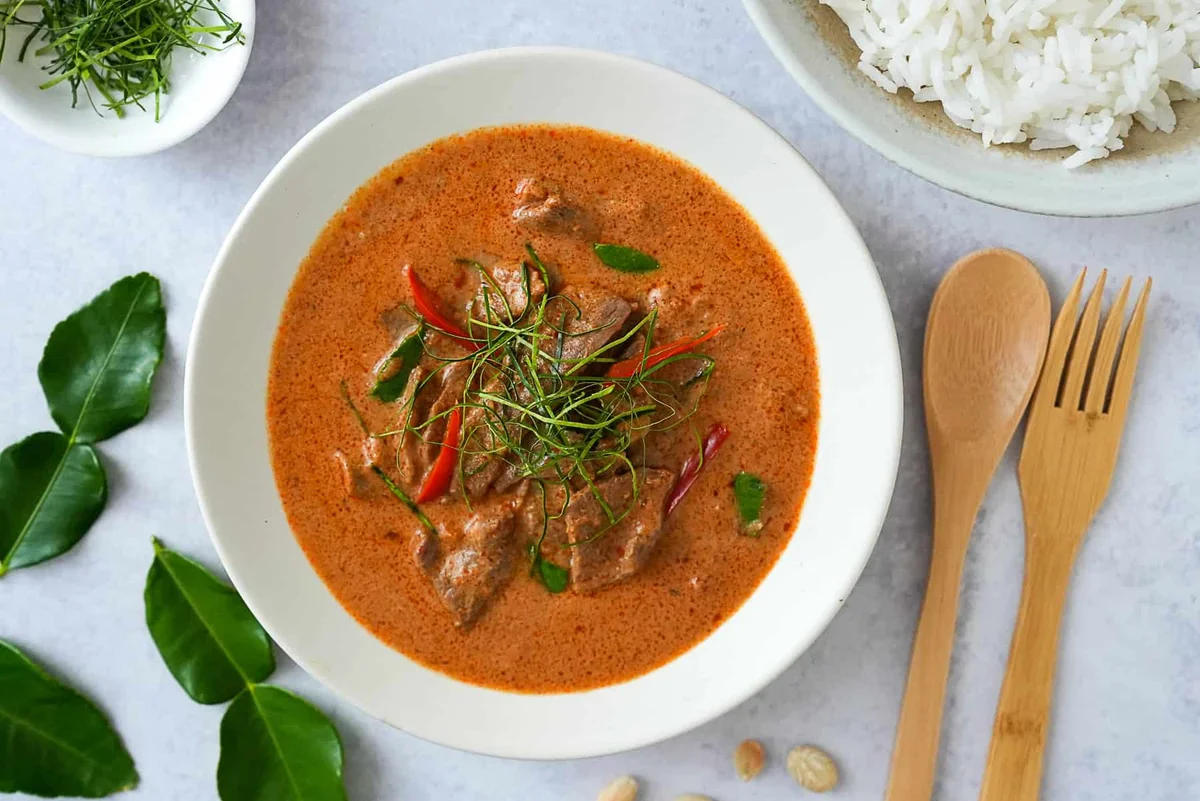
Beef Panang curry brings tender slices of beef together with a rich coconut sauce, roasted peanuts and fragrant makrut lime leaves. It makes a flavourful Thai-inspired meal in about 35 minutes.
Ingredients
- 300 ml (1 1/4 cups)coconut milk
- 30 ml (2 tablespoons)Panang curry paste
- 15 ml (1 tablespoon)roasted peanuts
- 225 g (1 1/2 cups)beef, thinly sliced
- 120 ml (1/2 cup)water
- 6makrut lime leaves
- 5 ml (1 teaspoon)fish sauce
- 4 g (1 teaspoon)sugar
- 1mild red chilli (optional)
- 60 ml (1/4 cup)pea aubergines (optional)
Instructions
- 1
Prepare the paste
Dry-roast the peanuts in a pan, then pound them into the prepared Panang curry paste until smooth. If you do not have a mortar and pestle, blend the peanuts and stir them into the paste.
- 2
Part-cook the beef
Heat 60 ml (1/4 cup) of the coconut milk in a pan over medium heat. Add the sliced beef and cook until it is about halfway done, then remove it from the pan and set it aside.
- 3
Separate the coconut
Scoop the thicker top 80 ml (1/3 cup) of coconut milk from the can into a large pan or wok. Heat over medium heat until it bubbles vigorously and an oily sheen begins to appear.
- 4
Fry the paste
Add the prepared curry paste and stir it into the separated coconut milk. Cook for about 5 minutes, stirring continuously and watching closely so the paste does not burn, until its aroma is pronounced.
- 5
Make the sauce
Add the remaining coconut milk and the water. Remove the central veins from the makrut lime leaves, tear the leaves in half and add them to the sauce. Cook until the curry reaches your preferred thickness, adding more water if needed.
- 6
Season the curry
Taste the sauce and adjust it with fish sauce and sugar as needed. Add the thinly sliced red chilli if using.
- 7
Finish the beef
When the curry has reached the thickness you like, return the partly cooked beef to the pan. Cook for about 1 minute, until just done, then take the pan off the heat.
- 8
Garnish and serve
Spoon the curry into a serving bowl and garnish with makrut lime leaves cut into fine strips. Serve with warm jasmine rice.
What is beef Panang curry?
Panang curry is a Thai curry known for a thick, rich sauce and a fragrant balance of curry paste, coconut and lime. This version pairs that sauce with quickly cooked beef and roasted peanuts for a rounded, nutty flavour.
The method builds the sauce by frying the paste in thick coconut milk before loosening it with the rest of the milk and water. Makrut lime leaves bring a bright, aromatic note to the richness.
Nutrition and macros by portion
The nutrition label shows one serving as written: 468 calories, 23g protein, 13g carbs, 37g fat.
| Portion | Adjustment | kcal | Protein | Carbs | Fat |
|---|---|---|---|---|---|
| Lighter | Use less coconut milk | 328 kcal | 16g | 9g | 26g |
| This serving | As written | 468 kcal | 23g | 13g | 37g |
| Hungry | Serve with extra rice | 702 kcal | 35g | 20g | 56g |
The beef contributes protein, while coconut milk and peanuts account for much of the fat; the curry paste and sugar contribute carbohydrates. Serve it with a sensible portion of jasmine rice and add vegetables alongside to make the meal more balanced.
Build flavour with the paste
Peanuts: Dry-roasting them before pounding brings out their toasted flavour. Work them into the prepared paste until smooth, or blend them separately and stir them through.
Curry paste: Fry it in the thick coconut milk until fragrant, stirring often. This step helps the paste mingle with the coconut rather than simply dispersing into the finished sauce.
Handle the coconut milk gently
Thick coconut milk: Scoop from the top of the can for the initial frying stage. Heat it until bubbly and a slight oily sheen appears, keeping the pan at medium heat.
Remaining milk: Add it with the water after frying the paste. The amount of water can be adjusted as the sauce cooks to reach the consistency you prefer.
Keep the beef tender
First cook: Let the thin slices cook only halfway in a little coconut milk, then take them out. This gives the beef a head start without leaving it in the pan for the entire sauce-making time.
Final cook: Return the beef when the sauce is ready and cook for about a minute, just until done. Thin slices need little time at this stage.
Use the lime leaves well
In the sauce: Remove the tough central veins and tear the leaves before adding them. This lets their fragrant citrus aroma infuse the curry as it cooks.
For the finish: Cut a few leaves into fine strips to garnish the bowl. The fresh-looking garnish gives the rich sauce a bright final accent.
Choose the sauce consistency
Thicker curry: Let the sauce simmer until it reaches the consistency you want, as directed in the method. Keep stirring and check it regularly while it reduces.
Looser curry: Add water a little at a time if the sauce becomes thicker than you prefer. Taste again after adjusting so the seasoning still suits the sauce.
What to serve with it
Jasmine rice: Serve the curry with warm jasmine rice, as suggested in the method. Its mild flavour works well alongside the fragrant, creamy sauce.
Pea aubergines and chilli: The pea aubergines and red chilli are optional additions. Include either or both according to your preference, without letting them distract from the beef and curry sauce.
Recipe notes & tips
- Stir the curry paste continuously as it fries to help prevent it catching on the pan.
- Use a large pan or wok so you have room to stir the sauce and return the beef.
- Taste the curry before adding the fish sauce and sugar, then adjust gradually.
- Add water in small amounts if the sauce thickens more than you would like.
- Cut the makrut lime leaves into fine strips for a neat garnish.
Variations
- Add pea aubergines: Include them with the optional chilli for extra vegetable texture.
- Make it hotter: Slice in the optional mild red chilli, or adjust the amount to taste.
- Use another protein: Try thinly sliced chicken in place of beef and cook it until done.
- Boost the peanut flavour: Add a little more roasted peanut, pounded finely into the paste.
- Serve with extra vegetables: Add a simple vegetable side to accompany the curry and rice.
Common mistakes to avoid
- Burning the paste: Keep stirring continuously and watch it closely during the 5-minute frying stage.
- Overcooking the beef: Remove it when halfway done, then return it only for about a minute at the end.
- Skipping the coconut milk separation: Use the thicker milk from the top of the can for frying the paste.
- Making the sauce too thick: Add water as needed while it cooks to reach your preferred consistency.
- Adding seasoning without tasting: Check the curry first, then adjust the fish sauce and sugar to suit.
How to store
Refrigerate leftovers in a covered container and use within 3 days. Reheat gently in a pan until piping hot, adding a splash of water if the sauce has thickened; store rice separately where possible.
Frequently asked questions
Can I use a different cut of beef?
Yes, provided it can be sliced thinly. Thin slices cook quickly, which suits the brief final cooking time in the curry.
Do I have to use a mortar and pestle?
No. The method suggests blending the peanuts and stirring them into the prepared curry paste if you do not have one.
Can I leave out the chilli?
Yes. The red chilli is optional, so you can omit it or add it according to your preferred level of heat.
What if I cannot find pea aubergines?
They are optional and can simply be left out. The curry will still have its beef, coconut and Panang paste base.
How do I know when the curry sauce is thick enough?
Cook it until it reaches the consistency you prefer, adding more water if it becomes too thick. The recipe does not specify a fixed simmering time for this stage.
What should I serve with beef Panang curry?
The method recommends warm jasmine rice.
Cook it from the original
This recipe comes from rachelcooksthai.com. Their page has the author’s own photos, notes and tips — the best place to cook it from.
Open the recipe on rachelcooksthai.com