
Salt-Crusted Grilled Fish | Pla Pao | ปลาเผา
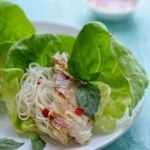
Pla pao is Thai whole fish grilled beneath a crust of coarse salt, with aromatic herbs tucked inside. The salt helps keep the flesh moist, while lettuce, noodles and a sharp dipping sauce make each serving easy to wrap and customise.
Ingredients
- 900 g (2 lb)whole white fish, such as red snapper or tilapia
- 2 stalkslemongrass
- 4kaffir lime leaves
- 120 g (½ cup)coarse sea salt
- 15 ml (1 tablespoon)lime juice
- 15 ml (1 tablespoon)fish sauce
- 15 ml (1 tablespoon)sugar
- 30 ml (2 tablespoons)water
- 1–2red Thai peppers
- 1 headbutter lettuce
- 170 g (6 oz)khanom jeen noodles or somen noodles
- to tastefresh herbs, including Thai basil, mint and/or coriander
Instructions
- 1
Prepare the fish
Wash the dressed fish, then make shallow diagonal cuts in the flesh on both sides.
- 2
Prepare the aromatics
Cut the lemongrass into 7.5–10 cm (3–4 inch) pieces, then halve each piece lengthways. Bruise each half with a knife. Tear the lime leaves in half, removing the central vein.
- 3
Fill the cavity
Put the bruised lemongrass and torn kaffir lime leaves inside the fish. Use toothpicks to close the cavity if needed.
- 4
Salt and grill
Cover the outside of the fish completely with coarse sea salt. Grill over low to medium heat until cooked through but still moist.
- 5
Prepare the sides
While the fish grills, mix the lime juice, fish sauce, sugar, water and red Thai peppers to make the dipping sauce. Boil the khanom jeen noodles for 3 minutes or follow the packet instructions. Wash the lettuce and fresh herbs.
- 6
Wrap and serve
When the fish is cooked, peel away the salty outer skin to expose the flesh. Put a piece of fish on a lettuce leaf with some noodles and fresh herbs, spoon over the dipping sauce, then wrap and eat.
What is pla pao?
Pla pao, or Thai salt-crusted grilled fish, is a way of cooking a whole fish over a grill with a thick coating of salt. The fish is served with fresh herbs, lettuce, noodles and a punchy dipping sauce, so diners can assemble each bite themselves.
This version follows that simple approach: lemongrass and kaffir lime leaves perfume the fish from inside, while the salt forms a protective outer layer as it grills.
Nutrition and macros by portion
The nutrition label shows one serving as written: 263 calories, 35g protein, 24g carbs, 3g fat.
| Portion | Adjustment | kcal | Protein | Carbs | Fat |
|---|---|---|---|---|---|
| Lighter | More lettuce, fewer noodles | 184 kcal | 25g | 17g | 2g |
| This serving | As written | 263 kcal | 35g | 24g | 3g |
| Hungry | Larger fish portion | 395 kcal | 53g | 36g | 5g |
The noodles and lettuce provide most of the carbohydrates, while the fish supplies most of the protein. The coarse salt and fish sauce contribute sodium; balance the plate with a generous amount of lettuce and herbs, and use the dipping sauce sparingly.
Choosing the fish
Whole fish: Red snapper and tilapia are suggested options; choose a fish of about 900 g that has been dressed and is suitable for grilling whole.
Shallow cuts: A few diagonal slashes on each side help the fish cook more evenly. Keep them shallow so the flesh stays intact beneath the salt.
Make the aromatics count
Bruised lemongrass: Crushing it lightly releases its aroma without needing to chop it finely. The long pieces are easy to remove with the skin after grilling.
Kaffir lime leaves: Removing the central vein and tearing the leaves helps expose their fragrance. Keep both aromatics inside the cavity rather than mixing them into the sauce.
Grilling beneath the salt
Even coverage: Coat the outside completely, as directed, so the skin is enclosed in salt during cooking. The recipe specifies low to medium heat but does not give a grilling time, so check the fish as it cooks.
Moist doneness: The fish should be cooked through but still moist. Once it is ready, peel away the salty outer skin and serve the flesh inside.
Mixing the dipping sauce
Balanced flavour: Lime juice, fish sauce, sugar and water combine for a sauce that is salty, sour and sweet. The red Thai peppers bring heat; use one or two according to your preference.
Mix the sauce while the fish is grilling, as the method directs. Stir again before serving so the sugar is distributed.
Noodles and fresh wraps
Noodles: Boil khanom jeen for 3 minutes, or use the packet timing if you have somen. Drain them before setting them out with the other accompaniments.
Lettuce and herbs: Wash and prepare them while the fish cooks. A lettuce leaf holds the fish, noodles and herbs together, with sauce spooned over the filling.
Serving the fish
Set the fish, lettuce leaves, noodles, herbs and dipping sauce out separately so everyone can make a wrap to taste. Remove the salty skin before taking flesh from the fish.
Serve soon after grilling while the fish is warm and the lettuce and herbs are fresh. Add the sauce a little at a time so each wrap stays easy to handle.
Recipe notes & tips
- Ask the fishmonger to dress the whole fish if you do not want to prepare it yourself.
- Bruise the lemongrass firmly enough to release its aroma but keep the pieces whole for easy removal.
- Keep the salt coating complete over the fish’s outside.
- Use the packet timing if your noodles are not khanom jeen.
- Set the washed lettuce and herbs out before the fish is ready so the wraps can be assembled promptly.
Variations
- Use somen: Replace khanom jeen with somen noodles and cook according to the packet.
- Adjust the heat: Use one red Thai pepper for a milder sauce or two for more heat.
- Choose another white fish: Use a similarly sized whole white fish that is suitable for grilling.
- Change the herbs: Choose Thai basil, mint, coriander or a mixture of them.
- Make individual wraps: Offer smaller lettuce leaves and let everyone add fish, noodles, herbs and sauce to taste.
Common mistakes to avoid
- Incomplete salt coverage: Coat the fish all over so the outer layer is not left exposed.
- Deep diagonal cuts: Keep the cuts shallow to avoid splitting the fish.
- Unbruised lemongrass: Bruise each piece with a knife to release its aroma.
- Overcooking the noodles: Boil khanom jeen for 3 minutes, or follow the packet timing for your noodles.
- Leaving the salty skin on: Peel it away after grilling to reach the moist fish flesh.
How to store
Refrigerate leftover fish, noodles and accompaniments separately in covered containers and use within 1–2 days. Reheat the fish gently until hot, and serve the lettuce, herbs and sauce fresh.
Frequently asked questions
Can I use tilapia for pla pao?
Yes. Tilapia is one of the suggested white fish options; a whole fish of about 900 g suits the listed quantity.
Do I eat the salt crust?
No. Peel off the salty outer skin after grilling and eat the moist flesh inside.
How long should I grill the fish?
The recipe does not specify a grilling time. Grill over low to medium heat and check that the fish is cooked through but still moist.
Can I use somen instead of khanom jeen?
Yes. The recipe lists somen as an alternative; cook it according to the packet instructions.
What herbs can I serve with the fish?
Thai basil is suggested, with mint and/or coriander as alternatives. Wash the herbs and serve them fresh in the lettuce wraps.
Can I prepare the dipping sauce ahead?
You can mix it while the fish grills, as in the method. If you make it earlier, keep it covered and stir it before serving.
Cook it from the original
This recipe comes from rachelcooksthai.com. Their page has the author’s own photos, notes and tips — the best place to cook it from.
Open the recipe on rachelcooksthai.com