
Individual No-Bake Biscoff Lotus Cheesecake
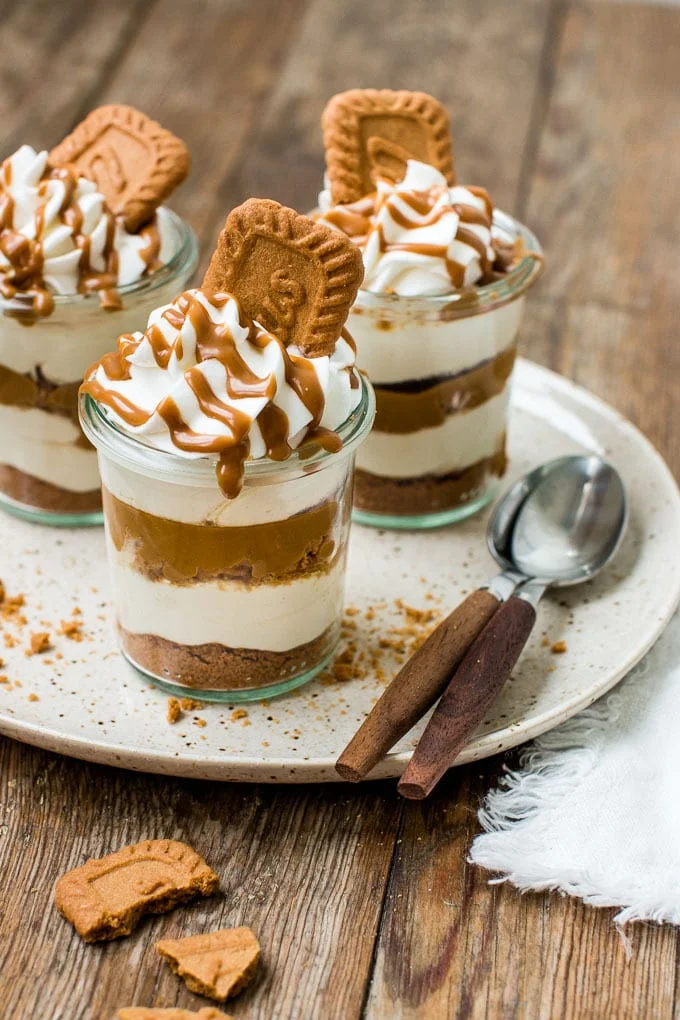
These individual no-bake Biscoff cheesecakes layer a smooth, cream-cheese filling with crushed Lotus biscuits and cookie butter. They are a good make-ahead dessert when you want a rich, chilled pudding without turning on the oven.
Ingredients
- 10Lotus Biscoff biscuits
- 225 gfull-fat cream cheese, softened to room temperature
- 24 g (3 tablespoons)icing sugar
- 60 ml (1/4 cup)Lotus Biscoff cookie butter spread
- 5 ml (1 teaspoon)pure vanilla extract
- 240 ml (1 cup)double cream
- 5Lotus Biscoff biscuits, coarsely chopped
- 180 ml (3/4 cup)Lotus Biscoff cookie butter spread
- To tastewhipped cream
- To tasteLotus Biscoff cookie butter spread, melted, for drizzling
- To tasteLotus Biscoff biscuits, coarsely chopped
Instructions
- 1
Make the biscuit base
Pulse the biscuits in a food processor until finely ground. Divide the crumbs evenly between individual serving dishes, using about 1 tablespoon per dish.
- 2
Mix the filling
Whisk the cream cheese, icing sugar, 1/4 cup (60 ml) cookie butter and vanilla together until completely smooth, either by hand or with an electric mixer. In a separate bowl, whisk the double cream with an electric mixer and whisk attachment until soft peaks form. Fold half of the whipped cream gently into the cream-cheese mixture, then fold in the remainder.
- 3
Melt the spread
Microwave the 3/4 cup (180 ml) cookie butter for several seconds, just until melted.
- 4
Layer and chill
Spoon or pipe half of the cheese filling evenly into the serving dishes. Add the chopped biscuits, followed by the melted cookie butter. If the spread is very soft, put the dishes in the freezer for several minutes to make the next layer easier to add. Top with the remaining cheese filling, then finish with biscuit crumbs, whipped cream or a drizzle of melted cookie butter, if desired. Cover and refrigerate for at least 2 hours before serving, or for up to 2–3 days.
What is an individual Biscoff cheesecake?
This is a chilled, no-bake take on cheesecake, portioned into separate dishes rather than made as one large cake. Its biscuit base and cookie-butter layers give it the caramelised, spiced flavour associated with Lotus Biscoff biscuits.
The method builds in contrast: a fine crumb base, creamy filling, chopped biscuits and a soft layer of melted spread. Individual portions also make the dessert easy to serve straight from the fridge.
Nutrition and macros by portion
The nutrition label shows one serving as written: 635 calories, 6g protein, 48g carbs, 46g fat.
| Portion | Adjustment | kcal | Protein | Carbs | Fat |
|---|---|---|---|---|---|
| Lighter | Use less cookie butter | 445 kcal | 4g | 34g | 32g |
| This serving | As written | 635 kcal | 6g | 48g | 46g |
| Hungry | Add another biscuit layer | 953 kcal | 9g | 72g | 69g |
The biscuits and icing sugar provide most of the carbohydrates, while the cream cheese, double cream and cookie butter contribute much of the fat. Cream cheese and cream supply some protein, though this is primarily a dessert rather than a protein-rich dish. Balance a serving with fresh fruit or choose a lighter main course beforehand.
The biscuit base
Fine crumbs: pulse the 10 biscuits until evenly ground so they sit neatly at the bottom of each dish. The recipe uses about 1 tablespoon per serving dish, leaving the rest of the biscuits for the filling and finish.
A smooth, airy filling
Room-temperature cheese: softened cream cheese blends more easily with the icing sugar, cookie butter and vanilla, helping avoid lumps.
Soft peaks: whip the double cream until it forms soft peaks, then fold it into the cheese mixture in two additions. A gentle folding motion keeps the filling light rather than knocking out the air.
Layering the cookie butter
Melted spread: warm the larger portion of cookie butter for only several seconds, stopping as soon as it is fluid. If it is very soft when layered, a few minutes in the freezer helps firm it enough to add the top layer of filling.
How to judge the texture
Filling: the cream-cheese mixture should be smooth before folding in the whipped cream, and the finished mixture should remain soft and fluffy.
Chilling: give the dishes at least 2 hours in the fridge so the layers settle and the dessert is pleasantly cold. The recipe does not specify a total preparation time.
Serving and finishing
Finish each portion with biscuit crumbs, whipped cream or a drizzle of melted cookie butter, as desired. Keep the toppings simple if you want the biscuit and cookie-butter layers to remain the focus.
These rich individual desserts work well after a lighter main course; fresh berries can be served alongside for a tart contrast.
Recipe notes & tips
- Soften the cream cheese before mixing so it combines smoothly with the other filling ingredients.
- Use a food processor to make an even, fine crumb for the base.
- Stop whisking the double cream when soft peaks form; firmer cream is harder to fold in gently.
- Fold the whipped cream in two additions to keep the filling airy.
- Microwave the cookie butter for just several seconds, then check whether it has melted before warming it further.
- Cover the dishes before chilling to protect the tops and prevent them picking up fridge odours.
Variations
- Add fresh berries: serve raspberries or strawberries alongside for a tart contrast.
- Use a larger dish: assemble the layers in one shallow dish and spoon out portions to serve.
- Add extra crunch: reserve some chopped biscuits to scatter over the top just before serving.
- Keep the finish simple: omit the whipped cream and use only biscuit crumbs for the topping.
- Make it dairy-free: use suitable dairy-free cream cheese and whipping cream alternatives, noting that the texture may differ.
Common mistakes to avoid
- Lumpy cream cheese: let it soften to room temperature before whisking it with the other filling ingredients.
- Overwhipped cream: stop at soft peaks so it folds smoothly into the cheese mixture.
- Deflated filling: fold gently with a spatula rather than beating the whipped cream into the mixture.
- Overheated cookie butter: microwave it for several seconds at a time and stop once it is melted.
- Soft layers: chill the assembled desserts for at least 2 hours before serving.
- Messy top layer: if the melted spread is very soft, freeze the cups for several minutes before adding the remaining filling.
How to store
Cover and refrigerate for up to 2–3 days. Serve chilled; no reheating is needed.
Frequently asked questions
Can I make these cheesecakes ahead?
Yes. Cover and refrigerate them for up to 2–3 days, and allow at least 2 hours of chilling before serving.
Do I need a food processor for the biscuit base?
A food processor is the method given for making fine crumbs. If you do not have one, crush the biscuits in a sealed bag until finely ground.
How long should I microwave the cookie butter?
The recipe says several seconds; the exact time depends on your microwave. Check it frequently and stop as soon as it has melted.
What if the melted spread is too soft to layer?
Put the serving dishes in the freezer for several minutes, then add the next layer once the spread is easier to work over.
Can I use a single serving dish instead?
The recipe is designed for individual dishes, with about 1 tablespoon of biscuit crumbs in each. A larger shallow dish can be used, though the layers and portions will be different.
Cook it from the original
This recipe comes from prettysimplesweet.com. Their page has the author’s own photos, notes and tips — the best place to cook it from.
Open the recipe on prettysimplesweet.com