
Red Curry with Pumpkin | Gang Ped Fak Tong | แกงเผ็ดฟักทอง
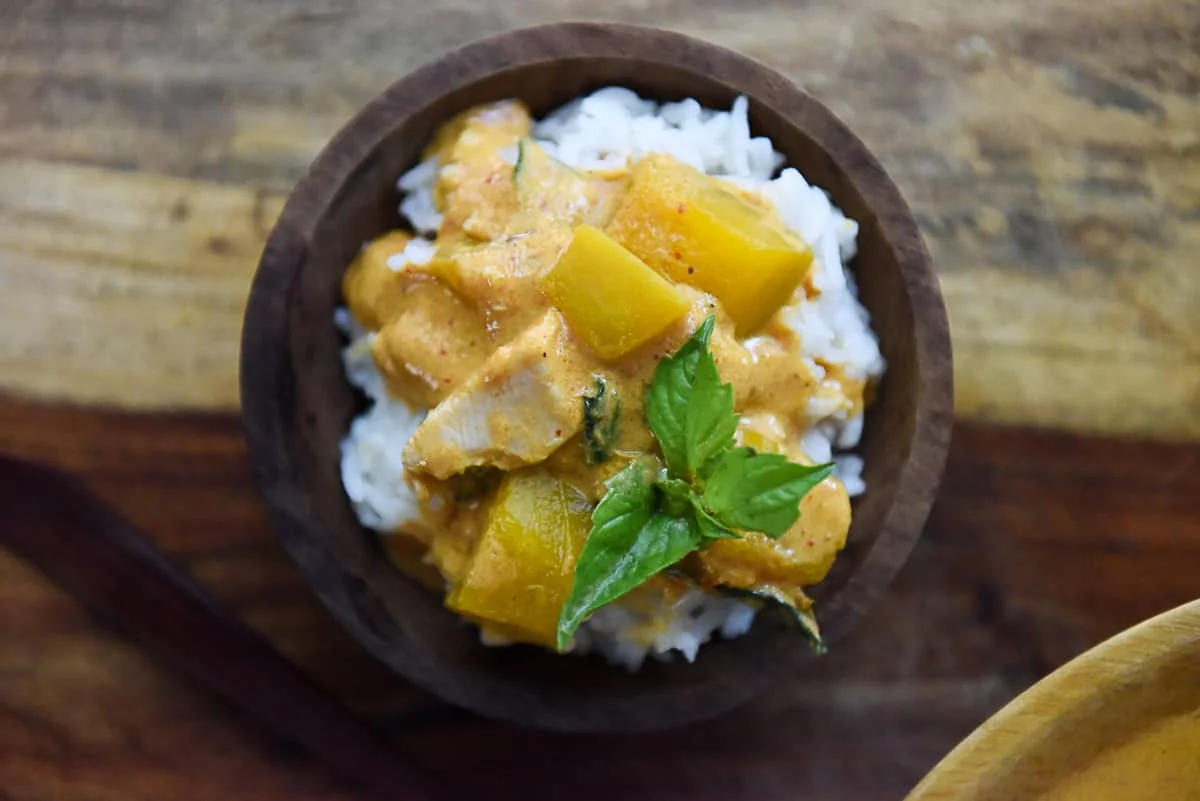
This Thai red curry pairs chicken and tender kabocha squash with coconut milk, curry paste and fragrant Thai basil. The squash brings a gentle sweetness to the spicy, savoury curry, which is served with warm jasmine rice.
Ingredients
- 240 ml (1 cup)coconut milk
- 30 ml (2 tablespoons)red curry paste
- About 140 g (1 cup)boneless, skinless chicken, thinly sliced
- About 300 g (2 cups)kabocha squash, peeled and cubed
- 3kaffir lime leaves
- 240–480 ml (1–2 cups)water
- 5 ml (1 teaspoon)fish sauce
- 5 ml (1 teaspoon)sugar
- About 25 g (1 cup)Thai basil
Instructions
- 1
Prepare the ingredients
Cut the chicken into bite-sized pieces. Peel the kabocha squash and cut it into 2.5 cm (1-inch) cubes. Remove the central veins from the kaffir lime leaves and tear each leaf in half. Pick the Thai basil leaves from their stems.
- 2
Fry the curry paste
Scoop 80 ml (⅓ cup) of the thick coconut cream from the top of the coconut milk. Heat it in a pan over medium-high heat until it bubbles and begins to separate, with small oily-looking bubbles. Add the red curry paste and fry for about 5 minutes, until fragrant.
- 3
Cook the curry
Add the chicken and stir to coat it in the curry mixture; cook for 1 minute. Pour in the remaining 160 ml (⅔ cup) coconut milk and 240 ml (1 cup) water, then bring to a simmer. Add the squash and torn kaffir lime leaves and simmer until the squash is cooked through. Add more water if needed while it simmers.
- 4
Adjust the seasoning
While the squash cooks, taste the curry and adjust the seasoning. Add the fish sauce and sugar, starting with 5 ml (1 teaspoon) of each and adjusting to suit the curry paste you used. Once the squash is cooked and the flavour is balanced, stir in the Thai basil leaves.
- 5
Finish and serve
Let the basil cook for about 1 minute, then take the pan off the heat. Garnish with a sprig of fresh Thai basil and serve with warm jasmine rice.
What is Thai red curry with pumpkin?
Gang ped fak tong is a Thai red curry made with pumpkin or squash; fak tong refers to pumpkin in Thai. It combines the aromatic heat of red curry paste with coconut milk and the soft, gently sweet flesh of the squash.
Here, chicken makes the curry more substantial, while kaffir lime leaves and Thai basil bring fragrant, fresh notes. Frying the curry paste in the thick coconut cream helps its aroma bloom before the thinner coconut milk is added.
Nutrition and macros by portion
The nutrition label shows one serving as written: 289 calories, 18g protein, 12g carbs, 20g fat.
| Portion | Adjustment | kcal | Protein | Carbs | Fat |
|---|---|---|---|---|---|
| Lighter | More squash, less rice | 202 kcal | 13g | 8g | 14g |
| This serving | As written | 289 kcal | 18g | 12g | 20g |
| Hungry | Larger portion with rice | 434 kcal | 27g | 18g | 30g |
The chicken provides much of the protein, while the squash and jasmine rice served alongside contribute carbohydrates. Coconut milk is the main source of fat in the curry. For a balanced plate, serve it with a moderate portion of rice and add a side of vegetables.
Choosing the ingredients
Curry paste: Brands vary in heat and saltiness, so taste the curry before adding the fish sauce and sugar. The recipe’s amounts are a starting point rather than a fixed seasoning balance.
Kabocha squash: Choose a firm squash and cut it into similarly sized cubes so the pieces soften at a similar pace. Peel it before cooking, as directed.
Frying the paste
Coconut cream: Use the thicker portion from the top of the tin to fry the paste. Heat it until it bubbles and looks slightly separated, then add the paste.
Fragrance: Stir the paste in the cream for about 5 minutes. Keep it moving and use the aroma as a cue; the aim is to release its fragrance without scorching it.
Getting the texture right
Squash: Simmer until a piece is tender when pierced but still holds its shape. Check it as it cooks, since cube size and the simmer can affect how quickly it softens.
Sauce: The curry may need extra water as the squash simmers. Add it gradually if the sauce becomes thicker than you want.
Balancing the flavour
Seasoning: Taste the curry while the squash cooks, then add fish sauce and sugar in the stated amounts or adjust to suit your paste. Fish sauce adds savouriness, while sugar can soften the sharpness and heat.
Basil: Stir the Thai basil in near the end and cook it for about 1 minute. This keeps its aroma fresh rather than letting it simmer throughout the cooking.
Serving the curry
Rice: Serve the curry hot with warm jasmine rice, as suggested in the method. Its mild flavour pairs well with the coconut curry sauce.
For the plate: Include a generous portion of squash and chicken alongside the rice, and spoon over enough sauce to coat them.
Recipe notes & tips
- Shake the coconut milk tin before opening only if you want it blended; otherwise, leave it undisturbed so the thicker cream can rise to the top.
- Cut the squash into evenly sized cubes to help them cook at a similar rate.
- Keep the curry paste moving as it fries so it does not catch on the bottom of the pan.
- Start with 240 ml of water and add more only if the curry needs it as the squash cooks.
- Taste the sauce before adding the full amount of fish sauce and sugar, as curry pastes differ.
- Add the basil at the end and serve soon after cooking for its fresh aroma.
Variations
- Use another squash: Swap in a similarly firm, sweet squash and simmer until tender.
- Make it hotter: Stir in extra red curry paste a little at a time.
- Add more vegetables: Include vegetables that can simmer alongside the squash without becoming too soft.
- Use prawns: Add prawns towards the end and cook until they are just done.
- Make it vegetarian: Replace the chicken with tofu and use a vegetarian curry paste and seasoning in place of fish sauce.
Common mistakes to avoid
- Scorching the paste: Keep it moving over the heat and lower the temperature if it starts to catch.
- Adding all the water at once: Begin with 240 ml and add more gradually if the sauce thickens too much.
- Uneven squash cubes: Cut them to a similar size so they finish cooking together.
- Overcooking the squash: Check it as it simmers and stop once it is tender but still holds its shape.
- Seasoning without tasting: Curry pastes vary, so taste before adjusting with fish sauce and sugar.
How to store
Cool leftovers promptly, then store them in a covered container in the fridge and use within 2 days. Reheat gently in a pan until piping hot, adding a splash of water if the sauce has thickened; store rice separately where possible.
Frequently asked questions
Can I use a different squash?
Yes. Choose a firm squash that will hold together during simmering, and check it regularly because cooking time may vary.
How do I know when the kabocha is cooked?
Pierce a cube with a knife or fork; it should be tender while still holding its shape.
How much water should I add?
Start with 240 ml (1 cup), as directed. Add more during simmering if the sauce becomes too thick or the squash needs more time to cook.
Can I adjust the heat?
Yes. Add less curry paste for a milder curry or a little more for extra heat, tasting as you go.
What should I serve with this curry?
The method suggests warm jasmine rice. Serve it alongside the curry so it can soak up the coconut sauce.
Cook it from the original
This recipe comes from rachelcooksthai.com. Their page has the author’s own photos, notes and tips — the best place to cook it from.
Open the recipe on rachelcooksthai.com