
Easy Veggie Kimbap (Korean Sushi Rolls)
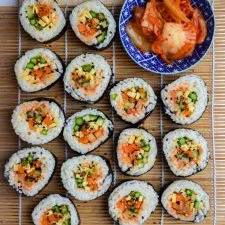
These Korean kimbap rolls wrap sesame-seasoned rice, egg and vegetables in sheets of seaweed. They make a colourful packed lunch or picnic dish, and the fillings can be arranged before rolling for a satisfying mix of textures in every slice.
Ingredients
- 125 g (4.5 oz)sushi rice
- 125 g (4.5 oz)jasmine rice
- 1/2 tbsp, plus extra for assemblytoasted sesame oil
- 1/2 tspfine sea salt
- 3 sheetsKorean nori seaweed
- 2eggs
- to tastesea salt
- to tastelight oil
- 1 largecarrot
- 6 thinasparagus spears
- 1/4English cucumber
- 3 tbspkimchee
- to tastetoasted sesame seeds
Instructions
- 1
Cook the rice
Put both types of rice and 350 ml cold water in a small saucepan with a lid. Bring to the boil, reduce to a simmer, cover and cook for 10 minutes.
- 2
Steam off heat
Take the pan off the heat without lifting the lid. Leave the rice to steam, covered, for 15 minutes.
- 3
Season the rice
Use a metal spoon to fold the 1/2 tsp fine sea salt and 1/2 tbsp toasted sesame oil into the rice. Set it aside uncovered to cool.
- 4
Cook the egg
Beat the eggs with a little sea salt. Heat a splash of light oil in a small non-stick frying pan over a medium-high heat, then cook the egg in a thin layer for 2–3 minutes on each side. Slide it out to cool, then cut it into thin ribbons.
- 5
Prepare vegetables
Peel the carrot and cut it into very thin batons. Snap the woody ends off the asparagus.
- 6
Cook the vegetables
Add a little more light oil to the pan and cook the carrot over a high heat for a few minutes, until softened with some bite and lightly charred. Set it aside and cook the asparagus in the same way. Cut the cucumber into batons without peeling it.
- 7
Spread the rice
Set a sheet of nori shiny side down on a bamboo sushi mat. With a bamboo paddle or wet fingers, press one-third of the rice over the sheet, leaving about 2 cm clear at the far edge.
- 8
Add the fillings
Arrange one-third of each filling down the middle of the rice and scatter over a generous amount of toasted sesame seeds.
- 9
Roll the kimbap
Starting from the edge nearest you, use the mat to roll the kimbap tightly away from you, keeping the mat out of the roll. Let the roll fall out of the mat and leave it seam-side down to rest. Repeat with the other two sheets and the remaining fillings.
- 10
Slice and serve
Move the rolls to a chopping board. Brush a very sharp knife with a little toasted sesame oil before slicing, adding more oil to the knife between rolls.
What is kimbap?
Kimbap is a Korean dish of rice and fillings rolled in dried seaweed, then sliced into rounds. Its name refers to seaweed and rice, and it is commonly packed for meals away from home.
This version combines two kinds of rice with egg, vegetables and kimchee. Sesame oil seasons the rice, while the range of fillings brings both fresh crunch and savoury depth.
Nutrition and macros by portion
The nutrition label shows one serving as written: 640 calories, 18g protein, 105g carbs, 17g fat.
| Portion | Adjustment | kcal | Protein | Carbs | Fat |
|---|---|---|---|---|---|
| Lighter | Use less sesame oil | 448 kcal | 13g | 74g | 12g |
| This serving | As written | 640 kcal | 18g | 105g | 17g |
| Hungry | Serve a larger portion | 960 kcal | 27g | 158g | 26g |
Most of the carbohydrates come from the rice, while the eggs contribute protein and the sesame oil supplies much of the fat. Vegetables add some fibre, and kimchee and salt contribute sodium. Pair a serving with extra fresh vegetables or a simple soup to round out the meal.
Why use two types of rice?
Rice blend: sushi rice helps the grains cling together, while jasmine rice contributes its own fragrance. Cooking them together gives the filling a cohesive texture for rolling.
Seasoning: fold in the sesame oil and salt while the rice is still warm so they distribute evenly. Let it cool uncovered before assembly, or warmth and steam can soften the nori.
Preparing the fillings
Egg ribbons: cook the beaten egg as a thin layer and let it cool before slicing. Thin strips are easier to line up in the roll than a thick omelette.
Vegetables: cut the carrot into slender batons so it softens quickly in the pan. Cook the carrot and asparagus separately, and keep the cucumber raw for a fresh, crisp contrast.
Getting a tight roll
Rice layer: wet fingers or a bamboo paddle help press the rice into an even layer without sticking. Leave the far edge clear so the filling does not push out as you roll.
Rolling: use the mat to guide the nori firmly around the filling, keeping the mat on the outside. Rest each roll seam-side down to help it hold its shape before slicing.
Slicing without squashing
A very sharp knife makes neat rounds without crushing the rice or dragging the fillings through the seaweed. Brush the blade with sesame oil and add a little more between rolls as directed.
If the rolls feel loose, use a gentle, steady sawing motion rather than pressing straight down. Wipe the blade clean if rice or filling builds up on it.
Serving and timing
The rice takes 25 minutes to cook and steam, followed by time to cool; meanwhile, you can prepare the egg and vegetables. Set out the fillings once they are cool enough to handle so assembly is straightforward.
Serve the sliced kimbap as a packed lunch or picnic meal. It also works alongside a light soup or extra vegetables if you want a more substantial spread.
Recipe notes & tips
- Cool the rice before spreading it over the nori so the seaweed stays firm.
- Keep the rice layer even and leave the far edge clear for a cleaner seal.
- Cut the carrot and cucumber into similar-sized batons for more even rolls.
- Let the cooked egg and vegetables cool before placing them on the rice.
- Use damp fingers when pressing rice onto the seaweed to reduce sticking.
- Rest each roll seam-side down before cutting so it is less likely to unroll.
Variations
- More vegetables: Add thin strips of another crisp vegetable alongside the listed fillings.
- Extra kimchee: Increase the kimchee for a more pronounced tangy, savoury filling.
- Mushroom filling: Cook sliced mushrooms until tender and use them in place of some of the vegetables.
- Different greens: Swap the asparagus for a similar amount of cooked spinach, squeezed dry before rolling.
- Sesame finish: Scatter extra toasted sesame seeds over the cut rolls just before serving.
Common mistakes to avoid
- Hot rice: It can soften the nori; leave it uncovered until cool before assembling.
- Wet fillings: Excess moisture can make the seaweed fragile; let cooked ingredients cool and drain them well.
- Overfilled sheets: Too much filling makes the roll hard to close; divide the ingredients evenly between the three sheets.
- Uneven rice layer: Thick patches make rolling awkward; spread the rice in a thin, consistent layer.
- Loose rolling: The slices may fall apart; guide the roll firmly with the mat while keeping the mat outside.
- Dull knife: It can squash the roll; use a very sharp blade and oil it between rolls.
How to store
Store leftover kimbap in an airtight container in the fridge and eat within 1 day for the best texture. The rice and vegetables will firm up when chilled; bring the rolls towards room temperature before serving, as reheating can soften the nori and change the texture.
Frequently asked questions
Can I make the rice ahead?
You can cook the rice ahead and cool it before assembly, but store it covered in the fridge and use it promptly. Let it lose its chill before spreading so it is easier to handle.
Do I need a bamboo rolling mat?
A mat makes it easier to shape a firm, even roll, but you can roll carefully by hand. Keep the filling centred and use the nori edge to guide the roll.
Can I leave out the kimchee?
Yes. The rolls will still work without it; use the listed vegetables and egg as the fillings.
How do I stop the rice sticking to my fingers?
Use wet fingers or a bamboo sushi paddle to spread the rice. Re-wet your fingers as needed, without making the nori soggy.
Can I use a different rice?
The recipe uses sushi rice and jasmine rice together. Changing the blend may affect how well the grains cling, so keep the rice layer compact when rolling.
Cook it from the original
This recipe comes from rachelphipps.com. Their page has the author’s own photos, notes and tips — the best place to cook it from.
Open the recipe on rachelphipps.com