
Challah Recipe
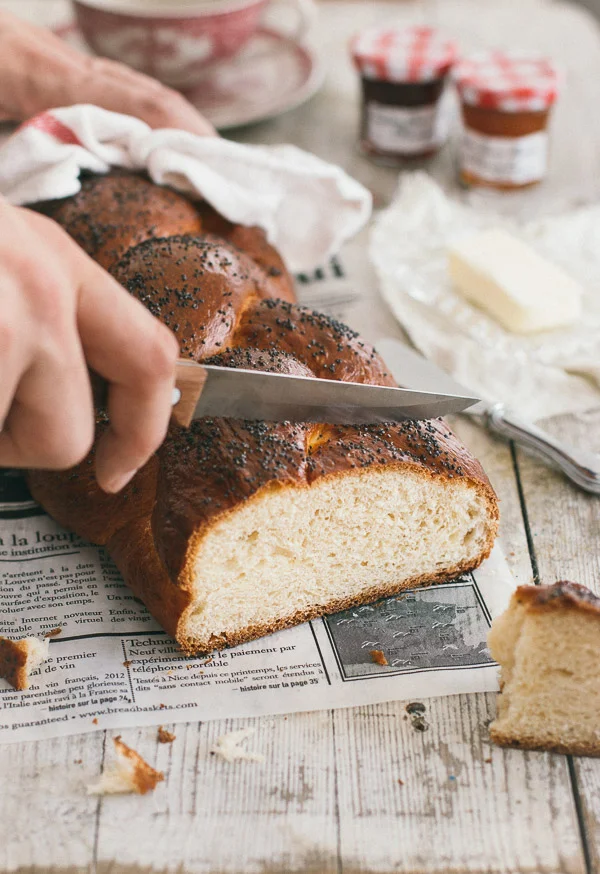
Challah is a soft, enriched bread with a glossy, seeded crust and a distinctive braid. This recipe makes two or three loaves, with a tender crumb that works for sharing fresh or turning into French toast the next day.
Ingredients
- 900 g (6½ cups), plus more as neededplain flour
- 100 g (½ cup), or 50 g sugar plus 60 ml honeygranulated sugar
- 14 g (1½ tablespoons)instant dried yeast
- 2½ teaspoonssalt
- 4 largeeggs
- 160 ml (⅔ cup)vegetable or rapeseed oil
- 270 ml (1 cup plus 2 tablespoons)lukewarm water
- 1 egg plus 15 ml (1 tablespoon) wateregg and water, for brushing
- To tastesesame or poppy seeds
Instructions
- 1
Mix the dough
In a mixer bowl, combine the flour, sugar and yeast. Mix in the salt, then add the eggs, oil and 270 ml lukewarm water. Attach a dough hook and mix on low for 1–2 minutes, until the dough begins to come together. Add a little water if it seems dry, or a little flour if it seems too wet.
- 2
Knead until elastic
Knead on medium-low for about 8 minutes, until the dough is soft and elastic and pulls away from the sides of the bowl. It may still stick to the bottom.
- 3
Let it rise
Put the dough in a lightly greased bowl and cover with cling film. Leave in a warm place for 1–2 hours, or until doubled in size.
- 4
Braid and prove
Line a baking tray with baking paper. Divide the risen dough into two or three equal pieces and shape each into a braided loaf. Set them on the tray with as much space between them as possible, cover loosely with cling film and leave for about 60 minutes, or until nearly doubled in size.
- 5
Heat the oven
Preheat the oven to 180°C.
- 6
Brush and bake
Beat 1 egg with 1 tablespoon water and brush it over the loaves, then scatter with seeds. Bake for 30 minutes, or until golden brown. A skewer inserted into the centre should come out clean; if using an instant-read thermometer, the centre should reach 90°C. Cool completely on a wire rack before slicing.
- 7
Store the bread
Challah is best on the day it is made, but it can be frozen for up to 2 months.
What is challah?
Challah is a braided, enriched bread associated with Jewish meals and traditions. Its dough is made with eggs and oil, giving it a softer, richer crumb than a basic lean loaf.
This version uses instant yeast and a straightforward mixer method. The two rises give the dough time to expand, while the braid and egg wash create its familiar shape and sheen.
Nutrition and macros by portion
The nutrition label shows one serving as written: 2670 calories, 75g protein, 400g carbs, 84g fat.
| Portion | Adjustment | kcal | Protein | Carbs | Fat |
|---|---|---|---|---|---|
| Lighter | Smaller bread portion | 1869 kcal | 53g | 280g | 59g |
| This serving | As written | 2670 kcal | 75g | 400g | 84g |
| Hungry | Larger bread portion | 4005 kcal | 113g | 600g | 126g |
The flour and sugar supply most of the carbohydrates, while the oil and eggs contribute much of the fat; eggs and flour also provide protein. The stated two servings make very large portions for this batch, so balance a slice with a substantial savoury dish or share a loaf among more people.
Getting the dough right
Flour: The recipe starts with 900 g, with a little extra available for adjustment. Add any extra sparingly; too much can make the finished loaf dense.
Water: Lukewarm water helps bring the ingredients together. Add it gradually if the dough feels dry, and use a little flour if it is unusually wet.
Kneading and rising
Kneading: Allow about 8 minutes at medium-low speed. The dough should become elastic and pull away from the bowl's sides, though it can still cling to the bottom.
First rise: Leave the covered bowl somewhere warm for 1–2 hours. Look for the dough to double rather than relying on the clock alone, since room temperature affects the pace.
Braiding and the second rise
Shaping: Divide the dough into two or three equal portions, then braid each one. The recipe does not specify a braid pattern, so use a simple three-strand braid if that is easiest.
Spacing: Leave plenty of room between the loaves on the lined tray. They expand during the roughly 60-minute second rise and again in the oven.
A glossy finish and baked-through centre
Egg wash: Brush the tops with the beaten egg and water mixture before adding seeds. This gives the crust its glossy finish and helps the seeds adhere.
Doneness: The loaves should be golden after about 30 minutes. Check the centre with a skewer, or use an instant-read thermometer and look for 90°C.
Serving and using leftovers
Serving: Let the loaves cool completely on a wire rack before slicing, so the crumb can settle. Serve fresh with a savoury meal or a sweet spread.
Leftovers: Challah is at its best on the day it is baked. Once it begins to stale, slices are useful for French toast or toasted bread.
Recipe notes & tips
- Weigh the flour for a more consistent dough.
- Keep any flour or water adjustments small and gradual.
- Use a lightly oiled bowl so the risen dough releases easily.
- Leave generous gaps between the shaped loaves on the tray.
- Cool the bread fully before slicing to help it hold its shape.
- Freeze loaves promptly if you will not eat them within a day.
Variations
- Honey option: Replace the sugar with 50 g sugar and 60 ml honey as specified.
- Sesame topping: Scatter sesame seeds over the egg-washed loaves before baking.
- Poppy topping: Use poppy seeds instead of sesame seeds for a different finish.
- Smaller loaves: Divide the dough into three pieces rather than two and watch for doneness.
- Plain crust: Leave off the seeds while keeping the egg wash for a glossy top.
Common mistakes to avoid
- Adding too much flour: The dough can turn heavy; add extra only a little at a time.
- Skipping the full knead: The dough may lack elasticity; knead for about 8 minutes and check its texture.
- Rushing the first rise: Wait until the dough has doubled, even if that takes the full 2 hours.
- Crowding the tray: The loaves need room to expand; space them as widely as the tray allows.
- Slicing while hot: The crumb can compress; wait until the loaves have cooled completely.
- Judging only by colour: Check the centre with a skewer or for a temperature of 90°C.
How to store
Challah is best eaten on the day it is baked. Freeze it for up to 2 months; thaw before serving, or warm slices gently in a toaster or oven.
Frequently asked questions
Can I make challah without a mixer?
Yes. Mix the ingredients in a large bowl, then knead by hand until the dough is soft and elastic. The method gives an 8-minute machine knead as a guide, but hand-kneading may take longer.
How do I know when the dough has risen enough?
For the first rise, look for the dough to double in size. After shaping, let the loaves rise for about 60 minutes, until they are nearly doubled.
Can I make two loaves or three?
Yes. Divide the dough into two or three equal pieces, as the recipe directs. Smaller loaves may bake differently, so check their colour and doneness rather than relying only on the stated time.
What can I use instead of sesame seeds?
Use poppy seeds, or leave the topping off. The egg wash can still be used on its own for a shiny crust.
Can I freeze challah?
Yes. The recipe says it can be frozen for up to 2 months. Cool it completely before freezing, then thaw before serving.
Why is the dough still sticking to the bowl?
A little sticking to the bottom is expected. It should still be soft and elastic and pull away from the sides; adjust with small amounts of flour or water only if the dough seems too wet or dry.
Cook it from the original
This recipe comes from prettysimplesweet.com. Their page has the author’s own photos, notes and tips — the best place to cook it from.
Open the recipe on prettysimplesweet.com