
Easy Coconut Kedgeree
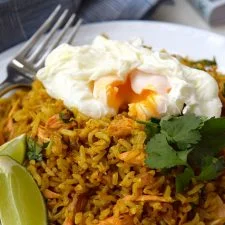
This quick kedgeree combines spiced brown rice, salmon and poached eggs for a British-style breakfast-for-dinner. Coconut oil and a choice of smoked or fresh salmon make it a flexible, lighter take on the classic.
Ingredients
- 1 tbspcoconut oil
- 6spring onions, sliced
- 2 largegarlic cloves, finely chopped
- 1/2red or green chilli, finely chopped
- 1 tspgaram masala
- 1/2 tspground turmeric
- 200 g (14 oz)cold cooked brown rice
- 100 g (7 oz)hot-smoked salmon or 1 salmon fillet portion
- 1 tspcoconut aminos, tamari or dark soy sauce
- to tastesea salt
- 2 tbspcoconut or white wine vinegar
- 2 largeeggs
- 1 small handfulfresh coriander, chopped
- to serveSriracha and lime wedges
Instructions
- 1
Heat the oil
Warm the coconut oil in a large frying pan over a medium-high heat until it shimmers.
- 2
Soften the aromatics
Add the spring onions, chilli and garlic. Fry for a few minutes, until softened but not browned.
- 3
Fry the spices
Stir in the garam masala and turmeric, and cook for about a minute until fragrant.
- 4
Coat the rice
Add the rice and stir until the grains are evenly coated in the spices.
- 5
Warm the salmon
Flake the salmon into the pan and cook until heated through. If using a raw smoked or plain salmon fillet, wrap it in foil with a splash of water or white wine and a little salt and pepper, then bake at 200°C (390°F) for 10 minutes before adding.
- 6
Season the rice
Add the coconut aminos, tamari or soy sauce, then taste and add a little sea salt as needed.
- 7
Poach the eggs
Set the rice aside and keep it warm. Add the vinegar to a pan of just-boiled water and place it over a medium heat; when small bubbles appear, swirl the water and slip in an egg. Crack each egg into a ramekin first, then poach for 3–4 minutes. Repeat with the other egg.
- 8
Serve the kedgeree
Stir the chopped coriander through the rice and divide it between two plates. Top each with a poached egg and extra coriander leaves, and serve with Sriracha and lime wedges on the side.
What is coconut kedgeree?
Kedgeree is a British dish of rice, fish and spices, with roots in the South Asian dish khichdi and its later adaptation in Britain. It is often served with egg and makes an easy meal at any time of day.
This version uses brown rice and coconut oil, with salmon in place of the more traditional smoked haddock. Poached eggs and a choice of chilli sauce let each serving be finished to taste.
Nutrition and macros by portion
The nutrition label shows one serving as written: 390 calories, 23g protein, 36g carbs, 17g fat.
| Portion | Adjustment | kcal | Protein | Carbs | Fat |
|---|---|---|---|---|---|
| Lighter | Use less coconut oil | 273 kcal | 16g | 25g | 12g |
| This serving | As written | 390 kcal | 23g | 36g | 17g |
| Hungry | Add extra brown rice | 585 kcal | 35g | 54g | 26g |
The brown rice supplies most of the carbohydrates, while the salmon and eggs contribute protein. Coconut oil and the egg yolks are the main sources of fat. Add a generous side of greens or other vegetables to round out the plate.
Build the flavour gently
Aromatics: soften the spring onions, garlic and chilli without browning them; this keeps their flavour mellow and gives the spices a fragrant base.
Spices: a brief fry in the oil brings out the aroma of the garam masala and turmeric. Keep them moving and add the rice promptly so they do not catch.
Choose your salmon
Hot-smoked salmon: flake it into the rice and warm it through, taking care not to break it up too finely.
Fresh fillet: cook it before adding; the foil parcel method in the recipe keeps the fish moist. Check that it is cooked through before flaking it into the pan.
Keep the rice separate
Cold cooked rice is easier to stir through the pan without turning mushy. Break up any compacted clumps as you add it, then toss until the grains are coated in the spiced oil.
Use a wide frying pan so the rice heats evenly. Once the salmon is warm, take the pan off the heat or keep it on low while you poach the eggs.
Poach the eggs with control
Water: bring it to the boil, then lower the heat so only small bubbles form. A vigorous boil can tear the whites apart.
Eggs: crack each one into a ramekin before sliding it into the swirled water. Poach for 3–4 minutes, then lift it out when the white is set and the yolk is still soft.
Serve with a fresh finish
Stir the coriander through just before plating so it keeps its fresh, herbal character. A little extra leaf garnish adds colour and freshness alongside the warm spices.
Offer lime wedges and Sriracha at the table rather than adding them to the pan. The lime brightens the rice, while everyone can choose how much heat to add.
Recipe notes & tips
- Use fully chilled, cooked rice so it stays distinct as you stir it through the pan.
- Have the fish cooked and flaked before you start poaching the eggs.
- Taste before adding salt, as smoked salmon and soy-based seasonings can already be salty.
- Crack each egg into a ramekin to make it easier to slide neatly into the water.
- Keep the poaching water at a gentle simmer rather than a rolling boil.
- Serve the Sriracha separately so diners can adjust the heat themselves.
Variations
- Use fresh salmon: bake a fillet in foil as described, then flake it into the spiced rice.
- Change the chilli: use less for a milder dish or add extra for more heat.
- Try another herb: use chopped parsley in place of coriander for a different fresh finish.
- Add peas: stir cooked peas through the rice as it warms for extra colour and sweetness.
- Swap the rice: use cold cooked white rice if that is what you have to hand.
Common mistakes to avoid
- Browning the aromatics: cook them only until softened so the garlic does not turn bitter.
- Burning the spices: stir them for about a minute, then add the rice as soon as they smell fragrant.
- Mashing the rice: use cold cooked rice and fold it through gently to keep the grains intact.
- Overcooking the salmon: warm it just until heated through, since further cooking can dry it out.
- Boiling the eggs too hard: lower the heat until only small bubbles form before adding them.
- Adding too much salt: taste after adding the coconut aminos, tamari or soy sauce, then season gradually.
How to store
Refrigerate leftover rice and salmon promptly in a covered container and eat within 2 days. Reheat the rice and salmon thoroughly in a pan or microwave; poach fresh eggs for serving, as poached eggs are best eaten straight away.
Frequently asked questions
Can I make this with fresh salmon?
Yes. Cook a salmon fillet first, as described in the method, then flake it into the rice and heat it through.
Can I use freshly cooked rice?
Cold cooked rice is easier to stir through without becoming sticky, so chill freshly cooked rice before using it if you can.
How do I know when a poached egg is ready?
After 3–4 minutes, the white should be set while the yolk remains soft. Leave it in a little longer if you prefer a firmer yolk.
What can I use instead of coconut aminos?
Use tamari or dark soy sauce as listed. Both bring savoury seasoning, so taste the rice before adding extra salt.
Is this kedgeree very spicy?
The chilli and Sriracha provide the heat, so you can reduce or omit the chilli and serve Sriracha at the table.
What should I serve with kedgeree?
Lime wedges are included for a bright finish. A simple side of greens or vegetables also works well.
Cook it from the original
This recipe comes from rachelphipps.com. Their page has the author’s own photos, notes and tips — the best place to cook it from.
Open the recipe on rachelphipps.com