
Dinner Rolls
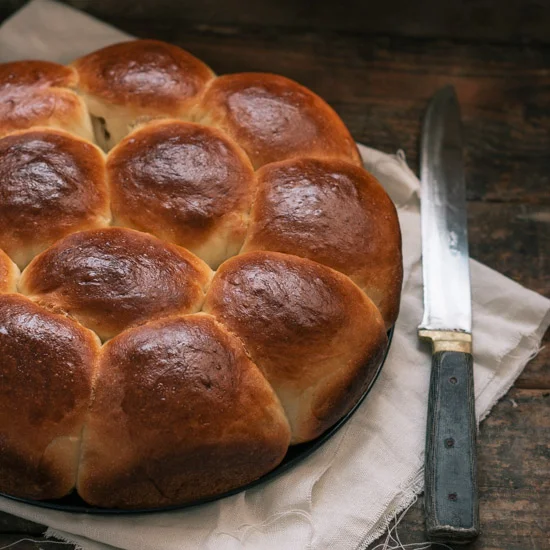
These soft, fluffy dinner rolls are made from an enriched yeast dough with milk, butter and egg. Make them for a family meal or holiday table, where they’re just as good warm as they are at room temperature.
Ingredients
- 60 ml (¼ cup)water, lukewarm
- 7 g (2¼ teaspoons)active dried yeast
- 180 ml (¾ cup)whole milk
- 75 g (⅓ cup)butter
- 1 largeegg
- 50 g (¼ cup)granulated sugar
- 1¼ teaspoonssalt
- 450 g (3¼ cups), plus a few extra tablespoonsplain flour
- 1 egg or 1–2 tablespoonsegg or melted butter, for brushing the tops
Instructions
- 1
Proof the yeast
Put the lukewarm water in a small bowl or cup, sprinkle the yeast over it and stir gently. Leave for 5–10 minutes until frothy. If it does not bubble, discard it and repeat with fresh yeast.
- 2
Warm the milk
Heat the milk in a small saucepan just until it boils, then take it off the heat. Add the butter and stir until melted.
- 3
Combine the dough
Put the lukewarm milk mixture, egg, sugar and salt in a stand-mixer bowl and whisk by hand. Stir in the yeast mixture, then add 450 g flour. Fit the mixer with a dough hook and mix on low for 1–2 minutes, until combined and a dough forms; alternatively, mix by hand with a wooden spoon.
- 4
Knead the dough
Knead for about 3 minutes on medium-low, adding extra flour 1 tablespoon at a time as needed, until the dough is moist and tacky but does not stick to your hands when pressed. Then knead for a further 5 minutes in the mixer, or 7–8 minutes by hand on a floured surface, until elastic and pulling away from the bowl sides while still sticking to the bottom. Keep the dough slightly sticky; if it seems too dry, add a little water or milk.
- 5
Let it rise
Put the dough in a lightly greased bowl and cover with plastic wrap. Leave it in a warm place for 1½–2 hours, or until doubled in size.
- 6
Shape the rolls
Grease a 25 cm (10-inch) round tin. Gently press the risen dough to release the air, divide it into 12 equal portions and shape each into a ball. Arrange 9 around the edge and 3 in the middle, leaving gaps between them. Cover and leave for 45–60 minutes, or until doubled in size again.
- 7
Preheat the oven
Preheat the oven to 190°C (375°F).
- 8
Brush and bake
Brush the rolls with melted butter or with an egg wash made by mixing an egg with 1 tablespoon water. Bake for 20 minutes, or until browned on top and hollow-sounding when tapped; a skewer inserted into the rolls should come out clean. If they brown too quickly, cover loosely with foil. Cool on a wire rack until warm.
- 9
Serve the rolls
Serve warm or at room temperature.
- 10
Freeze leftovers
The rolls are best on the day they are made, but they can be frozen for up to 2 months.
- 11
Check water temperature
For proofing the yeast, lukewarm water should be about 43–46°C (110–115°F). If you do not have a thermometer, it should feel lukewarm to the touch; hotter water can kill the yeast.
What are dinner rolls?
Dinner rolls are small, soft bread rolls served alongside a meal. They belong to a broad tradition of enriched breads, where ingredients such as milk, butter and egg make the crumb tender.
This version uses a lightly sweetened yeast dough and bakes the shaped rolls close together in a round tin. That arrangement gives them soft sides and makes them easy to pull apart.
Nutrition and macros by portion
The nutrition label shows one serving as written: 213 calories, 6g protein, 33g carbs, 7g fat.
| Portion | Adjustment | kcal | Protein | Carbs | Fat |
|---|---|---|---|---|---|
| Lighter | Use less butter | 149 kcal | 4g | 23g | 5g |
| This serving | As written | 213 kcal | 6g | 33g | 7g |
| Hungry | Serve an extra roll | 320 kcal | 8g | 50g | 11g |
Most of the carbohydrates come from the flour and sugar, while butter, milk and egg contribute much of the fat. Flour, milk and egg provide the protein. Pair a roll with a generous serving of vegetables and a protein-rich main for a more balanced plate.
Build a tender dough
Milk and butter: Heating the milk just to boiling and stirring in the butter melts it smoothly. Let the mixture cool to lukewarm before combining it with the egg and yeast mixture.
Flour: Add the extra flour gradually rather than tipping it all in at once. The dough should remain slightly tacky, which helps the baked rolls stay soft.
Give the yeast time
Proofing: The yeast should become frothy after 5–10 minutes in lukewarm water. If it stays flat, start again with fresh yeast rather than relying on it to raise the dough.
First rise: Leave the covered dough in a warm place until doubled, allowing 1½–2 hours. The time can vary, so use the change in size as your cue.
Knead for elasticity
Texture: At first, the dough may feel sticky and loose. Kneading develops its structure; stop adding flour once it is tacky but no longer clings to your hands when pressed.
By hand: Knead on a floured surface for 7–8 minutes after the initial mixing. Add only enough flour to make the dough manageable, since a dry dough can produce firmer rolls.
Shape and proof again
Even portions: Divide the dough into 12 pieces of similar size so they bake at roughly the same rate. Shape each portion into a ball, tucking the dough underneath to create a smooth top.
Second rise: Arrange the balls with gaps between them and leave them covered for 45–60 minutes, until doubled. They will expand further in the oven and may touch as they bake.
Check for doneness
Colour and sound: The tops should be browned, and a roll should sound hollow when tapped. If the tops colour too quickly before the rolls are done, cover them loosely with foil.
Skewer test: Insert a skewer into a roll and check that it comes out clean. Cool the rolls on a wire rack until warm so their bottoms do not stay trapped against the tin.
What to serve with them
These rolls work well beside soup, stew or a roast dinner, and they can also be split and filled with leftovers. Serve them warm with butter, or let them cool and bring them to the table at room temperature.
Recipe notes & tips
- Use water that is lukewarm, not hot, when proofing the yeast.
- Let the milk and butter mixture cool before adding it to the egg.
- Add flour in small amounts so the dough does not become dry.
- Use the dough’s doubled size, rather than the clock alone, to judge each rise.
- Leave space between the shaped rolls so they have room to expand.
- Cover the tin loosely with foil if the tops brown before the rolls are cooked through.
Variations
- Herb rolls: Knead finely chopped soft herbs into the dough.
- Garlic finish: Brush the baked rolls with melted butter mixed with crushed garlic.
- Seeded tops: Sprinkle seeds over the egg wash or melted butter before baking.
- Wholemeal blend: Replace part of the plain flour with wholemeal flour, adding liquid gradually if needed.
- Sweeter rolls: Increase the sugar slightly for rolls suited to a sweet breakfast spread.
Common mistakes to avoid
- Water too hot: It can stop the yeast working; use lukewarm water around 43–46°C.
- Dead yeast: If the mixture does not turn frothy after 5–10 minutes, discard it and proof fresh yeast.
- Too much flour: The dough can turn firm; add flour a tablespoon at a time and keep it slightly tacky.
- Short first rise: The rolls may be dense; wait until the dough has doubled before shaping.
- Crowded shaping: Rolls can bake unevenly if packed together too early; leave gaps between the balls.
- Over-browning: The tops may darken before the centre is baked; cover loosely with foil and continue baking.
How to store
These rolls are best on the day they are made. Freeze them for up to 2 months in a sealed freezer-safe container; thaw and warm gently in the oven before serving.
Frequently asked questions
Can I make the dough by hand?
Yes. Mix with a wooden spoon at first, then knead on a floured surface for 7–8 minutes.
How can I tell if the dough has risen enough?
It should be about double its original size after each rise. The first rise usually takes 1½–2 hours, and the second 45–60 minutes.
Can I use melted butter instead of egg wash?
Yes. Brush the tops with melted butter for a softer finish, or use egg wash for a shinier look.
What if the dough feels too sticky?
Keep kneading first, since the dough becomes easier to handle as it develops. If needed, add flour a tablespoon at a time, stopping when it is tacky but does not stick to your hands when pressed.
Can I freeze the baked rolls?
Yes. Freeze them for up to 2 months, then thaw and warm gently before serving.
How do I know the rolls are baked?
Look for browned tops, a hollow sound when tapped and a skewer that comes out clean. Cover loosely with foil if they brown too quickly.
Cook it from the original
This recipe comes from prettysimplesweet.com. Their page has the author’s own photos, notes and tips — the best place to cook it from.
Open the recipe on prettysimplesweet.com