
Green Curry with Chicken and Eggplant | Gaeng Keow Wan Gai | แกงเขียวหวานไก่
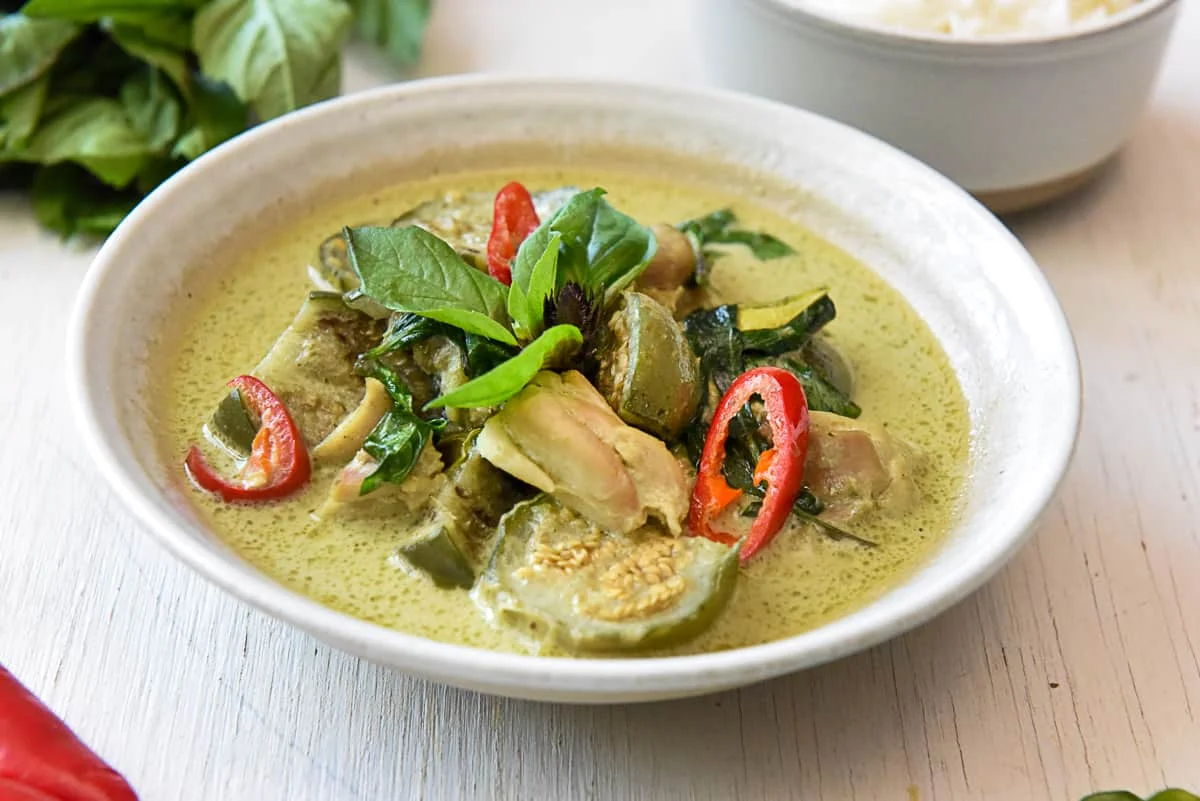
This Thai green curry combines chicken and Thai eggplant in a fragrant, coconut-rich sauce, finished with red pepper and Thai basil. Serve it with jasmine rice or khanom jeen noodles for a warming meal with plenty of fresh, aromatic flavour.
Ingredients
- 240 ml (1 cup), divided into 80 ml (⅓ cup) and 160 ml (⅔ cup)coconut milk
- 2 tablespoonsgreen curry paste
- 120 ml (½ cup)chicken, thinly sliced
- 240–480 ml (1–2 cups)water
- 2makrut lime leaves, deveined and torn
- 300 ml (2 cups)Thai eggplant, halved
- 1red pepper, sliced diagonally
- 120 ml (½ cup)Thai basil leaves
- 1 teaspoonfish sauce
- ½ teaspoonsugar
Instructions
- 1
Prepare ingredients
Cut the chicken into thin, bite-sized pieces against the grain. Remove the eggplant stems and halve the eggplants, slice the red pepper diagonally, and pick the Thai basil leaves from their stems. Devein the makrut lime leaves and tear them in half.
- 2
Heat coconut cream
Scoop about 80 ml (⅓ cup) of the thick coconut cream from the top of the can into a saucepan, keeping the thinner milk for later. Heat over medium-high until the cream separates into oily and milky layers.
- 3
Fry curry paste
Stir the green curry paste into the coconut cream until combined. Fry for about 3–5 minutes, until the paste is very fragrant.
- 4
Cook curry ingredients
Add the chicken and turn it in the curry paste; cook until cooked through. Pour in the remaining coconut milk and 240 ml (1 cup) water, then bring the curry back to a simmer. Add the eggplant and makrut lime leaves and cook until the eggplant is tender. If needed, add another 120–240 ml (½–1 cup) water to keep the curry soup-like. When the ingredients are cooked through and tender, add the red pepper and Thai basil.
- 5
Adjust seasoning
Taste the curry and decide whether it needs more seasoning. If needed, add fish sauce and/or sugar to round out the flavour.
- 6
Serve curry
Take the curry off the heat and serve with jasmine rice or khanom jeen noodles.
What is green curry with chicken?
Gaeng keow wan gai is a Thai green curry made with chicken; its name is commonly rendered as green sweet curry with chicken. It belongs to Thailand’s family of coconut-milk curries, where curry paste brings chilli, herbs and aromatics together in a rich, fragrant sauce.
This version balances the heat and aroma of green curry paste with tender eggplant, red pepper and Thai basil. Cooking the paste in separated coconut cream first helps release its fragrance before the thinner coconut milk builds the broth.
Nutrition and macros by portion
The nutrition label shows one serving as written: 179 calories, 7g protein, 11g carbs, 13g fat.
| Portion | Adjustment | kcal | Protein | Carbs | Fat |
|---|---|---|---|---|---|
| Lighter | Use less coconut milk | 125 kcal | 5g | 8g | 9g |
| This serving | As written | 179 kcal | 7g | 11g | 13g |
| Hungry | Larger portion with rice | 269 kcal | 11g | 17g | 20g |
The coconut milk contributes most of the fat, while the chicken provides protein and the curry paste, vegetables and coconut milk contribute carbohydrates. Serve a portion with jasmine rice or noodles and add extra vegetables alongside if you want a more substantial plate.
Choose and prepare the ingredients
Coconut milk: The thick cream from the top of the can is used first, while the thinner milk is saved to loosen the curry later. If the can has not separated, chill it first so the cream is easier to scoop off.
Chicken: Slice it thinly against the grain so the pieces cook quickly and are easier to eat. Keep the pieces fairly even in size for more consistent cooking.
Thai eggplant: Halving the small eggplants exposes more surface to the simmering curry. Makrut lime leaves and Thai basil bring distinctive citrusy and anise-like aromas.
Fry the paste in coconut cream
The first stage is to heat the thick coconut cream until it separates, then fry the curry paste in it. Stir regularly so the paste becomes aromatic without catching on the bottom of the pan.
Look for a fragrant smell and a visible oily layer; the stated frying time is about 3–5 minutes. If the cream is not separating, continue heating gently and avoid rushing straight to the thinner milk.
Get the broth and vegetables right
Water: The recipe begins with 240 ml (1 cup) and allows another 120–240 ml (½–1 cup) if needed. Add the extra gradually, aiming for a soup-like consistency rather than a thick sauce.
Eggplant: Simmer it with the lime leaves until tender. The exact cooking time depends on the size and freshness of the eggplant, so check its texture as it cooks.
Red pepper and basil: These go in near the end, after the other ingredients are cooked through. This keeps them from spending the whole simmer in the pan.
Season to taste
Fish sauce adds savoury depth, while a little sugar can soften and round out the curry’s flavour. Taste before adding either, as curry pastes can vary in saltiness and heat.
Add the seasonings gradually and taste again. The aim is to balance the existing flavours rather than make the curry noticeably sweet or salty.
Serve it with rice or noodles
Jasmine rice is a classic accompaniment and soaks up the fragrant coconut broth. Khanom jeen noodles are another suggested option and make the curry feel more like a noodle meal.
Serve the curry while hot, with the eggplant, chicken and broth distributed across portions. The recipe serves four.
Recipe notes & tips
- Chill the coconut milk can beforehand if the cream and thinner milk are not clearly separated.
- Slice the chicken against the grain into evenly sized pieces for quick, even cooking.
- Stir the curry paste frequently as it fries so it does not catch on the pan.
- Add the extra water in small amounts to keep the curry soup-like without making it too thin.
- Taste before adding fish sauce or sugar, then adjust in small increments.
- Add the Thai basil just before the curry is finished to preserve its fresh aroma.
Variations
- Adjust the heat: Use less green curry paste for a milder curry, or add more if you prefer it hotter.
- Add more vegetables: Include extra Thai eggplant or red pepper while keeping the broth consistency in mind.
- Use another protein: Swap the chicken for thinly sliced prawns and cook them until just done.
- Make it vegetarian: Replace the chicken with tofu and use a suitable vegetarian alternative to fish sauce.
- Finish with lime: Add a squeeze of lime at the table for a brighter, tangier finish.
Common mistakes to avoid
- Skipping the cream separation: Heat the thick coconut cream until it separates before frying the paste.
- Scorching the paste: Stir it regularly over medium-high heat and stop once it is fragrant.
- Adding all the water at once: Start with 240 ml and add more only if needed to maintain a soup-like curry.
- Overcooking the pepper and basil: Add them after the eggplant and chicken are cooked through.
- Seasoning without tasting: Curry paste varies, so taste first and add fish sauce or sugar gradually.
How to store
Refrigerate leftover curry in a covered container and use within 3 days. Reheat gently in a saucepan until piping hot, adding a little water if the broth has thickened; store rice or noodles separately where possible.
Frequently asked questions
Can I use regular aubergine instead of Thai eggplant?
Yes. Cut it into small, even pieces so it cooks through in a similar way, and check for tenderness as it simmers.
What if my coconut milk has not separated?
Chill the can and try scooping the firmer cream from the top again. If it remains blended, use the thickest portion available and heat it gently before adding the curry paste.
How do I keep the curry from becoming too thick?
Begin with 240 ml (1 cup) water and add more in small amounts as the eggplant cooks. The recipe allows up to 480 ml (2 cups) in total.
Can I prepare the curry ahead?
You can make it ahead and refrigerate it, then reheat gently until piping hot. Add fresh Thai basil near the end of reheating for a fresher aroma.
What should I serve with this curry?
Serve it with jasmine rice or khanom jeen noodles, as suggested in the recipe.
Cook it from the original
This recipe comes from rachelcooksthai.com. Their page has the author’s own photos, notes and tips — the best place to cook it from.
Open the recipe on rachelcooksthai.com