
Fig Scones
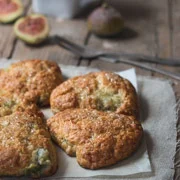
These tender fig scones pair buttery, lightly sweetened dough with fresh or dried figs and a crisp sugar finish. They make a useful bake for breakfast, afternoon tea or a simple snack, and are especially good served warm.
Ingredients
- 280 g (2 cups/10 oz)plain flour
- 15 ml (1 tablespoon)baking powder
- 1.25 ml (1/4 teaspoon)salt
- 75 g (6 tablespoons/2.6 oz)granulated sugar
- 115 g (1/2 cup/1 stick), cold and cut into 6 mm (1/4-inch) piecesbutter
- 1 largeegg
- 120 ml (1/2 cup), plus 15 ml (1 tablespoon) for brushingdouble cream
- 30 ml (2 tablespoons)honey
- 5 ml (1 teaspoon)vanilla extract
- 160–240 ml (2/3–1 cup), choppedfigs, fresh or dried
- To tastecoarse, turbinado or demerara sugar
Instructions
- 1
Prepare the oven
Heat the oven to 200°C (400°F). Line a large baking tray with baking parchment or a silicone baking mat and set it aside.
- 2
Mix dry ingredients
Whisk the flour, baking powder, salt and granulated sugar together in a large bowl. Cut in the cold butter with a pastry blender or your fingertips, or pulse the ingredients in a food processor, until the mixture looks like coarse crumbs. Uneven butter pieces are fine. Stir in the figs gently so they are coated in flour.
- 3
Form the dough
In a small bowl, whisk the egg with 120 ml (1/2 cup) cream, honey and vanilla. Add this to the flour mixture and fold gently with a rubber spatula until a dough starts to form; do not overmix. Turn the dough onto a floured surface and knead gently about 5–6 times, until it comes together into a ball. It may be slightly sticky. Pat it into a 23 cm (9-inch) circle about 2 cm (3/4-inch) thick, then cut into 8 even wedges.
- 4
Brush and bake
Arrange the wedges on the prepared tray. Brush their tops with a little of the remaining cream and sprinkle with coarse sugar. Bake for 15–18 minutes, until golden brown. Set the tray on a wire rack and leave the scones to cool for 10 minutes. While they are still hot, sprinkle them with coarse sugar again for extra crunch.
- 5
Serve the scones
Serve the scones warm or at room temperature.
- 6
Freeze leftovers
The scones are best eaten on the day they are made, but can be frozen for up to 1 month.
What are fig scones?
Scones are a familiar British bake, often served with tea, and can be made plain or with fruit folded into the dough. This version uses figs for soft, sweet pockets against a tender, buttery crumb.
Cream, honey and vanilla give the dough richness and flavour, while a little coarse sugar on top adds crunch. The method keeps handling brief, which helps the wedges bake up tender rather than tough.
Nutrition and macros by portion
The nutrition label shows one serving as written: 340 calories, 5g protein, 48g carbs, 15g fat.
| Portion | Adjustment | kcal | Protein | Carbs | Fat |
|---|---|---|---|---|---|
| Lighter | Use less topping sugar | 238 kcal | 4g | 34g | 11g |
| This serving | As written | 340 kcal | 5g | 48g | 15g |
| Hungry | Serve two scones | 510 kcal | 8g | 72g | 23g |
Most of the carbohydrates come from the flour, sugar, honey and figs; butter and cream provide most of the fat, while the egg and flour contribute some protein. Pair a scone with plain yoghurt or another protein-rich side and fresh fruit for a more balanced plate.
Choosing the figs
Fresh figs: Chop them into small pieces so they distribute through the dough. Handle them gently when folding in, as ripe fruit can soften and break up.
Dried figs: These work well when fresh figs are unavailable and give a chewier bite. Chop them into similar-sized pieces so each wedge gets an even share.
Keep the butter cold
Cold butter: Work it into the flour until you have coarse crumbs, leaving some uneven pieces. Those small pieces help create a tender, flaky texture as the scones bake.
Light touch: Stop mixing once the dough begins to come together. A few gentle kneads are enough to form a ball without developing too much gluten.
Shape without overworking
Sticky dough: A slight stickiness is expected, so use a lightly floured surface and hands rather than adding a lot of extra flour. Too much extra flour can make the baked scones dry.
Even wedges: Pat the dough into a circle of roughly 23 cm (9 inches) and 2 cm (3/4 inch) thick, then cut it into 8 pieces. Keeping the wedges similar in size helps them bake at the same rate.
Look for a golden top
Bake time: Start checking at 15 minutes and continue up to 18 minutes if needed. The tops should be golden brown when the scones are ready.
Sugar finish: Brush the tops with cream before baking so the coarse sugar has a surface to cling to. A second sprinkle while the scones are hot adds another layer of crunch.
Serve them simply
Warm scones are especially inviting, though they are also good at room temperature. Serve them on their own, or alongside tea, coffee or a bowl of yoghurt.
For a more substantial plate, add fresh fruit and a protein-rich accompaniment such as plain yoghurt. The scones are best on the day they are baked.
Recipe notes & tips
- Chill the butter until just before you start mixing so it stays firm in the dough.
- Measure the cream for the dough separately from the tablespoon reserved for brushing.
- Dust the work surface lightly with flour rather than adding extra flour directly to the dough.
- Cut the wedges with a sharp knife and avoid pressing down repeatedly, which can compress the dough.
- Leave space between wedges on the tray so the sides can bake evenly.
- Use the full 18-minute bake only if the scones have not turned golden earlier.
Variations
- Add orange zest: Stir finely grated zest into the dry ingredients for a fragrant citrus note.
- Use dried figs: Chop them finely for chewy fruit pockets when fresh figs are out of season.
- Add chopped nuts: Fold a small handful of walnuts into the dough for extra crunch.
- Add warm spice: Mix a pinch of cinnamon into the flour for a spiced variation.
- Change the topping: Sprinkle with demerara sugar for a coarse, caramel-like crunch.
Common mistakes to avoid
- Warm butter: It blends into the flour instead of leaving distinct pieces; keep it cold and work quickly.
- Overmixing: Too much handling can make the scones firm; fold only until the dough comes together.
- Too much flour on the bench: Excess flour can dry the dough; dust the surface sparingly.
- Uneven wedges: Pieces of very different sizes bake at different rates; divide the circle into 8 similar wedges.
- Skipping the doneness check: Ovens vary; look for golden tops within the 15–18-minute baking window.
How to store
These scones are best eaten on the day they are made. Freeze them for up to 1 month; thaw and warm briefly in the oven before serving.
Frequently asked questions
Can I use fresh or dried figs?
Either works. Chop the figs into small pieces and fold them in gently so they are spread through the dough.
How do I know when the scones are baked?
They should be golden brown after 15–18 minutes in a 200°C oven. Check from 15 minutes onwards.
Why is the dough a little sticky?
A slightly sticky dough is expected with the cream and honey. Use a lightly floured surface and avoid adding a lot of extra flour.
Can I make the scones ahead?
They are best on the day they are baked. You can freeze them for up to 1 month and warm them after thawing.
Can I leave off the coarse sugar?
Yes. The sugar topping adds crunch, but the scones can be baked without it.
Cook it from the original
This recipe comes from prettysimplesweet.com. Their page has the author’s own photos, notes and tips — the best place to cook it from.
Open the recipe on prettysimplesweet.com