
Thai Stirfried Noodles | Pad Thai | ผัดไทย
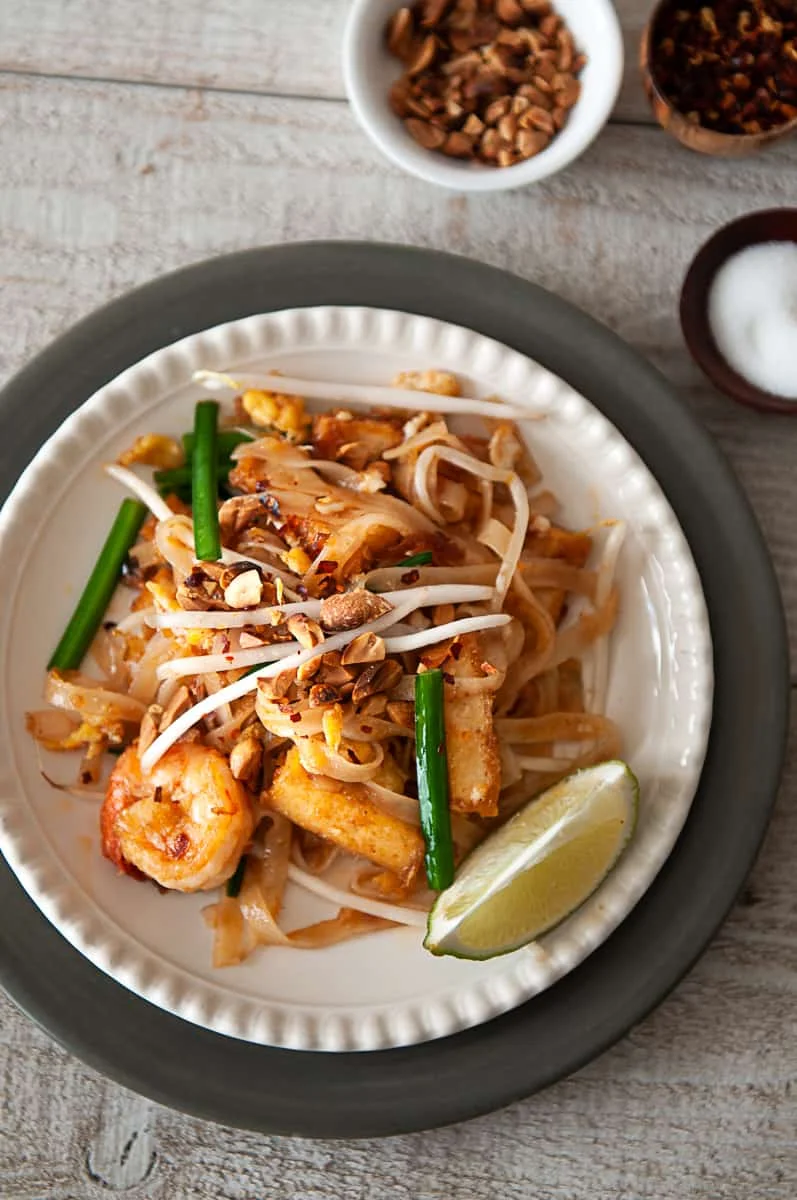
Pad Thai is a Thai stir-fry of chewy rice noodles, a sweet-sour tamarind sauce, egg, tofu and shrimp, finished with peanuts and fresh accompaniments. This single-serving version is a good choice when you want a quick, flavour-packed noodle dish once the sauce and ingredients are ready.
Ingredients
- 15 ml (1 tablespoon)tamarind paste
- 15 ml (1 tablespoon)fish sauce
- 15 ml (1 tablespoon)palm sugar
- 15 ml (1 tablespoon)white sugar
- 5 ml (1 teaspoon)garlic, chopped
- 5 ml (1 teaspoon)shallots, chopped
- 5 ml (1 teaspoon)salted radish, chopped
- 60 ml (¼ cup)fried tofu, sliced into small rectangular pieces
- 3–4 mediumshrimp, peeled and deveined
- 60 ml (4 tablespoons)Pad Thai sauce
- 15 ml (1 tablespoon)shrimp paste in soya bean oil
- 1egg
- 57 g (2 oz)dry medium rice noodles
- 60 ml (¼ cup)bean sprouts
- 60 ml (¼ cup)garlic chives, cut into 2.5 cm (1-inch) pieces
- 10 ml (2 teaspoons)roasted peanuts, chopped
- To servelime slices, roasted chilli flakes and white sugar
Instructions
- 1
Make tamarind paste
To prepare the paste, combine 60 ml (¼ cup) wet tamarind with 120 ml (½ cup) hot water. Work it between your fingers until it forms a paste, then strain out the seeds and fibres.
- 2
Prepare the sauce
Combine the tamarind paste with the fish sauce, palm sugar and white sugar. Warm over medium heat, stirring until everything has dissolved.
- 3
Prepare ingredients
Have the Pad Thai sauce and all the other ingredients ready before you begin cooking; there will not be time to wash, chop or mix things once you start.
- 4
Blanch the noodles
Heat a pot of water over medium heat until small bubbles form on the bottom. Blanch the rice noodles in the water for 6 minutes.
- 5
Cook aromatics
Meanwhile, heat a wok over medium-high heat. Add a little oil and wait until hot, then add the garlic, shallots and salted radish. Sauté until the garlic is golden brown.
- 6
Cook tofu shrimp
Add the fried tofu and shrimp, then sauté until both are cooked through. The noodles should be ready around the same time.
- 7
Toss noodles
Drain the noodles and put them straight into the wok. Add the Pad Thai sauce and shrimp paste in soya bean oil, then stir to combine.
- 8
Scramble the egg
Push the noodles to one side of the wok and scramble the egg in the clear space. When it is cooked, mix it through the noodles.
- 9
Finish and serve
Add the bean sprouts, garlic chives and peanuts. Stir-fry for just a few seconds, until the chives are barely wilted, then take the wok off the heat immediately. Serve with lime slices, roasted chilli flakes and white sugar on the side.
What is Pad Thai?
Pad Thai is a Thai stir-fried noodle dish built around rice noodles and a sauce that balances tamarind’s sourness with sweetness and savoury fish sauce. It became widely known beyond Thailand and is now a familiar Thai restaurant favourite around the world.
This version pairs the noodles with shrimp, tofu and egg, then adds bean sprouts, garlic chives and peanuts for freshness and texture. Lime and optional chilli and sugar let you adjust each bite at the table.
Nutrition and macros by portion
The nutrition label shows one serving as written: 527 calories, 19g protein, 87g carbs, 12g fat.
| Portion | Adjustment | kcal | Protein | Carbs | Fat |
|---|---|---|---|---|---|
| Lighter | Use less sugar and peanuts | 369 kcal | 13g | 61g | 8g |
| This serving | As written | 527 kcal | 19g | 87g | 12g |
| Hungry | Add extra rice noodles | 791 kcal | 29g | 131g | 18g |
The rice noodles and sugars provide most of the carbohydrates, while the tofu, shrimp and egg contribute protein. Cooking oil, peanuts and the sauce ingredients contribute fat; serve with extra fresh vegetables if you want a more balanced plate alongside the noodles.
Get everything ready first
Prep first: chop the garlic, shallots and radish, slice the tofu, and have the shrimp, sauce and garnishes close by. Stir-frying happens quickly, so having everything ready makes it easier to follow the method without overcooking the ingredients.
Balance the sauce
Tamarind: the paste provides the characteristic sour note, while fish sauce adds savoury depth. Palm sugar and white sugar dissolve into the sauce to balance those flavours.
Dissolve: warm the sauce ingredients over medium heat until the sugars have dissolved. Keep the finished sauce ready to add as soon as the noodles go into the wok.
Blanch the noodles carefully
Water temperature: wait for small bubbles to appear on the bottom of the pot rather than bringing it to a vigorous boil. Blanch the noodles for the stated 6 minutes, then drain them promptly.
Timing: try to finish draining the noodles as the tofu and shrimp are cooked, so they can go straight into the wok and be coated with sauce.
Use a hot wok
Aromatics first: let the wok heat over medium-high heat and add the garlic, shallots and salted radish only once the oil is hot. Cook until the garlic turns golden brown, keeping an eye on it so it does not burn.
Egg next: move the noodles aside to make room for scrambling the egg. Once set, mix it through so it coats and mingles with the noodles.
Look for tender, lively textures
Noodles: after blanching and tossing with sauce, they should be chewy rather than mushy. Drain them as soon as the 6-minute blanch is done.
Vegetables: add the bean sprouts, garlic chives and peanuts at the end. The chives should be barely wilted when you take the wok off the heat.
Serve with fresh accompaniments
At the table: serve lime slices, roasted chilli flakes and white sugar on the side, as directed. A squeeze of lime gives a fresh contrast, while the chilli and sugar can be added to taste.
For a fuller plate, serve the noodles with a simple side of fresh vegetables or a light soup.
Recipe notes & tips
- Measure and arrange all the ingredients before heating the wok.
- Cut the tofu into small pieces so it cooks through quickly.
- Drain the noodles as soon as the 6-minute blanch is complete.
- Have the sauce ready to pour in as soon as the noodles reach the wok.
- Take the wok off the heat as soon as the chives are barely wilted.
- Offer the lime, chilli flakes and sugar separately so each serving can be adjusted at the table.
Variations
- More vegetables: add extra bean sprouts at the end for additional crunch.
- No shrimp: leave out the shrimp for a tofu-and-egg version.
- More heat: serve with extra roasted chilli flakes.
- Citrus finish: squeeze lime over the noodles just before eating.
- Nut-free finish: omit the peanuts and serve without them.
Common mistakes to avoid
- Starting without prep: the stir-fry moves quickly, so measure, chop and arrange everything before heating the wok.
- Boiling the noodles hard: use water with small bubbles on the bottom, as specified, and blanch for 6 minutes.
- Overcooking the garlic: watch for it to turn golden brown, then move on to the tofu and shrimp.
- Leaving the noodles to sit: drain them when ready and add them straight to the wok.
- Cooking the chives for too long: stir them in for only a few seconds and stop when barely wilted.
How to store
Refrigerate leftovers in a sealed container and eat within 2 days. Reheat in a wok or frying pan until hot, adding a small splash of water if the noodles have tightened; the bean sprouts will soften on reheating.
Frequently asked questions
Can I prepare the sauce ahead of time?
Yes. Make the sauce first and keep it ready while you prepare the remaining ingredients, as the method recommends.
How do I know when the noodles are ready?
Blanch them for 6 minutes in water with small bubbles forming on the bottom, then drain them promptly. They should remain chewy rather than soft and mushy.
Can I use another protein instead of shrimp?
You can leave out the shrimp and use the tofu and egg in the recipe. If substituting another protein, cook it through before adding the noodles.
Why cook the egg separately in the wok?
Pushing the noodles to the side leaves space to scramble the egg. Once cooked, it can be folded through the noodles.
What should I serve with Pad Thai?
Serve the lime slices, roasted chilli flakes and white sugar on the side, as in the recipe. A simple fresh vegetable side or light soup also works well.
Can I make this without peanuts?
Yes. Omit the chopped peanuts and serve the noodles without them.
Cook it from the original
This recipe comes from rachelcooksthai.com. Their page has the author’s own photos, notes and tips — the best place to cook it from.
Open the recipe on rachelcooksthai.com