
Easy Miso Pumpkin Soup
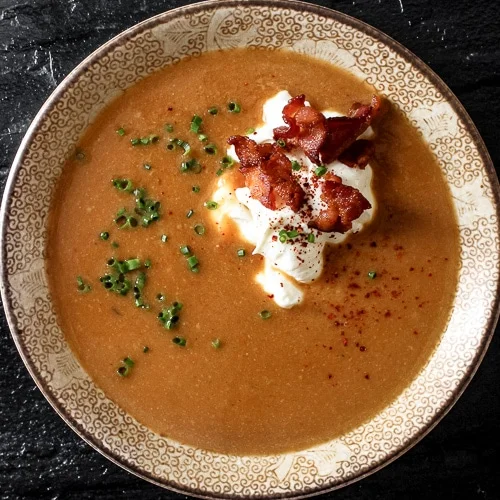
Roasted pumpkin, bacon and miso make a creamy soup with a balance of sweetness, savoury depth and a little saltiness. Roasting the pumpkin first brings out its flavour, while the bacon and miso give the broth extra richness.
Ingredients
- 900 g–1.36 kg (2–3 lb; approximately 3–4 cups)pumpkin
- 950 ml (4 cups)broth (chicken, beef or vegetable)
- 6 slicesbacon, chopped
- 4–5 clovesgarlic, finely minced
- 1 largeonion
- 30 ml (2 tablespoons)oil
- 43 g (3 tablespoons)butter
- 45 ml (3 tablespoons)miso
- to tastesour cream
- to tastefresh bacon bits
- to tastechives or spring onions, finely chopped
- a pinchcayenne pepper
Instructions
- 1
Roast the pumpkin
Heat the oven to 177°C (350°F). If using a whole pumpkin, butternut squash or kabocha squash, halve it and scoop out the seeds; save them for a snack if you like. Drizzle the pumpkin or squash with oil, place it on an oven-safe tray and roast for about 1 hour, until soft enough for a knife to slide in easily.
- 2
Prepare the ingredients
Let the roasted pumpkin cool for a few minutes before handling. Chop the bacon and onion, and finely mince the garlic. Remove and discard the pumpkin skin, then cut the flesh into roughly 2.5 cm (1-inch) pieces.
- 3
Cook in the pot
Set a large pot over medium heat and add the oil and butter. When the butter has melted, add the bacon and brown it for 1–2 minutes. Add the garlic and onion and sauté for about 5 minutes, until soft. Stir in the pumpkin and cook for 5–10 minutes, scraping up any browned bits that form on the bottom. Pour in 240 ml (1 cup) of broth and scrape the base of the pot, then add the remaining broth and lower the heat to medium-low. Simmer for 15 minutes. Stir in the miso and mix for 1–2 minutes, until dissolved.
- 4
Blend until smooth
Once the ingredients are soft, blend the soup until smooth using a jug blender or hand blender. Taste and add salt as needed. Finish with the garnishes and serve.
What is miso pumpkin soup?
Pumpkin soup is a familiar autumn dish in the United States, where pumpkin is often roasted or simmered until tender and blended into a smooth bowl. This version brings in miso, a fermented soybean paste associated with Japanese cooking, for a savoury counterpoint to the pumpkin’s sweetness.
Roasting the pumpkin before simmering helps develop its flavour, while bacon adds a smoky note. Blending the cooked ingredients gives the broth its creamy texture without needing cream in the soup itself.
Nutrition and macros by portion
The nutrition label shows one serving as written: 481 calories, 15g protein, 28g carbs, 34g fat.
| Portion | Adjustment | kcal | Protein | Carbs | Fat |
|---|---|---|---|---|---|
| Lighter | Less bacon and butter | 337 kcal | 11g | 20g | 24g |
| This serving | As written | 481 kcal | 15g | 28g | 34g |
| Hungry | Larger bowl with bread | 722 kcal | 23g | 42g | 51g |
The pumpkin and broth provide most of the carbohydrates, while the bacon, butter and oil contribute much of the fat. Bacon and miso also provide some of the protein, with the exact balance depending on the products used. Serve a bowl with a green salad or other vegetables for a more balanced plate.
Choosing the pumpkin and broth
Pumpkin: Choose a cooking pumpkin or use butternut or kabocha squash as suggested in the method. The amount is given as a range, so the soup may be a little thicker or thinner depending on the size of the pumpkin.
Broth: Chicken, beef or vegetable broth will all work. Pick one that suits the bacon and miso you are using, and taste before adding salt because both can bring plenty of savoury flavour.
Roast until tender
Even roasting: Cut the pumpkin or squash in half and remove the seeds before roasting. The flesh is ready when a knife can be inserted easily; if it still feels firm, give it more time in the oven.
Cooling: Leave the roasted pumpkin to cool for a few minutes before removing the skin and cutting it. This makes it easier to handle, though it will still be warm when it goes into the pot.
Build flavour in the pot
Bacon and aromatics: Brown the chopped bacon briefly, then soften the onion and garlic in the same pot. This gives the soup a savoury base before the pumpkin and broth go in.
Browned bits: The pumpkin may stick slightly as it cooks. Scrape the browned layer from the base when you add the first cup of broth; those bits will loosen into the liquid and add flavour.
Blend and season
Miso: Stir it in after the soup has simmered, mixing for 1–2 minutes so it dissolves. Miso varies in saltiness, so taste the finished soup before deciding whether it needs extra salt.
Texture: Blend until smooth, taking care with the hot liquid. A hand blender lets you work directly in the pot; if using a jug blender, follow its guidance for blending hot soup.
Timing and doneness
The pumpkin’s roughly 1-hour roast is the longest part of the method. Use the knife test rather than relying only on the clock, since pumpkin size and variety can affect how quickly it softens.
After the pumpkin is cooked, allow about 5 minutes for the onion and garlic, 5–10 minutes for the pumpkin in the pot and 15 minutes to simmer. The soup is ready to blend once the ingredients are soft.
Toppings and serving ideas
Sour cream, fresh bacon bits and chopped chives or spring onions add coolness, crunch and a fresh finish. A pinch of cayenne can bring a gentle heat.
Serve the soup with crusty bread or a simple green salad for a fuller meal. Add toppings to individual bowls so everyone can choose how much they want.
Recipe notes & tips
- Save the pumpkin seeds before roasting if you would like to toast them as a snack.
- Use a sharp knife and a stable board when cutting a whole pumpkin or squash.
- Scrape the pot thoroughly when adding the first cup of broth to lift the browned bits.
- Taste the soup after adding miso before seasoning it with salt.
- Add the sour cream and other garnishes just before serving.
Variations
- Use butternut squash: Swap it in for the pumpkin and roast until knife-tender.
- Choose vegetable broth: Use it for a meat-free broth base, while noting the recipe still includes bacon.
- Adjust the heat: Add a little more cayenne to each bowl for extra warmth.
- Change the garnish: Use spring onions instead of chives for a sharper fresh finish.
- Make it smoother: Blend for longer until no pieces of pumpkin remain.
Common mistakes to avoid
- Undercooking the pumpkin: Roast until a knife slides in easily so it blends smoothly.
- Skipping the browned bits: Scrape them up with the first cup of broth to carry their flavour into the soup.
- Adding salt too early: Taste after the miso is mixed in, then season if needed.
- Handling hot pumpkin too soon: Let it cool for a few minutes before removing the skin and chopping it.
- Blending hot soup carelessly: Take care with the hot liquid and follow your blender’s instructions.
How to store
Cool leftovers and refrigerate them in a covered container for up to 3 days. Reheat gently in a saucepan, stirring occasionally; add a splash of broth if the soup has thickened. Add fresh toppings when serving.
Frequently asked questions
Can I use butternut squash instead of pumpkin?
Yes. The method specifically allows butternut squash or kabocha squash in place of pumpkin; roast it until a knife inserts easily.
Can I use vegetable broth?
Yes, vegetable broth is one of the suggested options. The recipe still contains bacon, so changing the broth alone does not make the soup vegetarian.
How do I know when the pumpkin is roasted?
It should be soft enough for a knife to slide into the flesh easily. If it remains firm, continue roasting and check again.
Why is the pumpkin sticking to the pot?
Some sticking and browning can happen as the pumpkin cooks. Scrape the browned bits up with the first cup of broth before adding the rest.
When should I add the miso?
Add it after the soup has simmered for 15 minutes. Mix it in for 1–2 minutes until dissolved, then blend the soup.
Can I make the soup ahead?
Yes. Refrigerate the cooled soup in a covered container and reheat it gently before serving. Add the sour cream and other garnishes at the table.
Cook it from the original
This recipe comes from pupswithchopsticks.com. Their page has the author’s own photos, notes and tips — the best place to cook it from.
Open the recipe on pupswithchopsticks.com