
Roasted Pepper and Tomato Pasta
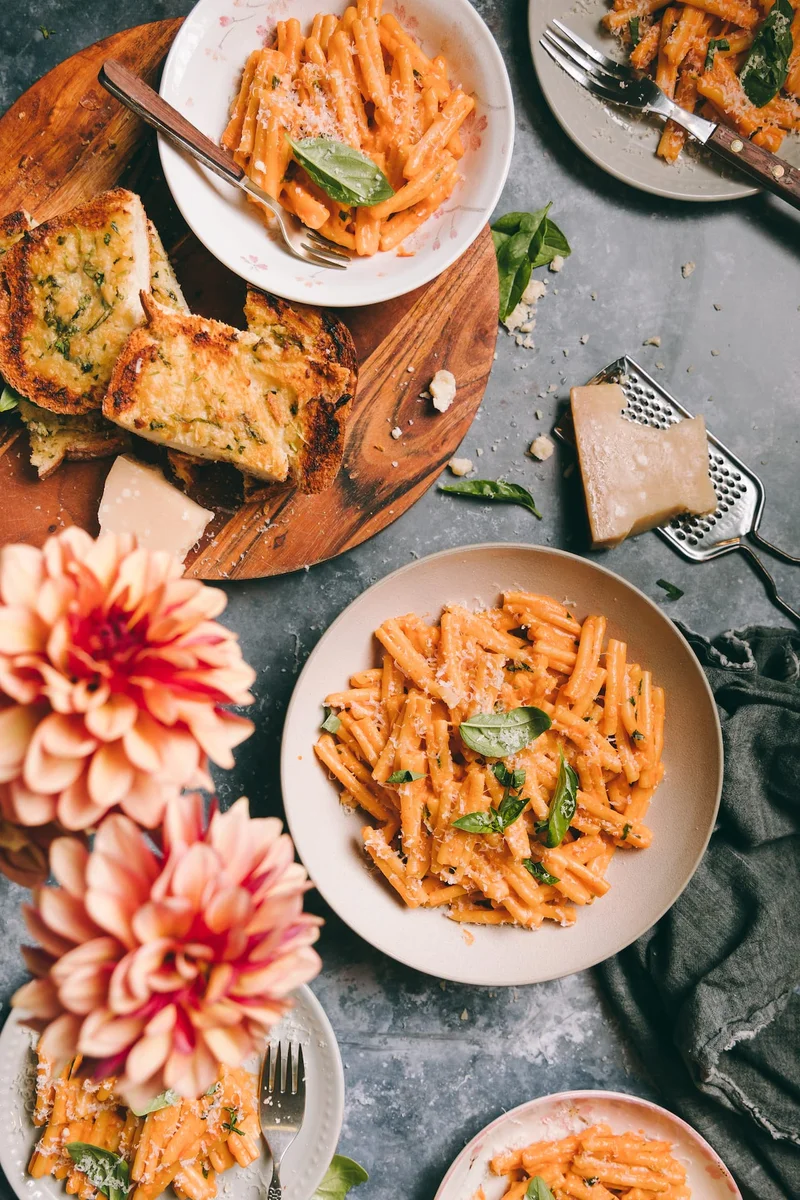
Roasted pepper and tomato pasta combines sweet roasted vegetables and garlic with cream, Parmesan and fresh basil for a smooth, savoury sauce. It makes a comforting Italian-inspired meal, with most of the cooking time spent roasting the vegetables.
Ingredients
- 1 headgarlic
- 1red pepper
- 2 largetomatoes
- 3shallots
- to tastesalt
- a littleoil
- 28 g (2 tablespoons)butter
- 15 g (¼ cup)fresh basil leaves
- 80 ml (⅓ cup)double cream
- 35 g (⅓ cup), plus extra to garnishfreshly grated Parmesan
- 400 g (4 cups)dry penne or Ferrazzoli pasta
Instructions
- 1
Prepare the vegetables
Heat the oven to 200°C (400°F). Halve the tomatoes and pepper and arrange them with the shallots. Trim the end of the garlic head, then set it cut-side down on top. Drizzle with a little oil and sprinkle with salt.
- 2
Roast the vegetables
Bake for 40 minutes.
- 3
Blend the sauce
Leave the roasted vegetables to cool completely. Squeeze the garlic cloves from their head into a blender, then add the pepper, tomatoes and shallots. Pour in any juices from the baking dish and blend until smooth.
- 4
Cook the pasta
Boil the pasta according to the packet instructions; about 8 minutes typically gives an al dente texture. Meanwhile, warm a frying pan over medium heat and melt the butter. Add the blended sauce and stir, then pour in the cream and mix.
- 5
Add basil and cheese
Chop the basil leaves and stir them into the sauce with the Parmesan.
- 6
Toss with pasta
Add the cooked pasta and 60 ml (¼ cup) pasta water, then mix everything together.
- 7
Finish and serve
Grate extra Parmesan over the pasta and serve straight away.
What is roasted pepper and tomato pasta?
This is a creamy pasta dish built around vegetables roasted until soft and sweet, then blended into a smooth sauce. It draws on familiar Italian ingredients—pasta, tomatoes, basil and Parmesan—while using cream for a richer finish.
Roasting the pepper, tomatoes, shallots and garlic together brings their flavours into one sauce, and the juices left in the tray help carry that flavour into the blender.
Nutrition and macros by portion
The nutrition label shows one serving as written: 560 calories, 19g protein, 80g carbs, 18g fat.
| Portion | Adjustment | kcal | Protein | Carbs | Fat |
|---|---|---|---|---|---|
| Lighter | Use less cream | 392 kcal | 13g | 56g | 13g |
| This serving | As written | 560 kcal | 19g | 80g | 18g |
| Hungry | Serve a larger portion | 840 kcal | 29g | 120g | 27g |
Most of the carbohydrates come from the pasta, while the butter, cream and Parmesan contribute much of the fat; the Parmesan also provides some protein. Pair a serving with a green salad or other vegetables to add freshness and balance the plate.
Roast the vegetables until tender
Cut-side down: placing the trimmed garlic head cut-side down helps it roast alongside the other vegetables. Once cooked and cooled, the cloves should squeeze readily from their skins.
Use the tray juices: scrape them into the blender with the vegetables rather than leaving their concentrated flavour behind.
Blend for a smooth sauce
Cool first: the recipe calls for the vegetables to cool completely before blending. This also gives you a chance to handle the garlic head safely.
Blend thoroughly: aim for a consistent sauce with no large pieces of pepper or shallot. If the vegetables have roasted until soft, they should blend smoothly.
Keep the pasta al dente
Check the packet: pasta shapes and brands vary, so use the cooking time on the packet as your guide. The recipe gives about 8 minutes as a typical time for an al dente result.
Save pasta water: add the stated 60 ml (¼ cup) to help the sauce coat the pasta. Stir it in with the pasta rather than draining every last drop away.
Finish the creamy sauce
Butter and cream: warming the blended vegetables in melted butter before adding cream gives the sauce its rich, silky character. Stir as you add the cream so it combines evenly.
Basil and Parmesan: stir these in after the cream, then finish with extra Parmesan at the table for a fresh, savoury topping.
What to serve alongside it
A crisp green salad or simply dressed leaves bring freshness alongside the creamy pasta. Crusty bread is useful for any sauce left in the bowl.
Serve the pasta as soon as it is tossed with the sauce, while the texture is at its best.
Recipe notes & tips
- Roast the vegetables until soft so they blend into a smooth sauce.
- Keep any juices from the roasting tray and add them to the blender.
- Let the vegetables cool completely before squeezing the garlic cloves out.
- Follow the pasta packet timing and check for an al dente bite.
- Measure the pasta water before draining so it is ready to loosen the sauce.
- Grate the Parmesan freshly for the sauce and the finishing garnish.
Variations
- Add chilli: stir in a pinch of chilli flakes with the cream for a little heat.
- Use another pasta shape: choose a similar short shape that holds the sauce well.
- Add spinach: fold a handful into the hot sauce until just wilted.
- Make it more herby: add a little chopped parsley alongside the basil.
- Boost the vegetables: serve with extra roasted vegetables on the side.
Common mistakes to avoid
- Leaving out the tray juices: they add roasted flavour, so pour them into the blender.
- Blending while hot: the recipe specifies cooling the vegetables completely first.
- Overcooking the pasta: check it against the packet timing and aim for an al dente bite.
- Skipping pasta water: reserve 60 ml (¼ cup) to help the sauce coat the pasta.
- Adding the pasta before the sauce is ready: blend and warm the sauce while the pasta cooks, then combine them.
How to store
Store leftovers in an airtight container in the fridge for up to 3 days. Reheat gently in a pan or microwave, stirring in a splash of water if the sauce has thickened.
Frequently asked questions
Can I make the sauce ahead?
Yes. Roast and blend the vegetables ahead, then refrigerate the sauce in a covered container and reheat it gently before adding the cream and cooked pasta.
Can I use another type of pasta?
Yes. Choose a pasta shape that can be coated easily by the smooth sauce, and cook it according to its packet instructions.
How do I know when the vegetables are roasted?
The recipe uses a 40-minute roasting time. The vegetables should be soft enough to blend smoothly.
Can I use dried basil?
Fresh basil is specified for this recipe and gives it a fresh finish. If using dried basil instead, add a small amount and adjust to taste.
Why add pasta water?
The starchy water helps the sauce cling to the pasta. Add the specified 60 ml (¼ cup) and mix well.
Cook it from the original
This recipe comes from playfulcooking.com. Their page has the author’s own photos, notes and tips — the best place to cook it from.
Open the recipe on playfulcooking.com