
Instant Pot Chicken Pho
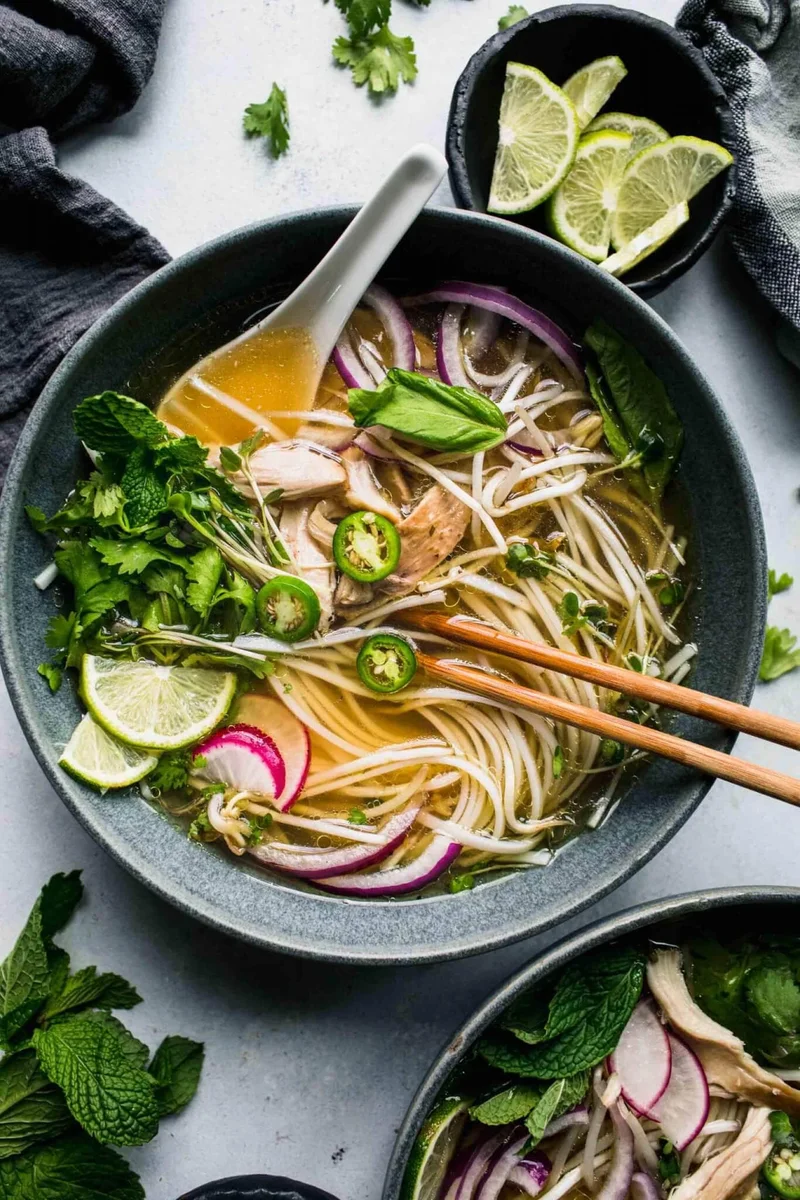
This pressure-cooker take on Vietnamese chicken pho pairs a fragrant, spiced broth with rice noodles, tender chicken and fresh toppings. It makes a warming, customisable soup without hours of simmering.
Ingredients
- 397 g (14 oz)rice noodles
- 15 ml (1 tablespoon)extra-virgin olive oil
- 1 largeyellow onion, halved
- 1 piece, about 5 cm (2 inches)ginger, cut into 6 mm (¼-inch) slices and lightly smashed
- 3cardamom pods, lightly smashed
- 1cinnamon stick
- 15 ml (1 tablespoon)coriander seeds
- 3star anise pods
- 5cloves
- 1Fuji apple, peeled, cored and cut into 1.3 cm (½-inch) chunks
- 8 g (½ cup)roughly chopped coriander leaves
- 6bone-in, skin-on chicken thighs
- 45 ml (3 tablespoons)fish sauce
- 15 ml (1 tablespoon)sugar
- 1.9 litres (8 cups)water
- 7.5 ml (1½ teaspoons)kosher salt
- 1lime, cut into wedges
- 2jalapeños, thinly sliced
- ½red onion, thinly sliced and soaked in cold water for 10 minutes
- To tastefresh herbs, such as mint, coriander and basil
- To tastebean sprouts
- To tasteSriracha sauce
- Optional, to tastedaikon radish sprouts
- To tasteblack pepper
Instructions
- 1
Soak the noodles
Put the rice noodles in a large bowl of warm water and leave them to soak for 30–45 minutes while you prepare the broth.
- 2
Char aromatics
Add the oil to the Instant Pot and select Sauté. Once hot, place the onion cut-side down in the pot with the ginger. Cook without stirring for about 4 minutes, until lightly charred.
- 3
Add spices
Add the cardamom, cinnamon, coriander seeds, star anise and cloves, then cook for 1 minute more, until fragrant. Add the water, apple, coriander leaves, chicken, fish sauce and sugar, then secure the lid.
- 4
Pressure cook
Select Manual and cook at high pressure for 15 minutes.
- 5
Release pressure
When cooking is complete, turn off the Instant Pot and let the pressure release naturally for 10 minutes. Set a timer; if the pressure has not fully released when it rings, turn the valve on top to release the remaining pressure.
- 6
Strain the broth
Lift the chicken out of the pot and set it aside. Strain the broth, season it with salt and pepper to taste, then skim off some of the fat.
- 7
Assemble the bowls
When the chicken is cool enough to handle, pull the meat from the bones and divide it among 4 large soup bowls; reserve the bones for making bone broth. Drain the noodles and divide them among the bowls. Ladle over the broth and add the toppings you like.
What is chicken pho?
Pho ga is Vietnamese chicken noodle soup, built around a clear, aromatic broth served with rice noodles and fresh garnishes. This pressure-cooker version draws on the same familiar combination of toasted spices, ginger, onion and chicken.
The Instant Pot shortens the broth-making process, while apple adds a gentle fruitiness. Fresh herbs, lime and chilli let each person finish their bowl to taste.
Nutrition and macros by portion
The nutrition label shows one serving as written: 842 calories, 32g protein, 102g carbs, 32g fat.
| Portion | Adjustment | kcal | Protein | Carbs | Fat |
|---|---|---|---|---|---|
| Lighter | More sprouts, fewer noodles | 589 kcal | 22g | 71g | 22g |
| This serving | As written | 842 kcal | 32g | 102g | 32g |
| Hungry | Add extra noodles | 1263 kcal | 48g | 153g | 48g |
The rice noodles and apple contribute most of the carbohydrates, while the chicken provides protein. Fat comes mainly from the chicken skin and olive oil, with some also skimmed from the broth. To balance the bowl, add plenty of bean sprouts and fresh herbs, and serve any extra noodles separately.
Build the broth’s flavour
Charred aromatics: Let the cut side of the onion and the ginger sit against the hot pot without stirring. A little charring gives the broth a deeper, roasted note.
Whole spices: Cook the cardamom, cinnamon, coriander, star anise and cloves briefly before adding liquid. Stop when they smell fragrant so they do not scorch.
Prepare the noodles
Rice noodles: Soaking them in warm water softens them before they meet the hot broth. Check the packet guidance if your noodle thickness differs, and drain them before dividing into bowls.
Keep them separate: The noodles go into the bowls rather than the pressure cooker. This avoids overcooking them while the chicken and broth cook.
Release the pressure safely
Natural release: Give the pot 10 minutes to release pressure on its own after cooking. If the float valve is still raised, carefully use the top valve to release what remains, following your cooker’s instructions.
Straining: Take out the chicken first, then strain the broth to remove the cooked aromatics and spices. Skim off some surface fat before seasoning.
Check the chicken and broth
Chicken: Let the thighs cool until they are comfortable to handle, then separate the meat from the bones. Divide the meat between the bowls and discard or reserve the bones for stock.
Seasoning: Taste the strained broth after adding salt and pepper. Its final balance will depend on the saltiness of the fish sauce, so adjust gradually.
Choose the toppings
Fresh finish: Add herbs, bean sprouts, lime and sliced jalapeño just before eating. The lime brings brightness, while the herbs and sprouts provide freshness and texture.
Extra heat: Serve Sriracha at the table so everyone can choose their own level of spice. Daikon sprouts are an optional extra.
What to serve with pho
This is a complete soup with chicken, noodles and broth, so it can be served on its own. Put the toppings in small dishes so each person can customise their bowl.
For a lighter accompaniment, serve a simple salad or extra bean sprouts alongside it. Keep the toppings separate until serving to preserve their fresh texture.
Recipe notes & tips
- Cut the onion in half through the root so it stays together while charring.
- Use the full 30–45 minute soak for the noodles, then drain them well before serving.
- Keep the spices whole so they are easy to strain out of the finished broth.
- Skim the broth while it is hot, taking off only as much fat as you prefer.
- Soak the sliced red onion in cold water for 10 minutes to soften its sharpness.
- Serve the lime and chilli at the table so each bowl can be adjusted individually.
Variations
- More greens: Add extra bean sprouts and fresh herbs to each bowl just before serving.
- Extra chilli: Offer more sliced jalapeño or Sriracha at the table.
- Lime-forward: Serve extra lime wedges for a brighter, tangier finish.
- Use chicken breasts: Swap in bone-in chicken breasts, keeping in mind they may cook differently and should be checked for doneness.
- Skip the apple: Leave it out for a broth without its gentle fruity note.
- Add daikon sprouts: Scatter them over the bowls as an optional crisp garnish.
Common mistakes to avoid
- Stirring the onion too soon: Leave it cut-side down and undisturbed for about 4 minutes to develop a char.
- Scorching the spices: Cook them for just 1 minute, stopping once they smell fragrant.
- Overcooking the noodles: Keep them out of the pressure cooker and soak them separately.
- Skipping the pressure-release wait: Allow 10 minutes for natural release before using the valve for any remaining pressure.
- Adding toppings too early: Put fresh herbs, sprouts and lime on the bowls at serving time so they retain their freshness.
- Over-seasoning the broth: Taste after straining and add salt and pepper gradually.
How to store
Store leftover broth and chicken in an airtight container in the fridge for up to 3 days, and keep noodles and fresh toppings separate. Reheat the broth and chicken until piping hot, then pour over the noodles and add fresh toppings. Freeze the broth and chicken separately for up to 3 months; the noodles and garnishes are best prepared fresh.
Frequently asked questions
Can I use a different type of rice noodle?
Yes. Choose a noodle suitable for soup and follow its packet instructions for soaking or cooking, as thickness affects the time needed.
Can I make the broth ahead?
Yes. Strain and chill the broth with the chicken, then reheat them when ready to serve. Keep the noodles and fresh toppings separate until then.
Do I need to remove the chicken skin?
The recipe cooks the thighs with the skin on, which contributes flavour and fat to the broth. You can skim some fat after straining, or remove the skin before serving if you prefer.
Why soak the red onion?
A 10-minute soak in cold water takes the edge off its sharpness while leaving it crisp. Drain it before adding it to the bowls.
Can I use chicken thighs without bones?
The recipe specifies bone-in, skin-on thighs, which help flavour the broth. Boneless thighs can be used, but the broth may have a less rounded chicken flavour.
Can I make this without an Instant Pot?
This method is written for a pressure cooker. A stovetop version would need a separate simmering method and timing, so follow a suitable stovetop pho recipe rather than applying the pressure-cooking times.
Cook it from the original
This recipe comes from platingsandpairings.com. Their page has the author’s own photos, notes and tips — the best place to cook it from.
Open the recipe on platingsandpairings.com