
Dahi Kebab
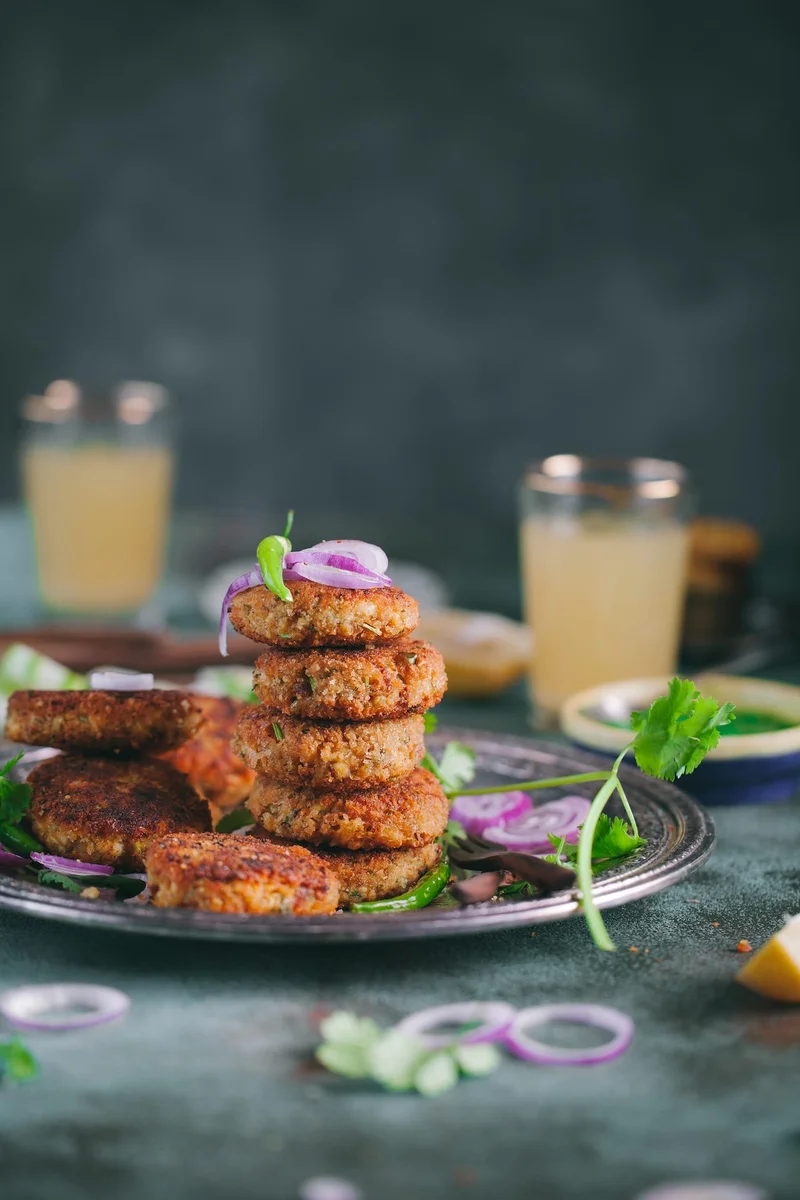
Dahi kebab are North Indian vegetarian patties with a crisp breadcrumb coating and a soft, creamy centre made from hung yoghurt, paneer, herbs and spices. They take time to drain, but the mixture is quick to shape and fry once the yoghurt is ready.
Ingredients
- 300 ml (1¼ cups)thick plain yoghurt
- 170 g (6 oz)paneer, grated
- 15–20fresh mint leaves
- 6sprigs of fresh coriander, leaves and stems
- 15cashews
- 1 teaspoonghee
- 40 g (¼ cup)rice flour
- 60 g (½ cup), divided; 30 g (¼ cup) for coatingbreadcrumbs
- 1 teaspoonground cumin
- 1 teaspoonchilli powder
- ½ teaspoonground turmeric
- to tastesalt
- ½ teaspoonsugar
- 1 teaspoondried mango powder
- 35 g (⅓ cup)fried onion
- as neededoil, for shallow-frying
Instructions
- 1
Drain the yoghurt
Line a colander with muslin and add the thick yoghurt. Bring the cloth edges together and squeeze out excess liquid, then tie the cloth around the yoghurt and refrigerate overnight to drain further.
- 2
Chop the herbs
When ready to make the kebabs the next day, finely chop the coriander and mint together.
- 3
Toast the cashews
Melt the ghee in a frying pan and toast the cashews for 1 minute. Transfer them to a chopping board; once cool enough to handle, chop finely by hand rather than blending them into a paste.
- 4
Combine the mixture
Put the drained yoghurt in a mixing bowl with the chopped herbs and cashews, all the spices, rice flour, salt, sugar and ¼ cup of the breadcrumbs.
- 5
Add the onion
Crush the fried onion with your hands and add it to the bowl.
- 6
Mix until cohesive
Mix everything together. The mixture will be slightly sticky, but should still be shapeable.
- 7
Shape the kebabs
Wet your hands and shape the mixture into bite-sized kebabs or patties.
- 8
Prepare the coating
Spread the remaining ¼ cup of breadcrumbs over a plate for coating the kebabs before frying.
- 9
Heat the oil
Set a heavy-based frying pan over a medium heat and add enough oil to shallow-fry the kebabs.
- 10
Coat and arrange
Gently coat each kebab all over in breadcrumbs and carefully place it in the pan. Fry in batches rather than overcrowding the pan.
- 11
Fry until golden
Handle the delicate kebabs carefully when turning them. Fry for 2–3 minutes on each side.
- 12
Serve warm
Serve the kebabs warm with a dip of your choice, or pair them with salad to make a more complete meal.
What are dahi kebab?
Dahi kebab are Indian vegetarian patties built around dahi, or yoghurt, that has been drained until thick. The recipe describes them as a North Indian speciality, with a breadcrumb crust around a soft, creamy centre.
This version combines hung yoghurt with paneer, herbs, cashews and spices. Rice flour and breadcrumbs help bind the moist mixture, while the fried onion adds a savoury note.
Nutrition and macros by portion
The nutrition label shows one serving as written: 168 calories, 6g protein, 15g carbs, 10g fat.
| Portion | Adjustment | kcal | Protein | Carbs | Fat |
|---|---|---|---|---|---|
| Lighter | Use less frying oil | 118 kcal | 4g | 11g | 7g |
| This serving | As written | 168 kcal | 6g | 15g | 10g |
| Hungry | Serve with a larger salad | 252 kcal | 9g | 23g | 15g |
The carbohydrates mainly come from the rice flour, breadcrumbs and onion, while ghee and frying oil contribute much of the fat. Yoghurt, paneer and cashews provide protein, with paneer also contributing fat. Pair a serving with salad for a fresh contrast and a more balanced plate.
Why drain the yoghurt?
Hung yoghurt: draining it overnight removes excess liquid and makes the mixture easier to shape. Keep it refrigerated while it drains.
Check the texture: the yoghurt should be notably thicker after draining. If it still seems loose, let it drain for longer before mixing.
Get the mixture ready
Fresh herbs: chop the mint and coriander finely so they are evenly distributed and do not make the patties difficult to shape.
Cashews: toast them briefly in ghee, then chop by hand. A blender can turn them into a paste, whereas small pieces give the mixture more texture.
Shape gently
Sticky mixture: a slightly tacky texture is expected. Wet hands before shaping to make forming bite-sized patties easier.
Even portions: shape the kebabs to a similar size so they cook at roughly the same rate. Handle them gently, as the yoghurt-based mixture is delicate.
Fry for a crisp coating
Breadcrumb layer: coat each kebab gently on all sides just before it goes into the pan. This helps form the crisp outside without compressing the soft centre.
Pan space: cook in batches in a heavy-based pan over medium heat. Turning carefully after 2–3 minutes per side helps the patties brown without breaking.
Choose a dip or side
Dip: serve the kebabs warm with a dip of your choice, as the recipe suggests. A cooling yoghurt-based dip or a tangy chutney would suit their spiced, creamy flavour.
Salad: pair them with a fresh salad for contrast and a more complete plate. Serve soon after frying for the best difference between the crisp coating and soft centre.
Recipe notes & tips
- Drain the yoghurt in the refrigerator overnight to give it time to lose excess liquid.
- Chop the cashews by hand so they stay in small pieces rather than becoming a paste.
- Wet your hands before shaping the sticky mixture.
- Coat the patties gently so they keep their shape.
- Fry in batches, leaving room to turn each kebab carefully.
- Serve soon after frying while the breadcrumb coating is crisp.
Variations
- Fresh chilli: add finely chopped chilli to the mixture for extra heat.
- Extra herbs: increase the mint or coriander for a more pronounced fresh-herb flavour.
- Chutney side: serve with a tangy chutney for a sharper contrast.
- Smaller bites: shape the mixture into smaller pieces for a bite-sized snack.
- Dip choice: pair with your preferred dip, as suggested in the recipe.
Common mistakes to avoid
- Yoghurt still watery: drain it for longer so the mixture is easier to shape.
- Cashew paste: avoid blending the nuts; chop them finely by hand instead.
- Patties sticking to your hands: wet your hands before shaping.
- Crumb coating falling away: press the crumbs on gently and coat each kebab all over.
- Crowded pan: fry in batches so the kebabs have room and are easier to turn.
- Rough turning: use care when flipping because the patties are fragile.
How to store
Refrigerate leftover kebabs in a covered container and eat within 2 days. Reheat gently in a frying pan until hot, turning carefully; the coating may not be as crisp as when freshly fried.
Frequently asked questions
Why does the yoghurt need to drain overnight?
Draining removes excess liquid and thickens the yoghurt, helping the kebab mixture hold its shape. Keep it in the refrigerator while it drains.
Can I prepare the mixture ahead?
You can drain the yoghurt overnight, as the recipe directs. The remaining method is best done close to serving so the kebabs can be enjoyed warm.
How do I stop the mixture sticking to my hands?
Wet your hands before shaping each kebab. The mixture is expected to feel a little sticky.
How do I know when the kebabs are cooked?
Fry them for 2–3 minutes on each side, until the breadcrumb coating is browned. Turn them gently because they are delicate.
Can I bake these instead of shallow-frying?
The supplied method uses shallow-frying, so baking would change the result and timing. For the intended crisp coating, follow the pan-frying method.
What should I serve with dahi kebab?
Serve them warm with a dip of your choice, or pair them with salad as suggested in the recipe.
Cook it from the original
This recipe comes from playfulcooking.com. Their page has the author’s own photos, notes and tips — the best place to cook it from.
Open the recipe on playfulcooking.com