
Schnitzel
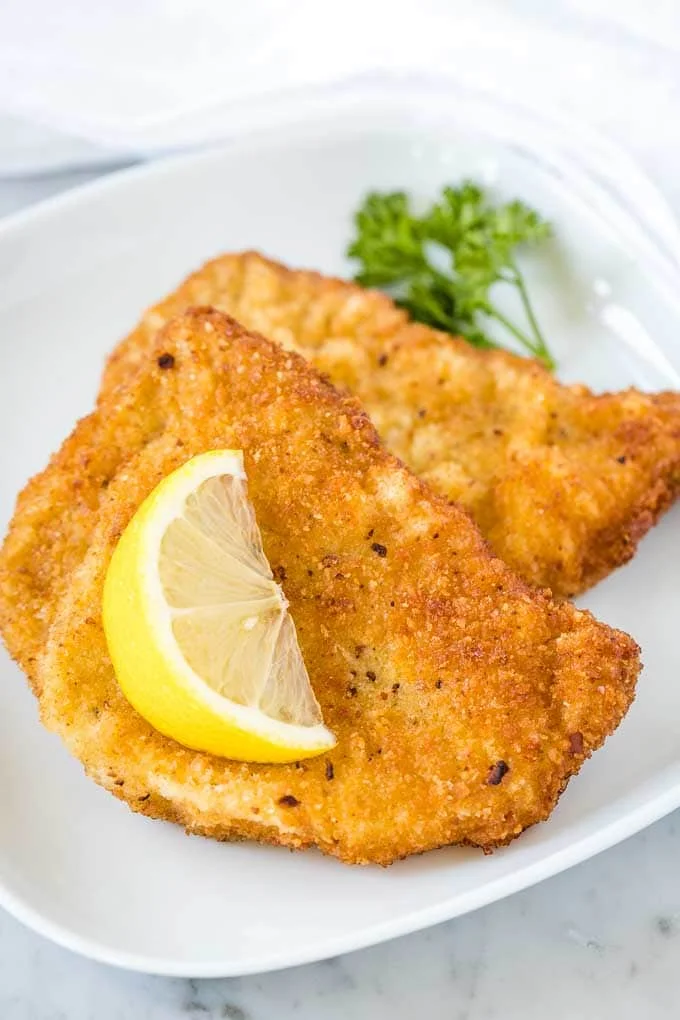
German-style schnitzel is made from thin pork chops coated in flour, egg and breadcrumbs, then shallow-fried until crisp and golden. It is a quick, satisfying centrepiece that works well with a squeeze of lemon and simple sides.
Ingredients
- 4 (or more if small)boneless pork chops
- to seasonsalt
- to seasonblack pepper
- 30 g (4 tbsp)plain flour
- 110 g (1 cup)dried white breadcrumbs
- 2 largeeggs
- 30 ml (2 tbsp)cream or milk
- as neededclarified butter, or vegetable oil and 30 g (2 tbsp) butter
- 1lemon, cut into wedges
Instructions
- 1
Flatten the pork
Put a pork chop on a chopping board and cover it with a large piece of cling film. Pound it with a rolling pin, large knife or meat mallet until about 0.5 cm thick, taking care not to make holes. Season both sides with salt and pepper, then repeat with the remaining chops.
- 2
Prepare the coating
Lightly beat the eggs with the cream in a shallow bowl. Put the flour on one plate and the breadcrumbs on another.
- 3
Coat each chop
Turn each schnitzel in the flour on both sides, dip it through the egg mixture, then coat it evenly with breadcrumbs. Do not press the meat into the breadcrumbs.
- 4
Heat the fat
Pour oil or clarified butter to a depth of about 0.6 cm into a large frying pan and heat over medium heat. Test it with a breadcrumb: it should sizzle and brown quickly. If using oil, add 30 g (2 tbsp) butter; it will foam slightly.
- 5
Fry until golden
Add the schnitzels to the pan, working in batches if needed. Fry for about 2–4 minutes, depending on their size, until golden underneath. Turn and cook for a further 1–3 minutes, until the other side is golden and the pork is cooked through.
- 6
Drain and serve
Move the schnitzels to a plate lined with kitchen paper to blot away excess fat. Serve straight away with lemon wedges.
What is schnitzel?
Schnitzel is a thin, breaded cutlet, commonly associated with German and Austrian cooking. This version uses boneless pork chops, pounded thin so they cook quickly and provide plenty of crisp coating in each bite.
The three-stage coating and shallow-frying method create its familiar golden crust. A squeeze of lemon adds a bright contrast to the rich, savoury crumb.
Nutrition and macros by portion
The nutrition label shows one serving as written: 407 calories, 36g protein, 28g carbs, 16g fat.
| Portion | Adjustment | kcal | Protein | Carbs | Fat |
|---|---|---|---|---|---|
| Lighter | Serve with extra vegetables | 285 kcal | 25g | 20g | 11g |
| This serving | As written | 407 kcal | 36g | 28g | 16g |
| Hungry | Add another small schnitzel | 611 kcal | 54g | 42g | 24g |
The pork provides most of the protein, while the flour and breadcrumbs supply much of the carbohydrate. Frying fat and the egg contribute fat, with the exact amount depending on how much is absorbed. For a balanced plate, serve one schnitzel with vegetables and a moderate portion of potatoes.
Choosing and flattening the pork
Thin chops: Boneless chops are straightforward to coat and fry. If they are thick, pound them evenly to about 0.5 cm so they cook at a similar rate from edge to centre.
Gentle pounding: Keep the cling film between the meat and your tool, and use steady taps rather than forceful blows. This helps flatten the chop without tearing it.
Why the coating stays crisp
Three layers: Flour gives the egg something to cling to, while the egg helps the breadcrumbs cover the meat. Shake off excess flour before dipping, and let loose crumbs fall away rather than packing them on.
Light handling: Avoid pressing the schnitzel into the breadcrumbs. A loose coating can puff and crisp as it fries.
Getting the frying temperature right
Breadcrumb test: The fat is ready when a crumb sizzles and browns quickly. If it sits without bubbling, wait a little longer; if it darkens straight away, lower the heat.
Room to fry: Cook in batches when necessary so the chops lie comfortably in the pan. Crowding can cool the fat and make the coating less crisp.
Doneness and timing
Watch the colour: Fry the first side for about 2–4 minutes, then turn and cook for another 1–3 minutes. The exact time depends on the size and thickness of the chops and how steadily the pan is heating.
Check the centre: The pork should be cooked through, with no raw-looking centre. Remove each schnitzel as it is ready so the coating does not over-brown while you finish a batch.
Serving ideas
Fresh finish: Serve the schnitzel as soon as it has been briefly blotted, with lemon wedges for squeezing at the table.
Simple sides: Pair it with potato salad, boiled potatoes or chips, and add a crisp green salad or cooked vegetables for a more rounded plate.
Recipe notes & tips
- Use a broad, shallow bowl for the egg mixture so the chops are easier to dip.
- Set the flour, egg and breadcrumbs in order beside the pan to keep the coating process tidy.
- Turn the schnitzel with tongs or a spatula so the breadcrumb layer is less likely to come away.
- Let excess egg drip off before coating the meat in breadcrumbs.
- Blot the schnitzel briefly rather than leaving it on kitchen paper for long, which can soften the underside.
- Serve the lemon separately so the crust stays crisp until eating.
Variations
- Use chicken: Replace the pork with boneless chicken cutlets and pound them to an even thickness.
- Try panko: Use panko breadcrumbs for a coarser, crunchier coating.
- Add herbs: Mix finely chopped parsley into the breadcrumbs for a fresh note.
- Use paprika: Stir a little paprika into the flour for extra savoury flavour.
- Choose oil: Fry in vegetable oil and add the stated butter for a buttery finish.
Common mistakes to avoid
- Uneven thickness: Pound the chop to an even 0.5 cm so thin edges do not overcook before the centre is ready.
- Torn meat: Cover the chop with cling film and pound gently to avoid holes.
- Heavy coating: Shake off excess flour and do not press the schnitzel into the breadcrumbs.
- Cool frying fat: Wait for a breadcrumb to sizzle and brown quickly before adding the meat.
- Crowded pan: Fry in batches so the chops have space and the fat stays hot.
- Leaving it to drain: Blot briefly and serve promptly to help keep the crust crisp.
How to store
Refrigerate leftovers in an airtight container for up to 3 days. Reheat in a hot oven or air fryer until piping hot; the coating may soften if reheated in a microwave.
Frequently asked questions
Can I prepare the schnitzels ahead?
You can pound and season the chops ahead, then keep them covered in the fridge. For the crispest coating, bread and fry them close to serving time.
Can I use milk instead of cream?
Yes. The recipe allows either milk or cream in the beaten egg mixture.
What can I use instead of clarified butter?
Use vegetable oil and add 30 g (2 tbsp) butter to the pan, as specified in the recipe.
How do I know the oil is ready?
Drop in a breadcrumb. It should sizzle and brown quickly; lower the heat if it darkens immediately.
Can schnitzel be frozen?
For best texture, freeze the cooked schnitzels in a single layer, then transfer them to a sealed container. Reheat from frozen in the oven until piping hot, allowing extra time.
Cook it from the original
This recipe comes from platedcravings.com. Their page has the author’s own photos, notes and tips — the best place to cook it from.
Open the recipe on platedcravings.com