
Sous Vide Prime Rib
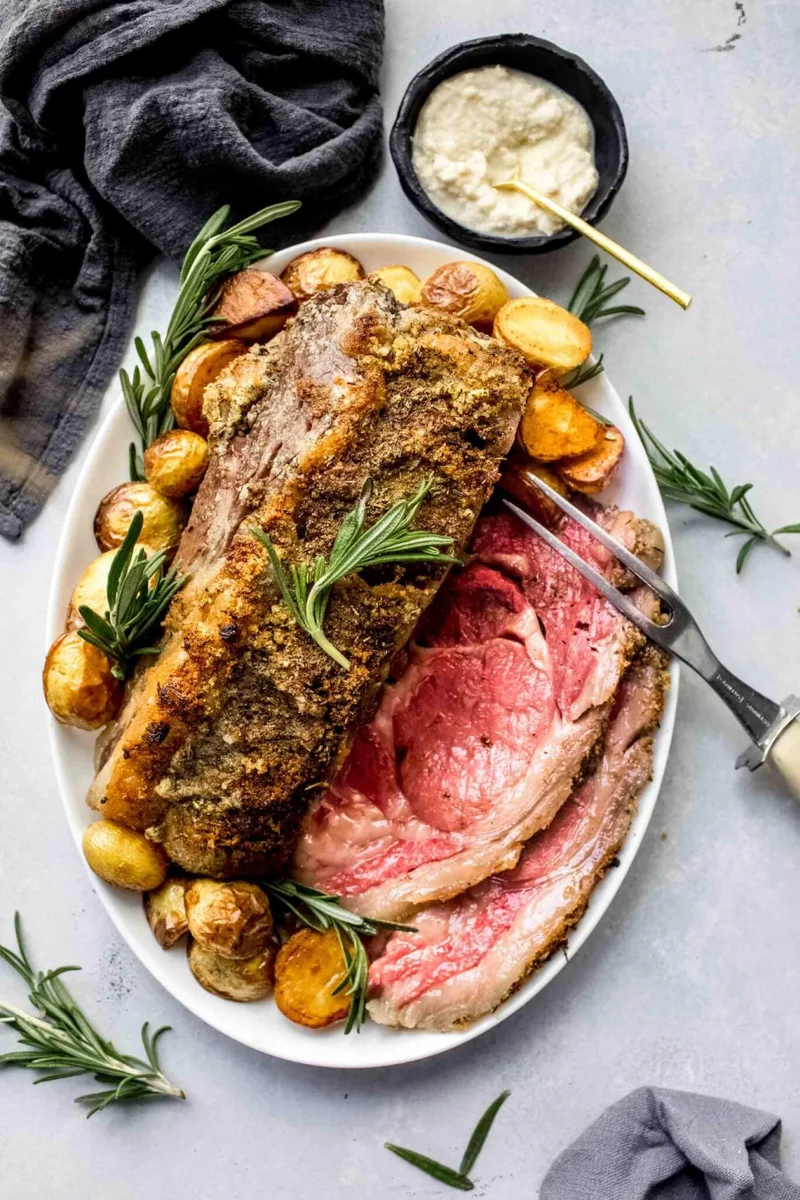
This American-style prime rib is cooked gently in a sous vide water bath, then finished in a very hot oven for a golden herb-butter crust. It is a make-ahead-friendly centrepiece for a holiday meal, served with a quick jus and horseradish.
Ingredients
- 2.27 kg (5 lb)bone-in beef ribeye roast
- to tastekosher salt
- 946 ml (1 quart)low-sodium beef broth
- 113 g (1 stick)salted butter, softened
- 2 tablespoonsgarlic powder
- 1 tablespoon finely chopped (or ½ tablespoon dried)fresh rosemary
- 1 tablespoon finely chopped (or ½ tablespoon dried)fresh thyme
- 1 tablespooncoarsely ground black pepper
- 2 teaspoonsherbes de Provence
- to tastehorseradish
Instructions
- 1
Salt the roast
Season the roast generously with kosher salt and refrigerate it uncovered for at least 1 hour, or up to overnight. Let the butter soften during this time.
- 2
Set the water bath
Set the sous vide cooker to 55.6°C (132°F) for medium-rare.
- 3
Bag the beef
Put the roast in a large vacuum bag or in two doubled-up zip-top bags, seal, and lower it into the water bath.
- 4
Cook sous vide
Cook for 6–10 hours, or for 8–12 hours if the roast is frozen.
- 5
Dry the roast
Take the beef out of the bag and reserve the cooking liquid. Pat the roast dry.
- 6
Heat the oven
Preheat the oven to 288°C (550°F).
- 7
Make herb butter
In a small bowl, mix the softened butter with the garlic powder, rosemary, thyme, pepper and herbes de Provence. Spread the mixture over the top and sides of the roast, then place it in a roasting pan.
- 8
Brown the crust
Roast for 8–10 minutes, watching closely, until the crust is golden.
- 9
Rest the beef
Remove the roast from the oven and let it rest.
- 10
Reduce the jus
While the roast rests, bring the reserved sous vide cooking liquid and beef broth to a boil in a large frying pan. Lower the heat and simmer until the liquid has reduced by half, skimming off any solids that rise to the surface.
- 11
Slice and serve
Slice the prime rib and serve it with the jus and horseradish on the side.
What is sous vide prime rib?
Prime rib is a large beef rib roast traditionally served as a celebratory centrepiece in American cooking. Here, the roast cooks in a temperature-controlled water bath before a brief oven finish.
The long, gentle cook aims for an even doneness through the meat, while the final blast of heat builds a browned exterior. Herb butter, jus and horseradish bring the familiar savoury accompaniments.
Nutrition and macros by portion
The nutrition label shows one serving as written: 157 calories, 3g protein, 3g carbs, 15g fat.
| Portion | Adjustment | kcal | Protein | Carbs | Fat |
|---|---|---|---|---|---|
| Lighter | Smaller slice, less butter | 110 kcal | 2g | 2g | 11g |
| This serving | As written | 157 kcal | 3g | 3g | 15g |
| Hungry | Larger slice of beef | 236 kcal | 5g | 5g | 23g |
Beef supplies most of the protein, while the butter contributes much of the fat; the broth and seasoning contribute relatively little carbohydrate. Pair a slice with vegetables and a moderate portion of potatoes to make a more balanced plate.
The roast and the seasoning
Bone-in beef: The recipe uses a 2.27 kg roast, so allow enough space in the bag and water bath for the water to circulate around it.
Salt: Season the beef ahead and leave it uncovered in the fridge for at least an hour. This gives the salt time to season the surface and leaves the exterior ready to pat dry before browning.
Herb butter: Softened butter makes it easier to spread the garlic, rosemary, thyme, pepper and herbes de Provence evenly over the roast.
Bagging and water-bath cooking
Sealing: Use a large vacuum bag or the specified two doubled-up zip-top bags, making sure the roast is sealed before it goes into the bath.
Temperature: The recipe sets the bath to 55.6°C (132°F) for medium-rare. Keep to the stated 6–10-hour cooking window, or 8–12 hours if starting with a frozen roast.
Getting a good crust
Dry surface: Patting the roast dry after removing it from the bag helps the exterior brown rather than steam in the oven.
Short finish: The oven is set very hot, at 288°C (550°F), so the crust can colour quickly. Watch closely during the 8–10 minutes and take the roast out when it is golden.
Making the jus
Cooking liquid: Reserve the liquid from the bag when you remove the roast; it forms the base of the jus alongside low-sodium beef broth.
Reduction: Bring both liquids to a boil, then simmer until reduced by half. Skim off any solids that rise to the surface for a cleaner sauce.
Resting and serving
Resting: Let the roast rest after its oven finish while the jus simmers. This also gives you a useful window to prepare the rest of the meal.
On the plate: Slice the beef and offer the reduced jus and horseradish alongside. Roast potatoes and green vegetables make suitable accompaniments.
Recipe notes & tips
- Soften the butter while the salted roast rests in the fridge.
- Check that the bag is sealed and the roast is submerged in the water bath.
- Pat the beef dry thoroughly before spreading on the herb butter.
- Keep a close eye on the roast during its short oven finish, as the high heat colours it quickly.
- Make the jus while the roast rests so both are ready to serve together.
Variations
- Dried herbs: Use ½ tablespoon each of dried rosemary and thyme instead of the fresh amounts.
- Horseradish sauce: Serve prepared horseradish or horseradish sauce at the table to suit different preferences.
- Pepper crust: Use the specified coarse-ground black pepper for a more pronounced seasoning on the exterior.
- Extra jus: Increase the broth if you would like more sauce, then simmer it to your preferred concentration.
Common mistakes to avoid
- Skipping the salt rest: Season the roast and refrigerate it uncovered for at least 1 hour as directed.
- Wet surface: Pat the beef dry after removing it from the bag so the oven can brown the crust.
- Unwatched oven finish: The oven is extremely hot, so check the roast closely throughout the 8–10 minutes.
- Over-reducing the jus: Simmer until the liquid is reduced by half, rather than leaving it unattended.
- Cutting too soon: Let the roast rest after roasting before slicing and serving.
How to store
Refrigerate leftover beef and jus in separate airtight containers within 2 hours, and use within 3–4 days. Reheat slices gently with a little jus to help keep the beef moist.
Frequently asked questions
Can I cook the roast from frozen?
Yes. The recipe gives a sous vide time of 8–12 hours for a frozen roast, compared with 6–10 hours when it is not frozen.
What temperature should the water bath be?
Set it to 55.6°C (132°F), the recipe's setting for medium-rare.
Can I use dried rosemary and thyme?
Yes. Use ½ tablespoon of dried rosemary and ½ tablespoon of dried thyme in place of the fresh herbs.
Why reserve the liquid from the bag?
It is combined with beef broth to make the jus. Simmer the mixture until reduced by half and skim off any solids that rise.
How long does the roast need in the oven?
Roast it at 288°C (550°F) for 8–10 minutes, watching closely until the crust is golden.
What can I serve with prime rib?
Serve it with the jus and horseradish, plus sides such as roast potatoes and green vegetables.
Cook it from the original
This recipe comes from platingsandpairings.com. Their page has the author’s own photos, notes and tips — the best place to cook it from.
Open the recipe on platingsandpairings.com