
Fresh Tomato Sauce
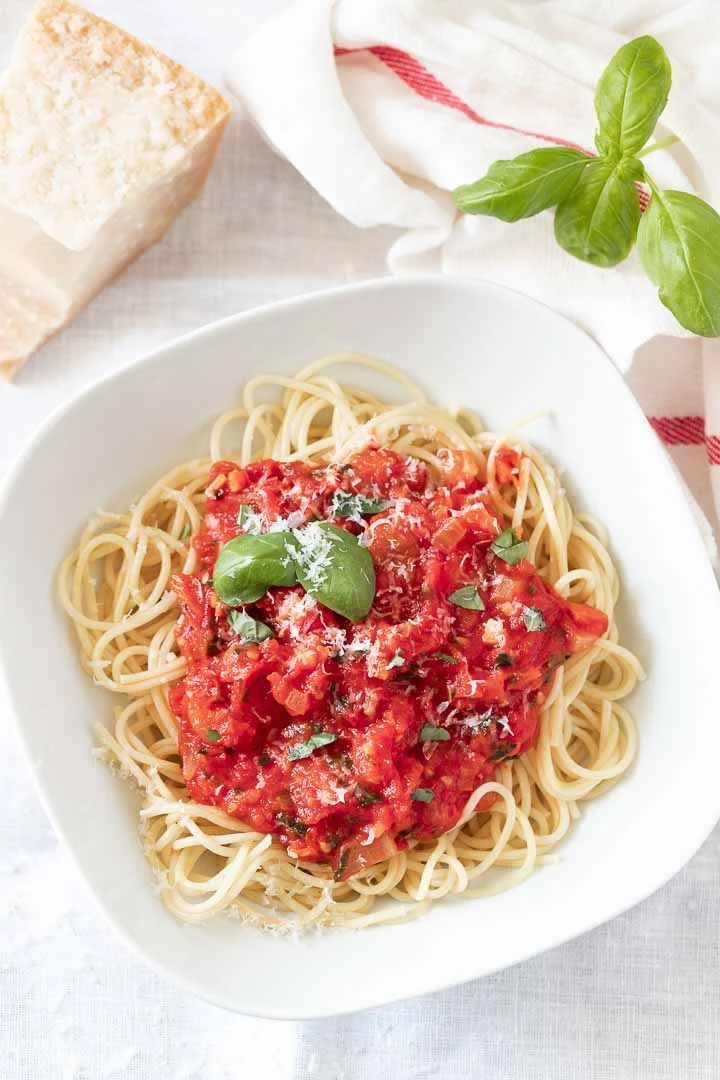
This fresh tomato sauce turns ripe plum tomatoes, onion, garlic and herbs into a simple Italian-style sauce for pasta. Blanching and peeling the tomatoes gives it a smooth, fresh flavour, while a little pasta water helps the sauce cling to the pasta.
Ingredients
- 2.27 kg (5 lb; about 14 medium plum tomatoes)plum tomatoes
- 30 ml (2 tablespoons)olive oil
- 75 g (½ cup)chopped yellow onion
- 2 clovesgarlic, minced
- to tastesalt and ground black pepper
- 2.5 ml (½ teaspoon)sugar
- 5 ml (1 teaspoon)chopped fresh thyme
- 6 large leavesfresh basil, chopped
- to serveParmesan cheese
Instructions
- 1
Boil the water
Fill a large stockpot with water and bring it to the boil.
- 2
Prepare ice water
Fill a large bowl with ice water and set it beside the stove.
- 3
Blanch tomatoes
Cut an X into the bottom of each tomato, then place them in the boiling water for 60 seconds.
- 4
Peel and chop
Lift the tomatoes into the ice water with a slotted spoon and leave them for 1–2 minutes. Remove the skins, roughly chop the tomatoes, discard the stems and any white flesh, and set the tomatoes aside.
- 5
Cook the aromatics
Heat the olive oil in the empty pot over medium heat. Add the onion and sauté for 4 minutes, until soft, then add the garlic and cook for 1 more minute. Add the tomatoes and their juices, turn the heat to high and season with salt and pepper.
- 6
Simmer the sauce
Bring the mixture to a simmer, then add the sugar, basil and thyme. Reduce the heat to medium-high and cook for about 15 minutes, until the sauce has thickened and reduced to about half.
- 7
Cook the pasta
Meanwhile, bring a large pot of water to the boil. Add 15 ml (1 tablespoon) of salt and cook the pasta according to the packet instructions until al dente.
- 8
Toss and serve
Stir 120 ml (½ cup) of pasta water into the tomato sauce and adjust the seasoning. Add the drained pasta and toss to coat, then serve with grated Parmesan.
What is fresh tomato sauce?
This is a simple Italian-style tomato sauce made by cooking fresh tomatoes with onion, garlic and herbs. Its marinara-like character comes from a short list of familiar ingredients rather than a long simmer.
Ripe plum tomatoes give this version its body, while peeling them helps keep the finished sauce tender and smooth. Tossing it with pasta and a little cooking water brings the sauce and pasta together.
Nutrition and macros by portion
The nutrition label shows one serving as written: 176 calories, 5g protein, 25g carbs, 8g fat.
| Portion | Adjustment | kcal | Protein | Carbs | Fat |
|---|---|---|---|---|---|
| Lighter | Use less olive oil | 123 kcal | 4g | 18g | 6g |
| This serving | As written | 176 kcal | 5g | 25g | 8g |
| Hungry | Larger pasta portion | 264 kcal | 8g | 38g | 12g |
The pasta is the main source of carbohydrate, while olive oil contributes most of the fat; the tomatoes and onion also provide carbohydrates. The Parmesan adds protein and some fat. For a more balanced plate, serve the pasta with a generous side of green vegetables.
Choosing the tomatoes
Ripe plum tomatoes: Choose tomatoes that feel heavy and yield slightly when pressed, with no large soft or damaged patches. Their juiciness supplies the base of the sauce.
Peeling: The brief blanch followed by an ice-water bath loosens the skins. Removing them before chopping makes for a less coarse sauce.
Building the flavour
Onion and garlic: Soften the onion before adding the garlic, which needs only a minute to cook. This order gives the onion time to turn tender without letting the garlic burn.
Herbs and sugar: Basil and thyme go in once the tomatoes have begun to simmer. The small amount of sugar rounds the sharpness of the tomatoes; taste the sauce before adding more.
Getting the texture right
Reduction: The sauce is ready when it has thickened and reduced to about half its starting volume. Stir as it cooks, especially towards the end, to prevent it catching on the bottom of the pot.
Pasta water: Add the specified 120 ml (½ cup) before tossing in the drained pasta. Its starchy liquid helps the sauce coat the pasta instead of sitting separately in the pot.
Timing the pasta
Pasta water: Start heating the separate pot while the sauce simmers so both parts are ready close together. Salt the boiling water as directed, then follow the pasta packet's timing.
Al dente: Stop cooking the pasta when it still has a slight bite. It will be tossed with the hot sauce, so avoid leaving it in the water beyond that point.
Serving the sauce
Pasta: Toss the drained pasta directly in the pot of sauce so each piece gets coated. If the sauce seems too thick, use the reserved pasta water as directed rather than adding plain water.
Finishing: Serve with grated Parmesan. A crisp green salad or simply cooked vegetables make an easy accompaniment.
Recipe notes & tips
- Have the bowl of ice water ready before you start blanching the tomatoes.
- Cut only through the tomato skin when making the X so the flesh stays intact.
- Use a slotted spoon to transfer the tomatoes safely from the boiling water.
- Stir the sauce regularly as it reduces, particularly near the end of cooking.
- Reserve the pasta water before draining the pasta.
- Grate the Parmesan just before serving for the best texture.
Variations
- Add chilli: Stir in a pinch of chilli flakes with the garlic for a gentle heat.
- Use oregano: Replace the thyme with chopped fresh oregano for a different herbal note.
- Make it chunkier: Chop the peeled tomatoes less finely and leave them to break down naturally as they cook.
- Add vegetables: Stir sautéed courgette into the finished sauce before tossing with pasta.
- Add a richer finish: Drizzle a little extra olive oil over the pasta just before serving.
Common mistakes to avoid
- Skipping the ice bath: The skins will be harder to remove; transfer the blanched tomatoes straight into ice water.
- Burning the garlic: It turns bitter if cooked too long; add it after the onion has softened and cook for just 1 minute.
- Crowding the pot: A very full pot can slow the sauce's reduction; use a large stockpot as directed.
- Undercooking the sauce: A thin sauce will not coat the pasta well; simmer until it has reduced to about half.
- Draining away the pasta water: It helps bind the sauce; set aside 120 ml (½ cup) before draining.
- Overcooking the pasta: It can turn soft when tossed with hot sauce; cook it only until al dente.
How to store
Store leftover sauce in an airtight container in the fridge and use within 3 days. Reheat gently in a saucepan, stirring, until piping hot; add a splash of water if it has thickened. The recipe does not specify a storage time for pasta once it has been mixed with the sauce.
Frequently asked questions
Do I have to peel the tomatoes?
The recipe blanches and peels them to give the sauce a smoother texture. You can leave the skins on, but expect a more rustic result.
Can I use a different type of tomato?
Yes, but choose ripe, juicy tomatoes. The sauce may need a little more or less cooking time depending on how much liquid they release.
How do I know when the sauce is ready?
It should be visibly thicker and reduced to about half its original volume after roughly 15 minutes of cooking.
Can I make the sauce ahead?
Yes. Cook the sauce ahead and refrigerate it, then reheat it while the pasta cooks. Add the pasta water when you combine the sauce with freshly cooked pasta.
What pasta should I use?
Use your preferred pasta shape and cook it according to the packet instructions until al dente. The method does not specify a particular shape.
Why add pasta water to the sauce?
The reserved water helps the sauce coat the pasta and brings the two together. Add the stated amount, then toss everything in the pot.
Cook it from the original
This recipe comes from platedcravings.com. Their page has the author’s own photos, notes and tips — the best place to cook it from.
Open the recipe on platedcravings.com