
Baked Bone-In Chicken Breasts
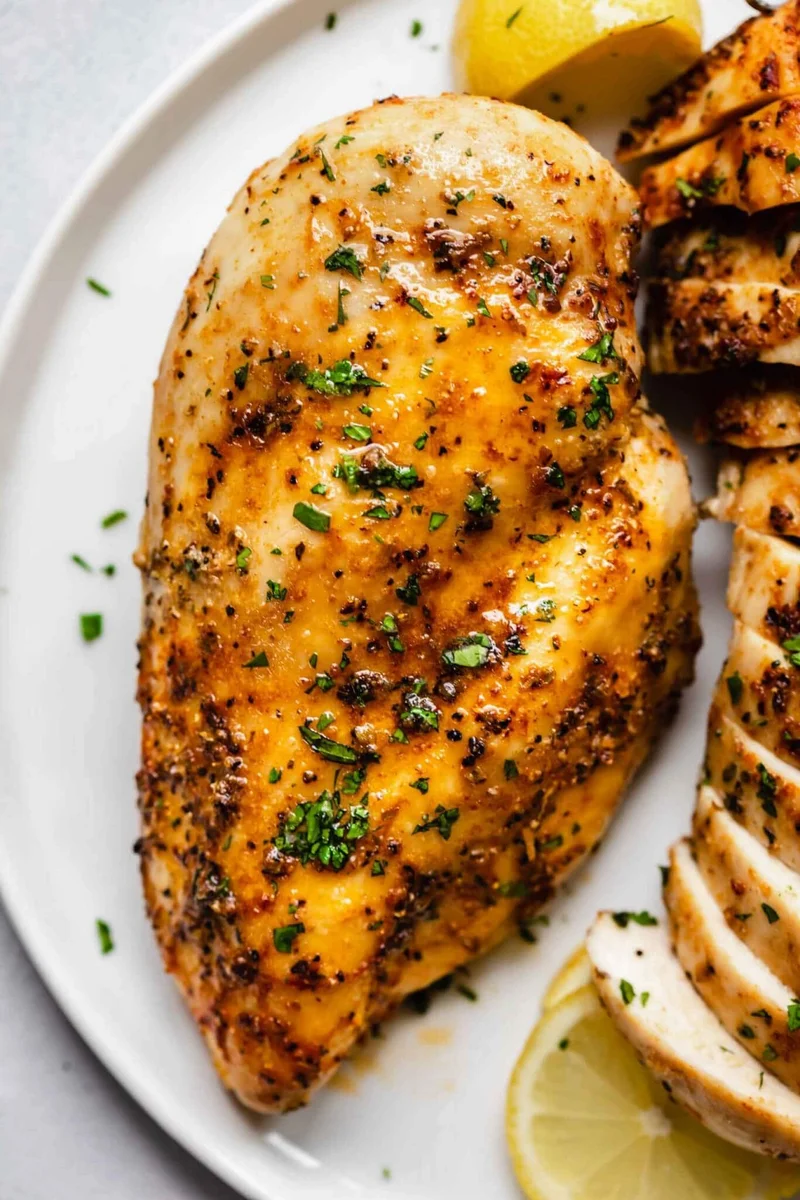
Oven-baked chicken breasts are coated in a simple herb-and-spice paste, then roasted until cooked through. This straightforward method works with either boneless or bone-in breasts, with a little extra oven time for bone-in pieces.
Ingredients
- 15 mlolive oil
- 2chicken breasts (boneless or bone-in)
- 1 teaspoonkosher salt
- ½ teaspoonoregano
- ½ teaspoonpaprika
- ½ teaspoonblack pepper
- ½ teaspoongarlic powder
Instructions
- 1
Heat the oven
Preheat the oven to 200°C (400°F).
- 2
Make the seasoning
In a small bowl, mix the salt and spices with the olive oil to form a paste. Rub it over the chicken breasts to coat them.
- 3
Bake the chicken
Arrange the chicken in a small baking dish and bake for 20–25 minutes, until cooked through and no longer pink. The internal temperature should reach 74°C (165°F).
- 4
Allow extra time
Bone-in chicken breasts take longer to cook. Add 5 minutes to the baking time and check that they are done.
What are baked chicken breasts?
Baked chicken breasts are a simple American-style main course made by seasoning chicken and cooking it in the oven. This version uses olive oil, oregano, paprika, black pepper and garlic powder for a savoury coating.
The recipe is flexible about the cut: it can be made with boneless or bone-in breasts. The main adjustment is allowing bone-in pieces an extra five minutes, then checking for doneness.
Nutrition and macros by portion
The nutrition label shows one serving as written: 163 calories, 24g protein, 1g carbs, 6g fat.
| Portion | Adjustment | kcal | Protein | Carbs | Fat |
|---|---|---|---|---|---|
| Lighter | Serve with extra vegetables | 114 kcal | 17g | 1g | 4g |
| This serving | As written | 163 kcal | 24g | 1g | 6g |
| Hungry | Add a larger side | 245 kcal | 36g | 2g | 9g |
The chicken provides most of the protein, while the olive oil contributes most of the fat; the seasoning adds very little carbohydrate. Serve it with vegetables and a portion of potatoes or another starch to make a more balanced plate.
The seasoning paste
Oil: mixing the olive oil with the salt and spices makes a paste that is easy to spread over the chicken. Coat the breasts evenly so the seasoning is distributed across the surface.
Spices: oregano, paprika, black pepper and garlic powder bring the flavour, while kosher salt seasons the meat. Keep the amounts as listed for the recipe’s intended balance.
Choosing the chicken
Boneless breasts: these are an option in the recipe and are likely to need less time than bone-in pieces. Start checking them within the stated 20–25-minute window.
Bone-in breasts: these are the focus of the dish and need an additional five minutes according to the method. Check the thickest part for the required internal temperature.
Checking for doneness
Temperature: the recipe specifies an internal temperature of 74°C (165°F). Check the thickest part of each breast, avoiding contact with the bone when measuring bone-in chicken.
Appearance: the method also calls for the chicken to be cooked through and no longer pink. Use the temperature check as the clearest doneness cue.
Timing and baking dish
Oven: preheat to 200°C (400°F) before baking so the chicken goes into a hot oven. The stated baking time is 20–25 minutes, with five extra minutes for bone-in breasts.
Dish: use a small baking dish as directed and arrange the breasts in it. If your pieces differ in size, check each one rather than assuming they will finish at exactly the same time.
What to serve with it
Vegetables: serve the chicken with roasted or steamed vegetables for a simple meal. Green vegetables or a mixed salad provide a fresh contrast to the savoury seasoning.
Starches: potatoes, rice or bread can make the plate more substantial. Choose a side that suits the meal and the portion you want.
Recipe notes & tips
- Mix the oil and seasonings thoroughly before coating the chicken.
- Coat all sides of each breast so the seasoning is not concentrated in one spot.
- Use the extra five minutes for bone-in breasts, then check the temperature.
- Check the thickest part of each breast for an accurate temperature reading.
- Let the oven finish preheating before putting in the baking dish.
Variations
- Herb change: Swap the oregano for another dried herb if you prefer a different flavour.
- Smokier paprika: Use smoked paprika in place of regular paprika for a deeper smoky note.
- Spice adjustment: Reduce or increase the black pepper to suit your preference.
- Boneless option: Use boneless chicken breasts and check them during the stated baking window.
- Side pairing: Serve with potatoes, rice or vegetables to suit the meal.
Common mistakes to avoid
- Uneven coating: Rub the seasoning paste over every side so each breast is seasoned.
- Skipping the temperature check: Check the thickest part and confirm it reaches 74°C (165°F).
- Using the boneless timing for bone-in chicken: Add the recipe’s extra five minutes and check for doneness.
- Relying only on the clock: Chicken pieces can differ, so check each breast rather than assuming they finish together.
- Putting chicken into a cold oven: Preheat to 200°C (400°F) before baking.
How to store
Refrigerate leftover chicken in a covered container and use within 3–4 days. Reheat until hot throughout; slice it before reheating if that helps it warm evenly.
Frequently asked questions
Can I use boneless chicken breasts?
Yes. The ingredient list allows boneless breasts as well as bone-in ones. Check boneless pieces within the stated 20–25-minute baking time.
How much longer do bone-in breasts need?
The recipe says to add 5 minutes to the baking time. Check the thickest part to confirm it reaches 74°C (165°F).
What temperature should the oven be?
Preheat it to 200°C (400°F).
How do I know the chicken is cooked?
Check that it is cooked through and no longer pink, and use a thermometer to confirm an internal temperature of 74°C (165°F) in the thickest part.
Can I prepare the seasoning ahead?
You can mix the oil, salt and spices shortly before coating the chicken. The recipe does not specify a make-ahead resting time.
Cook it from the original
This recipe comes from platingsandpairings.com. Their page has the author’s own photos, notes and tips — the best place to cook it from.
Open the recipe on platingsandpairings.com