
Ham Hock (Golonka) in Beer, Honey and Mustard
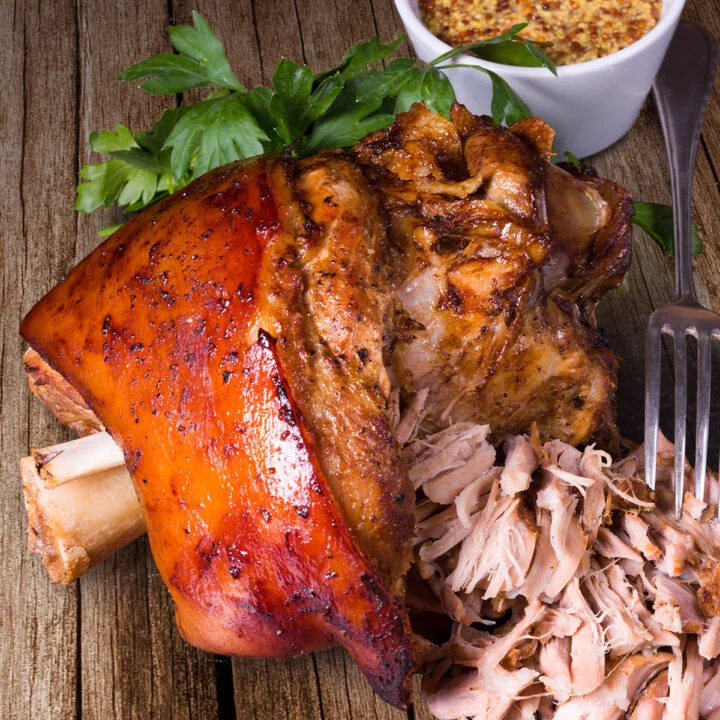
Polish golonka is cured pork knuckle, slowly cooked until tender and baked with porter, honey and mustard. The long preparation rewards you with fragrant meat and a golden, crisping skin.
Ingredients
- 2 (roughly 500 g each)pork hocks, front or rear
- 1 largecarrot
- 1parsley root (or celeriac)
- 1 headgarlic
- 1white onion
- 4bay leaves, fresh or dried
- 6allspice berries
- 8cloves
- 10black peppercorns
- 4 tbspsalt
- 4bay leaves, fresh or dried
- 6allspice berries
- 8cloves
- 10black peppercorns
- 1 largecarrot
- 1parsley root (or celeriac)
- 1 headgarlic
- 1white onion
- 1 bottle (500 ml)Baltic porter beer (or another dark beer, such as stout)
- 3 tbsphot Russian-style mustard or Dijon mustard
- 3 tbsphoney
- 2–3 sprigsrosemary
- 2–3 sprigsthyme
- 4–5garlic cloves
- 2white onions
Instructions
- 1
Choose a pot
Use a bowl or pot large enough to hold both hocks. A cooking pot of at least 3 litres is suitable and can also be used later to cook the meat.
- 2
Prepare vegetables
Peel the carrot, parsley root and onion, cut them into pieces and put them in the pot.
- 3
Add brine seasonings
Halve the garlic head crosswise without peeling it and add one half to the pot. Add 4 bay leaves, 6 allspice berries, 8 cloves, 10 black peppercorns and 4 tablespoons of salt.
- 4
Make the brine
Start by pouring in 1.4 litres of cold water. Stir until the salt has fully dissolved.
- 5
Check the skin
Inspect the hock skin for hairs. If needed, shave them off with a disposable razor or singe them with a cooking torch.
- 6
Submerge the hocks
Put the hocks in the brine and add more water if necessary so they are completely covered.
- 7
Cure in the fridge
Cover the pot with cling film and refrigerate for 48 hours.
- 8
Rinse the meat
Take the hocks out of the brine, rinse them in cold water and set them aside.
- 9
Strain the brine
Pour the brine through a strainer, keeping the vegetables and discarding the spices.
- 10
Simmer the hocks
Return the hocks to the empty pot. Add the second set of spices—4 bay leaves, 6 allspice berries, 8 cloves and 10 black peppercorns—but no salt. Add fresh water to cover the meat. Simmer on low heat for at least 2 hours with the lid slightly ajar.
- 11
Add more vegetables
As a guide, cook for 2 hours per 1 kg of meat. Halfway through, add another batch of peeled, chopped vegetables.
- 12
Check tenderness
After 2 hours, pierce the hocks with a fork. If they are not soft, continue cooking for another 30 minutes.
- 13
Heat the oven
Preheat the oven to 160°C, with the fan setting switched off.
- 14
Transfer the hocks
Move the hocks to a deep ovenproof dish or tray; a Dutch oven works well.
- 15
Score the skin
If you want scored skin, let the meat cool first, then cut the fat in a diamond pattern.
- 16
Mix the glaze
Pour the 500 ml bottle of porter into a jug or bowl. Whisk in 3 tablespoons of mustard and 3 tablespoons of honey.
- 17
Coat and season
Pour the mixture over the hocks; it will mostly collect in the bottom of the dish. Season generously with salt and freshly ground pepper.
- 18
Add aromatics
Tuck a few rosemary and thyme sprigs and garlic cloves into the gaps around the meat. Halve the onions and add them to the dish.
- 19
Cover the dish
Cover the dish with aluminium foil, with its shiny side facing inwards.
- 20
Bake covered
Bake in the preheated 160°C oven for 2 hours.
- 21
Finish uncovered
Remove the foil and bake for 1 more hour, basting the meat with the marinade occasionally. It will thicken as it cooks and cling more readily to the hocks.
- 22
Serve hot
Serve the hocks hot with dill pickles, potatoes and a glass of cold beer.
What is golonka?
Golonka is the Polish name for pork hock, a cut from the lower leg that is often cooked slowly until its connective tissue softens. It is a hearty dish commonly served with robust accompaniments such as potatoes and pickles.
This version first cures the hocks in a seasoned brine, then simmers them before baking with dark beer, honey and mustard. The two-stage cooking builds flavour while helping the meat become tender beneath the skin.
Nutrition and macros by portion
The nutrition label shows one serving as written: 465 calories, 14g protein, 67g carbs, 7g fat.
| Portion | Adjustment | kcal | Protein | Carbs | Fat |
|---|---|---|---|---|---|
| Lighter | Smaller hock portion | 326 kcal | 10g | 47g | 5g |
| This serving | As written | 465 kcal | 14g | 67g | 7g |
| Hungry | Add more potatoes | 698 kcal | 21g | 101g | 11g |
The pork hocks provide most of the protein and fat, while the honey and beer contribute carbohydrates; the vegetables add smaller amounts. Serve with potatoes and pickles, and adjust the potato portion to suit how substantial you want the plate to be.
The brine and aromatics
Brine vegetables: carrot, parsley root, onion and garlic flavour the liquid alongside salt and whole spices. Keep the hocks fully submerged during the 48-hour chill.
Cooking spices: the second set of bay leaves, allspice, cloves and peppercorns goes into fresh water with the hocks. The method calls for adding another batch of peeled, chopped vegetables halfway through simmering.
Tenderness before baking
Low simmer: keep the pot at a gentle simmer rather than a hard boil, with the lid slightly ajar. This gives the hocks time to soften without the liquid boiling away too quickly.
Fork test: after at least 2 hours, pierce the meat with a fork. If it is still firm, give it another 30 minutes and check again.
Beer, honey and mustard
Dark beer: porter brings a deep, malty flavour to the baking liquid; stout is suggested as an alternative. Whisk it thoroughly with the honey and mustard before pouring it over the hocks.
Glaze: most of the mixture sits in the bottom of the dish at first. Basting during the uncovered hour helps the thickening marinade coat the meat.
Skin and oven timing
Scoring: once the cooked meat has cooled enough to handle, cut the fat in a diamond pattern if you want scored skin. Check for hairs before cooking and remove any you find.
Baking: cook covered at 160°C for 2 hours, then uncover for 1 hour. The recipe specifies conventional oven heat, not the fan setting.
What to serve with it
Potatoes: serve them alongside to make a substantial plate and to soak up some of the beer and mustard cooking liquid.
Pickles: dill pickles bring a sharp, tangy contrast to the rich pork. A cold beer is the suggested drink pairing.
Recipe notes & tips
- Use a pot large enough to keep both hocks covered by the brine.
- Allow the full 48 hours for curing in the fridge.
- Check that the hocks are tender with a fork before transferring them to the oven.
- Keep the fan setting off, as the method specifies conventional oven heat.
- Baste the hocks occasionally during the final uncovered hour.
- Serve the cooking liquid with the meat and potatoes.
Variations
- Use stout: Swap the Baltic porter for another dark beer, as suggested in the recipe.
- Choose the mustard: Use Dijon instead of hot Russian-style mustard.
- Use celeriac: Substitute it for the parsley root in the vegetable mixture.
- Score the fat: Cut a diamond pattern into the fat after the hocks have cooled.
- Adjust the herbs: Use rosemary and thyme sprigs to flavour the baking dish.
Common mistakes to avoid
- Hocks above the brine: Add enough water to keep the meat fully submerged.
- Skipping the cure: Refrigerate the hocks in the brine for the full 48 hours.
- Boiling hard: Keep the cooking liquid at a low simmer with the lid slightly ajar.
- Rushing the simmer: Test with a fork and cook for another 30 minutes if the meat is not soft.
- Leaving the dish uncovered: Cover it for the first 2 hours of baking, then uncover for the final hour.
- Forgetting to baste: Spoon the marinade over the meat occasionally during the uncovered bake.
How to store
Cool leftovers and refrigerate them in a covered container, ideally with some of the cooking liquid, for up to 3 days. Reheat thoroughly in the oven, covered at first so the meat does not dry out.
Frequently asked questions
How long do the hocks need to cure?
Leave them in the brine, covered, in the fridge for 48 hours.
How do I know when the hocks are tender?
Pierce them with a fork after at least 2 hours of simmering. If they are not soft, cook for another 30 minutes and test again.
Can I use stout instead of porter?
Yes. The recipe suggests stout or another dark beer as a substitute for Baltic porter.
Should I use the oven fan?
No. Preheat the oven to 160°C with the fan setting switched off.
Do I have to score the skin?
No, scoring is optional. If you choose to do it, let the meat cool first and cut the fat in a diamond pattern.
What should I serve with golonka?
The suggested accompaniments are dill pickles and potatoes, with cold beer to drink.
Cook it from the original
This recipe comes from polonist.com. Their page has the author’s own photos, notes and tips — the best place to cook it from.
Open the recipe on polonist.com