
Scallop Piccata
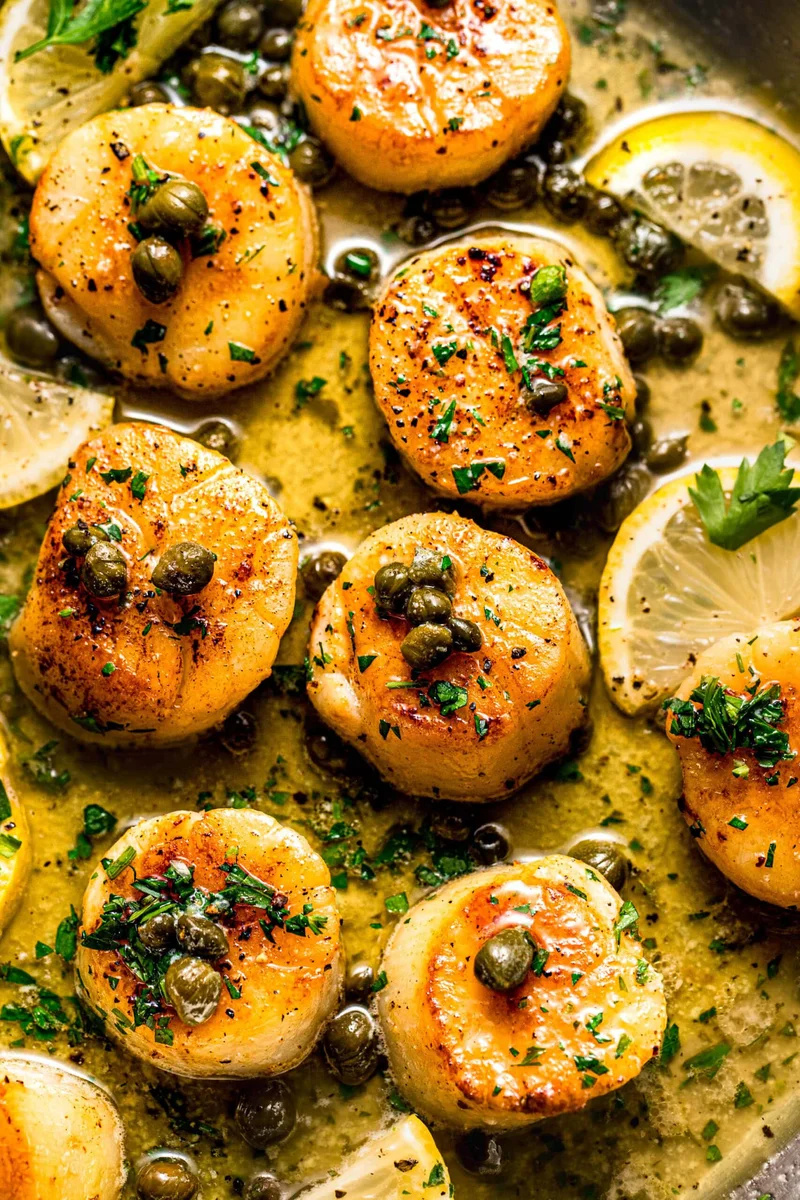
Scallop Piccata pairs quickly seared sea scallops with a buttery lemon-and-caper sauce. It makes an elegant dinner without a complicated method, and is ready in about 20 minutes.
Ingredients
- 454 gsea scallops
- 45 mlolive oil
- 56 g, dividedunsalted butter
- 30 mlcapers, drained
- 1 clovegarlic, grated or minced
- 30 mllemon juice
- 15 mlfresh parsley, finely chopped
- to tastekosher salt and pepper
Instructions
- 1
Dry the scallops
Arrange the scallops on a plate lined with kitchen paper and pat them very dry with more kitchen paper.
- 2
Season and rest
Season both sides lightly with salt and pepper. Leave the scallops at room temperature for 10 minutes before cooking.
- 3
Sear the first side
Heat the olive oil in a large frying pan over medium-high heat. When hot, add the scallops and sear without moving them for 3–4 minutes, until the undersides are golden.
- 4
Cook the second side
Add 14 g of the butter and turn the scallops over. Cook for about 3 minutes more, until the other side is golden, spooning the hot butter and oil over them as they cook. Transfer the scallops to a plate.
- 5
Melt remaining butter
Return the empty pan to a medium heat and add the remaining 42 g of butter.
- 6
Cook capers and garlic
Once the butter has melted, add the capers and garlic. Bring the mixture to a simmer and cook for about 1 minute, until fragrant.
- 7
Finish the sauce
Take the pan off the heat and stir in the lemon juice and parsley. Season to taste with salt, then nestle the cooked scallops into the sauce.
What is scallop piccata?
Piccata is an Italian-style preparation known for a bright, savoury sauce, often built around lemon and capers. This version uses sea scallops instead of the more familiar thin slices of meat.
A quick, high-heat sear gives the scallops a golden exterior, while butter, lemon and capers make a sharp, rich sauce. The contrast works best when the scallops are browned rather than steamed.
Nutrition and macros by portion
The nutrition label shows one serving as written: 275 calories, 14g protein, 5g carbs, 22g fat.
| Portion | Adjustment | kcal | Protein | Carbs | Fat |
|---|---|---|---|---|---|
| Lighter | Use less butter | 193 kcal | 10g | 4g | 15g |
| This serving | As written | 275 kcal | 14g | 5g | 22g |
| Hungry | Add pasta or bread | 413 kcal | 21g | 8g | 33g |
The olive oil and butter provide most of the fat, while the scallops supply the protein and the small amount of carbohydrate comes mainly from the capers and other ingredients. Serve with vegetables for a balanced plate, or add bread or a modest portion of pasta if you want a more substantial meal.
Choose and prepare the scallops
Scallops: Use sea scallops of similar size so they cook at roughly the same rate. If they are wet, patting them thoroughly dry is especially important for browning.
Seasoning: Salt and pepper go on before the short room-temperature rest. Keep the seasoning light at first, since capers can bring plenty of saltiness to the finished sauce.
Get a golden sear
Hot pan: Let the oil heat before adding the scallops, and leave space between them. If the pan is crowded, cook in batches so they can sear instead of releasing moisture and steaming.
Hands off: Resist nudging the scallops while the first side cooks for 3–4 minutes. They are ready to turn when the underside is golden and releases from the pan without force.
Finish them gently
Second side: After turning, cook for about 3 minutes and spoon the hot oil and butter over the scallops. Watch their thickness and avoid cooking them longer than needed; overcooked scallops can become firm and rubbery.
Sauce: Cook the garlic and capers briefly, just until fragrant, then remove the pan from the heat before adding lemon juice and parsley. This keeps the fresh, tangy flavours prominent.
Serve while the sauce is fresh
Timing: The sauce comes together quickly, so have the lemon juice and parsley ready before you start. Nestle the scallops back into the pan at the end and serve promptly.
On the plate: Serve with crusty bread, pasta or rice to catch the sauce. A simple green salad or steamed vegetables make a fresh counterpoint.
Adjust the seasoning
Capers: Drain them well before adding. Taste the sauce before adding more salt, as the capers may already make it salty enough.
Lemon: The stated amount gives the sauce its tang. If you prefer a milder finish, start with less and add a little more to taste after the pan comes off the heat.
Recipe notes & tips
- Dry the scallops thoroughly just before cooking for the best chance of a golden crust.
- Use a large pan and leave room around each scallop.
- Wait for the oil to heat before adding the scallops.
- Keep the garlic cooking brief so it becomes fragrant without burning.
- Taste the sauce before adding extra salt because capers are briny.
- Have the lemon juice and parsley ready before you begin cooking.
Variations
- Add white wine: Stir a small splash into the pan after cooking the garlic and capers, then simmer briefly before adding the lemon.
- Use lemon zest: Add a little finely grated zest with the lemon juice for a more aromatic finish.
- Add chilli: Stir a pinch of chilli flakes into the butter with the capers and garlic.
- Try another herb: Replace the parsley with chopped chives for a different fresh note.
- Serve with pasta: Toss cooked pasta with a little of the sauce and serve the scallops on top.
Common mistakes to avoid
- Damp scallops: They are more likely to steam than brown; pat them very dry with kitchen paper.
- Crowded pan: The scallops can release moisture and lose their crust; sear them in batches if needed.
- Moving them too soon: The first side may not brown properly; let it sear undisturbed for 3–4 minutes.
- Overcooking: Scallops can turn tough and rubbery; take them off the heat once both sides are golden and they are cooked through.
- Burnt garlic: It can make the sauce bitter; simmer it with the capers for only about 1 minute.
- Oversalting: Capers add brininess; taste the finished sauce before adding more salt.
How to store
Refrigerate leftovers in a covered container and eat within 2 days. Reheat gently in a pan over low heat until warmed through; avoid prolonged heating, which can toughen the scallops.
Frequently asked questions
Can I use frozen scallops?
Yes. Thaw them completely in the refrigerator and pat them very dry before cooking. If they are still icy or wet, they will not sear as well.
How can I tell when scallops are done?
Look for golden sides and an opaque appearance, with the scallops still tender. The recipe allows about 3–4 minutes on the first side and about 3 minutes on the second.
Can I use salted butter?
Yes, but reduce or hold back the added salt until you have tasted the sauce. The capers also contribute saltiness.
What should I serve with scallop piccata?
Crusty bread, pasta or rice can soak up the lemon-caper sauce. Green vegetables or a simple salad also work well alongside it.
Can I make the sauce ahead?
It is best made just before serving, while the scallops are cooking. The sauce takes only a few minutes, and freshly cooked scallops are at their best straight away.
Cook it from the original
This recipe comes from platingsandpairings.com. Their page has the author’s own photos, notes and tips — the best place to cook it from.
Open the recipe on platingsandpairings.com