
Jabłecznik: Polish Apple Cake
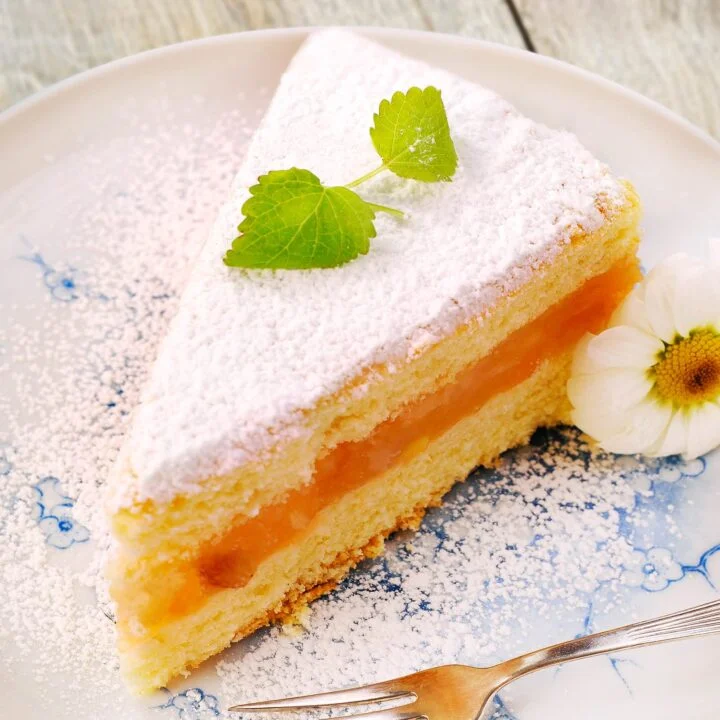
Jabłecznik is a Polish apple cake layered with gently spiced apples and a light sponge. It takes a little time to bake in stages, but makes a fragrant cake to share with tea or coffee.
Ingredients
- 1 kg (2.2 lb)tart, crisp apples
- 2 tablespoonsbutter
- 4 tablespoonscane sugar
- 1 teaspooncinnamon
- Juice of 1lemon
- 5 largeeggs
- 150 g (⅔ cup)caster sugar
- 110 g (1 stick)butter
- 3 tablespoonsmilk
- 240 g (2 cups)plain flour
- 1 teaspoonbaking powder
- 2 tablespoonsicing sugar
- A few drops, plus more if neededwater
Instructions
- 1
Prepare the apples
Peel the apples and cut them into wedges. Remove the cores, then chop each wedge into a few smaller pieces.
- 2
Fry the apples
Melt 2 tablespoons of butter in a large frying pan. Add the apple pieces, 4 tablespoons of cane sugar and 1 teaspoon of cinnamon. Fry for about 10 minutes, working in batches if needed. Soften the apples without letting them lose their shape.
- 3
Add the lemon
Stir in the juice of 1 lemon at the end of frying, then set the apples aside to cool.
- 4
Bring to room temperature
Make sure all the cake ingredients are at room temperature.
- 5
Melt the butter
Melt 110 g of butter in a microwave or on the hob, then leave it to cool.
- 6
Whisk eggs and sugar
Put 5 large eggs and 150 g of caster sugar into a large bowl or a stand-mixer bowl. Beat with a stand mixer or hand-held mixer until the mixture forms a pale foam and grows to about three times its volume.
- 7
Add butter and milk
With the mixer running, gradually pour in the melted butter, followed by 3 tablespoons of milk.
- 8
Fold in flour
Sift 240 g of flour and 1 teaspoon of baking powder directly into the egg mixture. Fold them in with a spatula.
- 9
Line the tin
Line a 23 x 33 cm baking tin with baking parchment.
- 10
Bake the first layer
Pour half of the batter into the prepared tin. Bake at 175°C for 15 minutes, until golden. Test the cake with a toothpick; it should come out dry.
- 11
Add apples and finish
Take the cake out of the oven, spread the apple filling over it and cover with the remaining batter. Bake at 175°C for a further 30 minutes, then test again with a toothpick.
- 12
Cool the cake
Remove the cake from the oven and leave it to cool. Dust with icing sugar or top with icing.
- 13
Make the icing
Put 2 tablespoons of icing sugar in a cup. Stir in a few drops of water with a fork, adding only a little more if it is too thick. If it becomes too runny, mix in more icing sugar. Pour the icing over the cake and leave it to set.
What is Jabłecznik?
Jabłecznik is a Polish apple cake, with its name referring to apples. Polish baking has many versions of apple cake; this one pairs a soft sponge with a separate layer of cooked fruit.
Tart apples, cinnamon and lemon give the filling a bright, gently spiced flavour. Baking the sponge in two stages helps it support the fruit without losing its light texture.
Nutrition and macros by portion
The nutrition label shows one serving as written: 220 calories, 6g protein, 33g carbs, 7g fat.
| Portion | Adjustment | kcal | Protein | Carbs | Fat |
|---|---|---|---|---|---|
| Lighter | Skip the icing | 154 kcal | 4g | 23g | 5g |
| This serving | As written | 220 kcal | 6g | 33g | 7g |
| Hungry | Serve a larger slice | 330 kcal | 9g | 50g | 11g |
The cake’s carbohydrates mainly come from the apples, sugar and flour; butter supplies most of the fat, while the eggs and flour contribute protein. Serve a slice with plain yoghurt and some fresh fruit for a more balanced plate.
Choosing and cooking the apples
Apple choice: Tart, crisp apples hold their shape well and offset the sweetness of the sponge. Cut them into similarly sized pieces so they soften at roughly the same rate.
Frying: Cook the apples in a roomy pan, in batches if necessary. Stop when they are tender but still hold their shape, then let them cool before adding them to the cake.
Building the sponge
Egg foam: Beat the eggs and caster sugar until pale, foamy and about three times their original volume. This aeration is central to the light sponge, so allow enough time for the mixture to expand.
Gentle mixing: Add the melted butter and milk gradually while mixing. Once the flour and baking powder go in, fold with a spatula rather than beating the batter.
Layering and baking
First bake: Spread half the batter in the lined tin and bake it for 15 minutes at 175°C. The surface should turn golden, and a toothpick should come out dry.
Fruit layer: Spread the cooled apples over the baked base and cover them with the remaining batter. Bake for another 30 minutes at 175°C, checking the centre with a toothpick before taking the cake out.
Finishing the cake
Cooling: Let the cake cool before dusting it with icing sugar or adding icing. This gives the topping a neater finish and makes the sponge easier to slice.
Simple icing: Add water to the icing sugar a few drops at a time. It is easier to thin a thick icing gradually than to correct one that has become too watery.
Serving ideas
Slices of Jabłecznik work well with tea or coffee, either plain or with a light dusting of icing sugar. The sweet sponge and tart fruit are flavourful without needing a rich accompaniment.
For a more substantial dessert, serve a slice with plain yoghurt or a small spoonful of crème fraîche. Keep additions modest if you want the apple and cinnamon to remain the focus.
Recipe notes & tips
- Use apples that are tart and crisp so the filling keeps its shape.
- Fry the fruit in batches if the pan is crowded.
- Let the cooked apple filling cool before layering it over the base.
- Bring the cake ingredients to room temperature as directed.
- Fold in the flour gently to help preserve the air in the egg mixture.
- Add water to the icing sugar a few drops at a time.
Variations
- Extra cinnamon: Add a little more cinnamon to the apples for a warmer spice note.
- Lemon zest: Grate some lemon zest into the apple filling for a brighter citrus aroma.
- Icing sugar finish: Dust the cooled cake with icing sugar instead of making icing.
- Plain serving: Leave off both toppings to let the fruit and sponge stand out.
- Serve with yoghurt: Add a spoonful of plain yoghurt alongside each slice.
Common mistakes to avoid
- Overcooking the apples: They can collapse into a purée; fry only until softened and still holding their shape.
- Crowding the pan: The apples may cook unevenly; fry them in batches if they do not fit comfortably.
- Adding hot filling: It can affect the cake layers; let the apples cool before assembling.
- Under-whisking the eggs: The sponge may be less light; beat until the foam is pale and about three times the volume.
- Overmixing after adding flour: This can deflate the batter; fold it in gently with a spatula.
- Adding too much icing water: The topping can become runny; mix in just a few drops at a time.
How to store
Once cool, store the cake covered in the fridge and eat within 3 days. Bring slices to room temperature before serving, or warm them briefly in a low oven.
Frequently asked questions
Which apples work best for Jabłecznik?
Choose tart, crisp apples that keep their shape when cooked. The recipe calls for 1 kg of them.
Can I make the apple filling ahead?
Yes. Cook it as directed and let it cool before storing it covered in the fridge. Bring it out when you are ready to assemble the cake.
Why does the recipe bake the cake in two stages?
The first bake sets the bottom layer before the apples and remaining batter go on top. This helps keep the filling between two sponge layers.
How do I know when the cake is baked?
Look for a golden top and test the centre with a toothpick. The recipe uses a dry toothpick as the doneness cue.
Can I use icing sugar instead of icing?
Yes. The recipe suggests either dusting the cooled cake with icing sugar or making a simple water-and-icing-sugar icing.
Cook it from the original
This recipe comes from polonist.com. Their page has the author’s own photos, notes and tips — the best place to cook it from.
Open the recipe on polonist.com