
Sernik: Classic Polish Cheesecake with on a Shortcrust Base
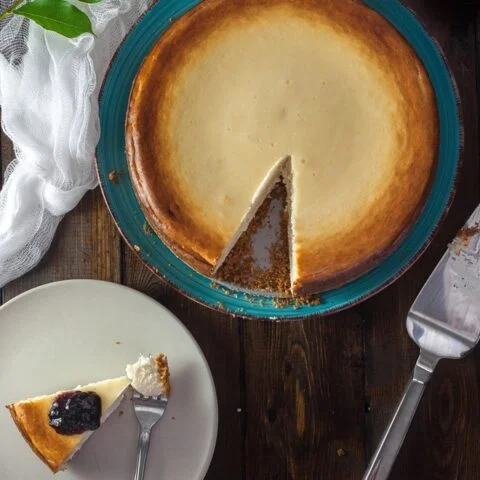
Sernik is a Polish cheesecake with a crisp shortcrust base and a rich filling made with farmer’s cheese. This version is baked slowly and finished with candied orange peel and raisins for a celebratory cake that can be made ahead.
Ingredients
- 250 g (2 cups)wholemeal flour (or plain flour)
- 2egg yolks
- 110 g (4 oz; 1 stick)butter
- 2 tbspicing sugar
- 1 tbspsour cream, 18% fat
- 1 kg (2.2 lb)full-fat farmer’s cheese
- 3egg yolks
- 5egg whites
- 200 g (1 cup)sugar
- 2 tspvanilla extract
- 110 g (4 oz; 1 stick)butter
- 2 tbsp (optional)potato starch
- 2 tbspchopped candied orange peel
- 2 tbsp (optional)raisins
- 2 tspicing sugar, for sprinkling
Instructions
- 1
Bring cheese ingredients
Take the ingredients for the cheese layer out of the fridge 2–3 hours before baking so they come to room temperature.
- 2
Make the pastry
Put all the shortcrust ingredients in a large bowl. Roughly chop the butter with a knife, then knead until combined and no large lumps remain. Shape into a ball.
- 3
Chill the dough
Cover the bowl with cling film and refrigerate the dough for 20–30 minutes.
- 4
Grind the cheese
While the dough chills, grind the farmer’s cheese using a meat grinder with its smallest holes, a potato ricer or a blender. If using a meat grinder, pass the cheese through at least twice, until smooth and lump-free. Set aside.
- 5
Prepare the tin
Preheat the oven to 180°C (360°F). Line a round 25 cm (10-inch) loose-based tin with baking parchment and grease the sides.
- 6
Line the tin
Roll the dough out to fit the tin, or press small pieces into it by hand. Make an even layer across the base.
- 7
Bake the base
Bake for 15 minutes, until lightly golden. Remove it from the oven but leave the oven on.
- 8
Mix yolks and sugar
In a large bowl, about 2 litres in capacity, combine the 200 g sugar, vanilla extract and 3 egg yolks with an electric mixer for 3 minutes.
- 9
Add cheese mixture
Add the ground cheese and softened butter. If the cheese mixture seems loose, add 2 tablespoons of potato starch. Mix with the electric mixer for 3–4 minutes.
- 10
Whisk egg whites
In a separate container, beat the 5 egg whites until stiff.
- 11
Fold in whites
Gently fold the egg whites into the cheese mixture with a spoon or spatula, taking care not to overmix.
- 12
Add fruit
Add the chopped candied orange peel and raisins, then fold them in for a few seconds.
- 13
Bake the cheesecake
Pour the cheese mixture over the pre-baked shortcrust base. Bake for 60 minutes at 180°C (360°F), with any fan-assisted function switched off.
- 14
Cool in oven
When the baking time is up, switch off the oven and leave the cheesecake inside for another 30 minutes. Then open the oven slightly and leave the cake inside until the oven has cooled completely.
- 15
Dust with sugar
Once the cheesecake is cool, sprinkle it with icing sugar.
What is sernik?
Sernik is a Polish baked cheesecake, traditionally made with a fresh curd cheese rather than the cream cheese often used in other cheesecakes. It is served in many forms, with recipes varying in their base and flavourings.
This version pairs a shortcrust pastry base with a cheese filling lightened with whipped egg whites. Candied orange peel and raisins add sweet, fruity accents.
Nutrition and macros by portion
The nutrition label shows one serving as written: 161 calories, 6g protein, 24g carbs, 4g fat.
| Portion | Adjustment | kcal | Protein | Carbs | Fat |
|---|---|---|---|---|---|
| Lighter | Smaller slice, fresh berries | 113 kcal | 4g | 17g | 3g |
| This serving | As written | 161 kcal | 6g | 24g | 4g |
| Hungry | Larger slice | 242 kcal | 9g | 36g | 6g |
The flour, sugar and pastry contribute much of the carbohydrate, while the butter and full-fat farmer’s cheese provide much of the fat. The cheese and eggs supply protein. Serve a slice with fresh fruit to add a fresh contrast to the rich cake.
The cheese filling
Farmer’s cheese: grind it until completely smooth before mixing it into the filling. A meat grinder, potato ricer or blender can do the job; with a grinder, pass the cheese through at least twice.
Room-temperature ingredients: take the cheese-layer ingredients out of the fridge 2–3 hours before baking. This helps them combine evenly.
A crisp pastry base
Shortcrust dough: knead the flour, yolks, butter, icing sugar and sour cream just until combined and shape it into a ball. Chill for 20–30 minutes before lining the tin.
Blind baking: bake the pastry base for 15 minutes until lightly golden before adding the filling. This gives the base a head start and helps keep its texture beneath the moist cheese mixture.
Folding in the egg whites
Stiff peaks: beat the egg whites until they hold their shape. Fold them into the cheese mixture gently, using a spoon or spatula.
A light touch: stop folding once the whites are incorporated, then mix in the orange peel and raisins briefly. Vigorous mixing can deflate the whites.
Baking and cooling
Steady heat: bake the filled cake for 60 minutes at 180°C, with the fan switched off. The filling should be set enough to hold its shape, though it may still have a slight wobble at the centre.
Gradual cooling: leave the cake in the switched-off oven for 30 minutes, then let it cool further in the slightly open oven until the oven is completely cool. This follows the recipe’s slow-cooling method before the cake is dusted with icing sugar.
Serving ideas
Plain slices: the icing sugar, orange peel and raisins give each slice plenty of flavour on their own. Cut the fully cooled cake with a clean knife for neater portions.
On the side: serve with fresh berries or sliced fruit for a bright contrast, or offer tea or coffee alongside it.
Recipe notes & tips
- Use a 25 cm round tin with a loose base, as specified in the method.
- Grind the farmer’s cheese until smooth to avoid lumps in the filling.
- If the cheese mixture seems loose, use the optional potato starch.
- Fold the stiff egg whites into the cheese mixture gently to preserve their volume.
- Switch off the oven fan for the 60-minute bake.
- Let the cake cool in the oven as directed before sprinkling it with icing sugar.
Variations
- Plain flour: swap it for the wholemeal flour in the shortcrust base.
- Without raisins: leave them out for a filling with candied orange peel only.
- Without starch: omit the optional potato starch if the cheese mixture is not loose.
- More orange: increase the candied orange peel to suit your taste.
- No fruit: leave out both the raisins and candied orange peel for a simpler cheese filling.
Common mistakes to avoid
- Lumpy cheese: grind it until smooth, passing it through a meat grinder at least twice if using one.
- Skipping the chill: refrigerate the dough for 20–30 minutes before lining the tin.
- Underbaked base: bake it for 15 minutes, until lightly golden, before adding the filling.
- Overmixing the whites: fold them in gently and stop once they are combined.
- Using the fan: switch off fan-assisted functions during the 60-minute bake.
- Rushing the cooling: leave the cake in the switched-off, gradually cooling oven as directed.
How to store
Once completely cool, cover and store the cheesecake in the fridge, where it will keep for up to 3–4 days. Serve chilled or let a slice sit briefly at room temperature before eating.
Frequently asked questions
What can I use instead of farmer’s cheese?
This recipe is designed for farmer’s cheese. It does not give a substitute, so another cheese may change the filling’s texture and flavour.
Do I have to use potato starch?
No, it is optional. Add 2 tablespoons only if the cheese mixture seems loose.
Can I leave out the raisins?
Yes. The recipe marks them as optional, so you can omit them and keep the candied orange peel.
How do I know when the egg whites are ready?
Beat them until stiff, so they hold their shape rather than falling back into the bowl.
Why does the cheesecake cool in the oven?
The method calls for gradual cooling: leave it in the switched-off oven for 30 minutes, then let it remain inside with the oven slightly open until completely cool.
Can I use plain flour for the base?
Yes. The recipe says wholemeal flour can be swapped for plain flour.
Cook it from the original
This recipe comes from polonist.com. Their page has the author’s own photos, notes and tips — the best place to cook it from.
Open the recipe on polonist.com