
Thai Potato Curry (Vegan)
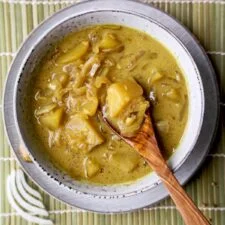
This vegan Thai potato curry simmers tender potatoes and onions in a coconut milk sauce flavoured with garlic, ginger and curry powder. It comes together in about 25 minutes and makes an easy meal to serve with rice.
Ingredients
- 30 ml (2 tablespoons)vegetable oil or another neutral oil
- 2garlic cloves, minced
- 15 ml (1 tablespoon)ginger, peeled and finely chopped
- 2.5 ml (½ teaspoon)ground coriander
- 240 ml (1 cup)organic coconut milk
- 227 g (8 ounces)potatoes, peeled and cut into 2.5 cm (1-inch) cubes
- 30 ml (2 tablespoons)soy sauce
- 1 teaspoonsugar
- ½ teaspoonkosher salt
- 15 ml (1 tablespoon)curry powder
- 120 ml (½ cup)vegetable broth
- 227 g (8 ounces)onions, thinly sliced
Instructions
- 1
Start the aromatics
Set a medium-sized pot over medium-high heat and add the oil, garlic, ginger and ground coriander.
- 2
Cook briefly
Stir for 1 minute, until the garlic is fragrant.
- 3
Add curry ingredients
Pour in the coconut milk and stir. Add the potatoes, soy sauce, sugar, salt and curry powder, then stir and bring to a boil.
- 4
Add the broth
Pour in the vegetable broth and bring the mixture back to a boil.
- 5
Simmer until tender
Add the onions and stir. Cover the pot and simmer for 15–20 minutes, until the potatoes are tender. Serve with rice.
What is Thai potato curry?
This is a coconut milk curry with potatoes and onions, seasoned with aromatics, soy sauce and curry powder. It draws on Thai curry flavours, while the curry powder gives this particular version its own simple, pantry-friendly character.
Coconut milk makes the sauce creamy, while the broth loosens it enough to simmer the vegetables. The potatoes absorb the seasoning as they cook, making this a practical one-pot dish.
Nutrition and macros by portion
The nutrition label shows one serving as written: 221 calories, 4g protein, 19g carbs, 16g fat.
| Portion | Adjustment | kcal | Protein | Carbs | Fat |
|---|---|---|---|---|---|
| Lighter | Use less coconut milk | 155 kcal | 3g | 13g | 11g |
| This serving | As written | 221 kcal | 4g | 19g | 16g |
| Hungry | Serve with extra rice | 332 kcal | 6g | 29g | 24g |
Potatoes and rice provide most of the carbohydrates, while coconut milk and oil contribute much of the fat. The potatoes and coconut milk offer only modest protein, so serve with a protein-rich side such as tofu or beans to balance the plate.
Build the flavour base
Aromatics: Garlic, ginger and ground coriander go into the hot oil first. A brief stir releases their fragrance without needing to brown them deeply.
Curry seasoning: Curry powder, soy sauce and a little sugar season the coconut milk. Stir them in well so the potatoes are coated once they are added.
Choose and cut the potatoes
Potato size: Cut the peeled potatoes into evenly sized 2.5 cm cubes so they cook at a similar rate. Larger pieces may need more time to become tender.
Doneness: Check a cube with a fork near the end of the simmer. It should be tender through the centre but still hold its shape.
Get the simmer right
Bring the coconut milk mixture to a boil after adding the potatoes and seasonings, then add the broth and bring it back to a boil as directed. Once the onions are in, cover the pot and lower the heat enough to maintain a gentle simmer.
Start checking the potatoes at 15 minutes. Continue simmering, covered, for up to 20 minutes if they need more time.
Keep the onions in the pot
The thinly sliced onions are added after the broth returns to a boil, then simmer alongside the potatoes. Their finer cut lets them soften during the final cooking stage.
Stir them in before covering so they are distributed through the curry rather than sitting on top.
Serve with rice
The curry is served with rice, which makes a simple base for the creamy sauce. Spoon the potatoes, onions and sauce over freshly cooked rice.
For a more rounded plate, pair it with a side of vegetables; keep the curry's simmering time focused on the potatoes and onions.
Recipe notes & tips
- Cut the potatoes into evenly sized cubes to help them finish cooking together.
- Stir the garlic, ginger and coriander continuously during their brief cooking time.
- Use a pot with a lid that fits well to keep the curry covered as it simmers.
- Check a potato cube for tenderness at 15 minutes before extending the simmer.
- Serve with rice as directed to make the most of the coconut curry sauce.
Variations
- Add chilli: Stir in chilli to bring some heat to the curry.
- Use firm tofu: Add cooked tofu at serving time for a more substantial meal.
- Add vegetables: Simmer quick-cooking vegetables with the onions, allowing for their cooking time.
- Try fresh herbs: Finish with chopped coriander leaves for a fresh herbal note.
- Adjust the sauce: Add a little more vegetable broth if you prefer a looser curry.
Common mistakes to avoid
- Uneven potato cubes: They cook at different speeds; cut them to a similar 2.5 cm size.
- Scorched aromatics: Garlic can catch quickly; stir the mixture for the full 1 minute over medium-high heat.
- Skipping the second boil: Bring the broth mixture back to a boil before adding the onions.
- Simmering uncovered: The method calls for a covered pot; keep the lid on to cook the potatoes as directed.
- Guessing doneness: Check a potato with a fork and continue simmering if its centre is still firm.
How to store
Refrigerate leftovers in a covered container and use within 3 days. Reheat gently in a covered saucepan or in the microwave until hot throughout, adding a splash of broth if the sauce has thickened.
Frequently asked questions
Can I make this curry ahead?
Yes. Cook it, cool it promptly and refrigerate it in a covered container. Reheat gently before serving.
How do I know when the potatoes are done?
Pierce a cube with a fork; it should be tender through the centre while still holding its shape.
Can I use a different type of potato?
Yes. Cut the potatoes you have into evenly sized cubes and check them for tenderness during the 15–20 minute simmer.
What should I serve with the curry?
Serve it with rice, as the recipe suggests. A vegetable side or a protein-rich accompaniment can round out the meal.
Can I make the sauce thinner?
Add a little more vegetable broth if you prefer a looser consistency.
Cook it from the original
This recipe comes from pickledplum.com. Their page has the author’s own photos, notes and tips — the best place to cook it from.
Open the recipe on pickledplum.com