
Fermented Tomatoes (Квашеные помидоры)
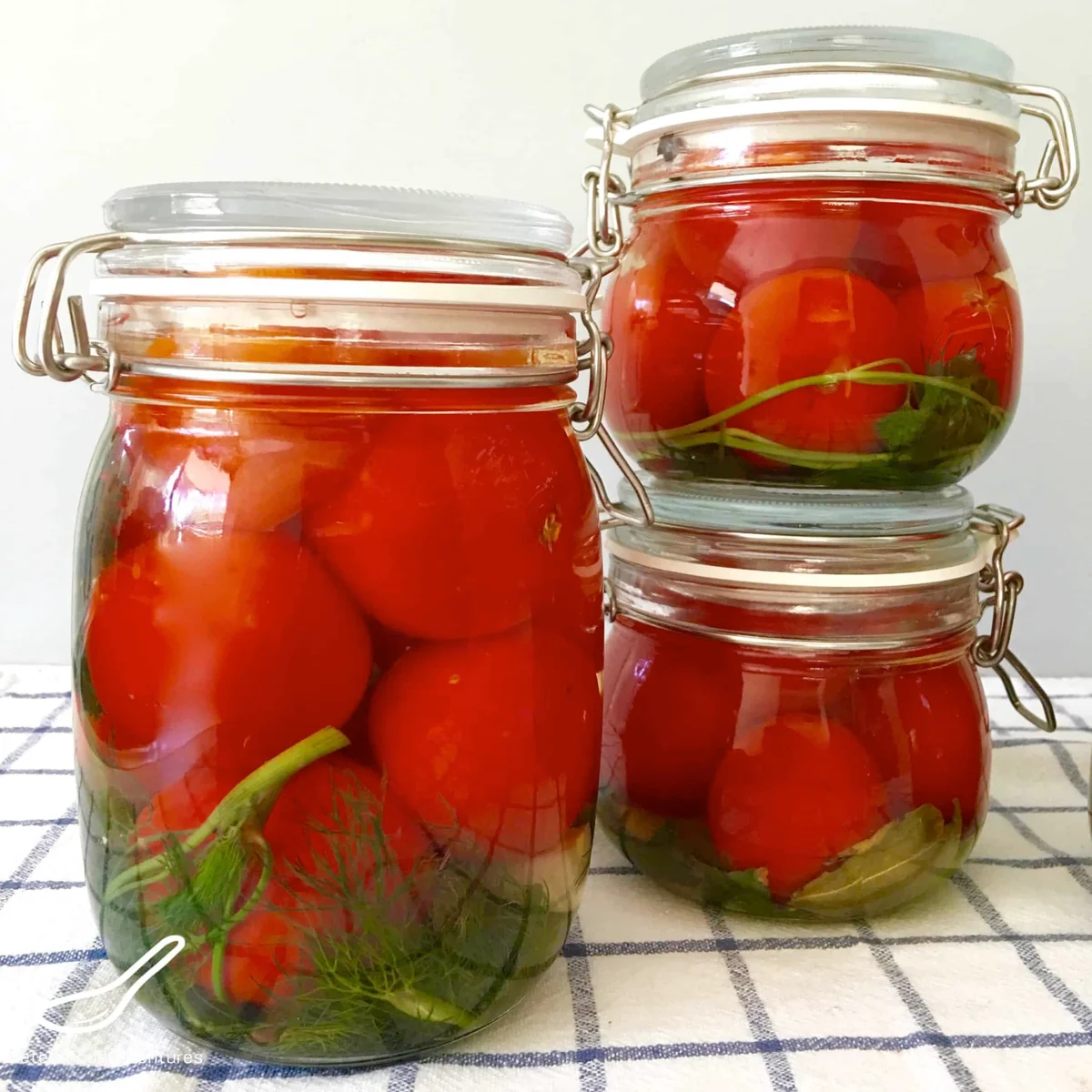
These Russian-style fermented tomatoes are packed with dill, garlic and warming spices, then left to sour gently in a salty brine. They take little hands-on time and make a tangy accompaniment to hearty meals.
Ingredients
- Enough to fill your jarTomatoes
- 1 bunchDill, ideally with a flower head
- 2Blackcurrant or horseradish leaves (optional)
- 5 clovesGarlic
- 10Peppercorns
- 2Cloves
- 2Whole allspice berries, if available
- 2 or 3 stemsParsley
- 1Bay leaf
- 3 generous teaspoonsPure salt, without iodine or additives
- 1 teaspoonSugar
- 475 ml (2 cups)Water
Instructions
- 1
Prepare tomatoes
Wash the tomatoes and remove their stems. Pierce each one with a fork at the stem end so the brine can get inside; pierce larger tomatoes in two places if needed.
- 2
Sterilise jars
Prepare sterilised jars. The recipe uses 1-litre jars, though 3-litre jars are also commonly used.
- 3
Add aromatics
Put the dill, parsley, optional leaves, garlic, allspice, bay leaf, cloves and peppercorns in the bottom of the jar.
- 4
Fill with tomatoes
Arrange the tomatoes over the herbs and spices until the jar is full. Cut the final tomato in half if that helps it fit.
- 5
Make the brine
Measure 475 ml (2 cups) of boiling water into a heatproof jug. Stir in 3 generous teaspoons of salt and 1 teaspoon of sugar until dissolved, then pour the mixture into the jar. Top up until the tomatoes are covered. Cold tap water can also be used, but hot water helps release flavour from the herbs and cools quickly.
- 6
Ferment tomatoes
Cover the jar opening with cheesecloth and leave it on a countertop, out of direct sunlight, for 3–5 days. Fermentation may take less time in summer and more in winter, depending on the room temperature. If any tomatoes sit partly above the brine, turn them daily.
- 7
Chill and mature
When the tomatoes have reached the level of sourness and fizz you like, close the lid and refrigerate them for another 1–2 weeks before eating. This gives the brine, herbs and tomatoes more time to develop their flavour. Keep the jar refrigerated.
What are fermented tomatoes?
Квашеные помидоры, or fermented tomatoes, are a traditional Russian-style preserve made by letting tomatoes sour in a seasoned brine. This version layers them with dill, garlic and spices, then gives them time to ferment at room temperature before chilling.
Piercing the tomatoes helps brine enter their flesh, while the aromatic leaves and herbs lend flavour to both the tomatoes and the liquid.
Nutrition and macros by portion
The nutrition label shows one serving as written: 35 calories, 2g protein, 8g carbs, 0g fat.
| Portion | Adjustment | kcal | Protein | Carbs | Fat |
|---|---|---|---|---|---|
| Lighter | Smaller tomato portion | 25 kcal | 1g | 5g | 0g |
| This serving | As written | 35 kcal | 2g | 8g | 0g |
| Hungry | Larger tomato portion | 53 kcal | 3g | 11g | 1g |
Tomatoes contribute most of the carbohydrates, while the salt is the main source of sodium; the small amount of sugar adds a little carbohydrate. There is very little fat or protein in the listed ingredients. Serve a tomato alongside a protein-rich main and a plain grain or potato to make a more balanced plate.
Choose the tomatoes and salt
Tomatoes: Use enough to pack your jar, choosing sound fruit that fits comfortably. Pierce each tomato at the stem end; larger ones may need a second puncture.
Salt: Use pure salt without iodine or additives, as specified in the recipe. The measured brine seasons the tomatoes as they ferment.
Build flavour in the jar
Herbs: Dill, parsley and garlic form the main aromatic base. Dill with its flower head is suggested, while blackcurrant or horseradish leaves are optional.
Spices: Peppercorns, cloves, allspice and bay add savoury warmth. Put them at the bottom first so the tomatoes sit on top of the flavourings.
Keep the tomatoes submerged
Brine: Stir the salt and sugar into boiling water until they dissolve, then pour it over the packed tomatoes. Make sure the fruit is covered before leaving the jar to ferment.
During fermentation: If tomatoes poke above the liquid, turn them daily as directed. Keep the jar out of direct sunlight and adjust the fermentation time to the warmth of the room.
Know when they are ready
Room-temperature stage: Leave the cheesecloth-covered jar on the counter for 3–5 days. The recipe notes that warmer summer conditions can shorten this stage, while cooler winter conditions can lengthen it.
Chilled stage: Once the sourness and fizz suit your taste, close the jar and refrigerate it for 1–2 weeks before serving. That extra time lets the brine and tomato flavours mingle and penetrate further.
How to serve them
Serve the tomatoes as a tangy side alongside hearty meals, or add one to a plate with potatoes, grains or other savoury dishes. A little of the seasoned brine can also be spooned over the tomatoes at the table.
Their sharp, salty flavour is a useful contrast to mild or rich foods, so start with a modest portion and add more to taste.
Recipe notes & tips
- Use a jar that lets you pack the tomatoes closely without crushing them.
- Pierce larger tomatoes in two places so the brine can get inside.
- Dissolve the salt and sugar completely before pouring in the brine.
- Keep the jar away from direct sunlight while it ferments.
- Turn any tomatoes that sit partly above the brine once a day.
- Let the jar chill for the full 1–2 weeks for deeper flavour.
Variations
- Add horseradish leaves: Use them in place of the optional blackcurrant leaves.
- Use blackcurrant leaves: Add the optional leaves for their distinctive herbal aroma.
- Choose dill flowers: Include a flower head when available for a traditional dill character.
- Use a larger jar: Make the recipe in a 3-litre jar, as is commonly done.
- Adjust the sourness: Start chilling when the tomatoes taste as tangy and fizzy as you like.
Common mistakes to avoid
- Skipping the punctures: Pierce the stem ends so the brine can permeate the tomatoes.
- Leaving fruit uncovered: Fill the jar so the tomatoes are covered with brine.
- Using direct sunlight: Set the jar on the counter away from direct sun.
- Forgetting exposed tomatoes: Turn any tomatoes protruding from the brine daily.
- Rushing the flavour: Refrigerate for another 1–2 weeks after the room-temperature fermentation.
- Using unsuitable salt: Choose pure salt without iodine or additives, as specified.
How to store
After the 3–5 day countertop fermentation, close the jar and keep it refrigerated; the recipe recommends waiting a further 1–2 weeks before eating. The source does not give a maximum storage period, so keep the jar chilled and use clean utensils when serving.
Frequently asked questions
How long do the tomatoes ferment on the counter?
The recipe gives 3–5 days, with warmer summer conditions tending to need less time and cooler winter conditions more. Keep the jar out of direct sunlight.
Can I use cold water for the brine?
Yes. The recipe says cold tap water is also suitable, although boiling water is preferred for the flavour it draws from the herbs.
Do I have to add the leaves?
No. The blackcurrant or horseradish leaves are optional, so you can leave them out if you cannot find them.
What size jar should I use?
The method uses a 1-litre jar, while noting that 3-litre jars are also commonly used. Pack in enough tomatoes to fill whichever jar you choose.
When can I eat the tomatoes?
Once they have fermented for 3–5 days and taste as sour or fizzy as you like, close the jar and refrigerate for another 1–2 weeks before eating.
Why pierce the tomatoes?
Piercing at the stem end lets the brine permeate the fruit. Larger tomatoes may need to be pierced in two places.
Cook it from the original
This recipe comes from petersfoodadventures.com. Their page has the author’s own photos, notes and tips — the best place to cook it from.
Open the recipe on petersfoodadventures.com