
Bbq Boiled Ribs
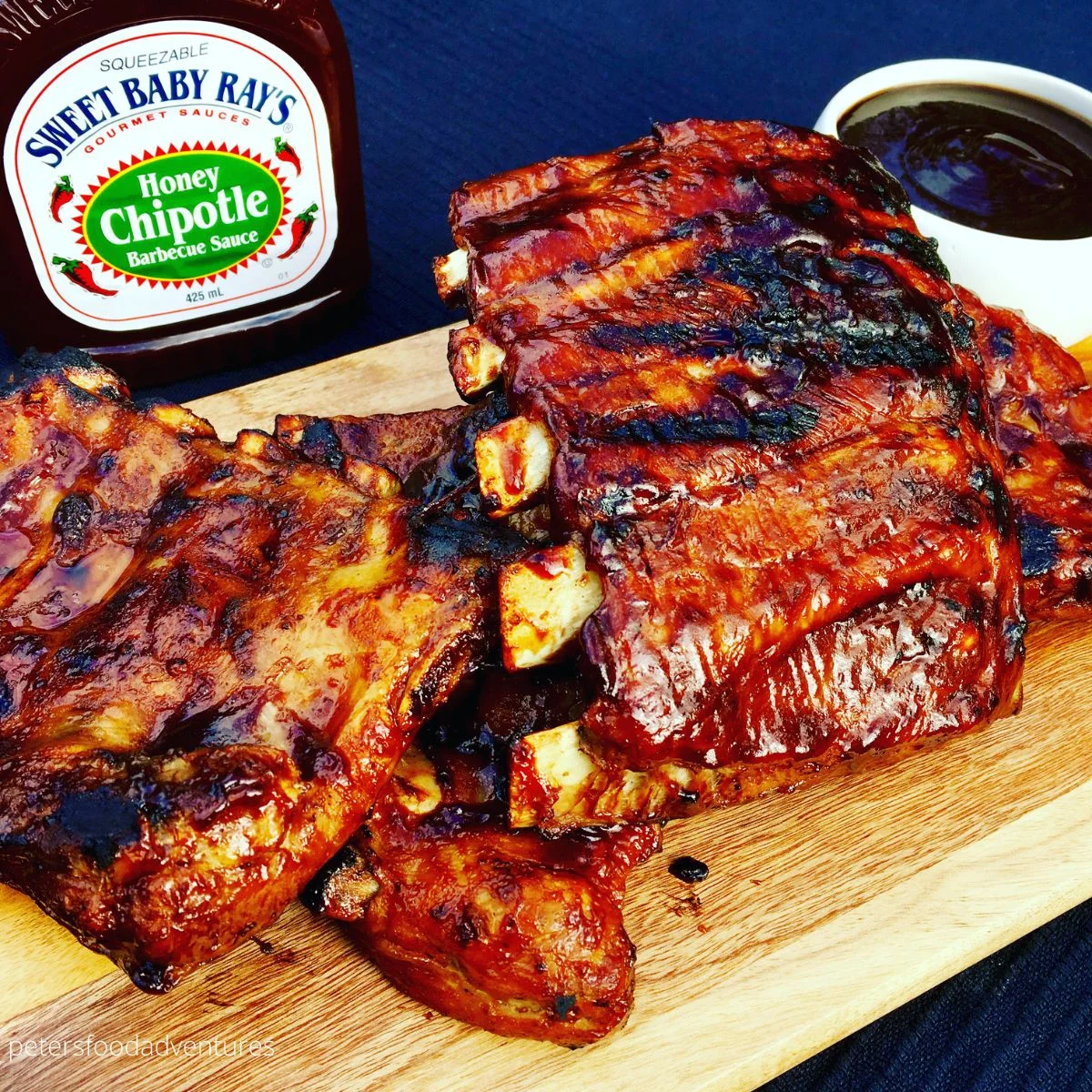
These American-style pork ribs are simmered with onion, garlic and crushed coriander seeds, then finished on the grill or under the broiler with barbecue sauce. Simmering first makes them tender while the final high heat adds a sticky, caramelised coating.
Ingredients
- 1 kg (2 lb)pork baby back ribs
- 2onions, thinly sliced
- 4 clovesgarlic
- 1 tablespooncoriander seeds, crushed
- 950 ml (4 cups)chicken broth
- for fryingoil
- to tastebarbecue sauce, for basting
Instructions
- 1
Remove the membrane
Loosen a corner of the membrane on the back of the ribs with a butter knife or your fingers. Grip it with a paper towel and pull it away.
- 2
Prepare the broth
In a large stockpot, sauté the onion and garlic in oil until tender. Add the ribs and crushed coriander seeds, then pour in enough chicken broth to cover the ribs.
- 3
Simmer until tender
Bring the broth to a boil, then turn the heat down. Cover and simmer gently for about 2 hours, until the ribs are fully tender.
- 4
Finish on the grill
Preheat the barbecue to medium heat. Lift the ribs out of the broth and discard the broth and onions. Brush the ribs with barbecue sauce and place them meatier side down on the grill. Grill for about 10 minutes, turning and basting with more sauce as needed.
- 5
Finish under the broiler
Carefully transfer the ribs to a foil-lined baking sheet and brush them generously with barbecue sauce. Place them under the broiler for 3–4 minutes, until the sauce caramelises and is slightly charred.
- 6
Serve the ribs
Serve immediately, with extra barbecue sauce on the side.
What are barbecue boiled ribs?
This American-style preparation cooks pork ribs gently in seasoned broth before giving them a quick, saucy finish over direct heat. Simmering softens the meat; grilling or broiling adds the browned, sticky surface associated with barbecue ribs.
Coriander seeds bring a warm, citrusy note to the broth, while onion and garlic build a savoury base. The method offers a quicker route to tender ribs than a long, low-temperature smoke, though it does not create the same smoky flavour.
Nutrition and macros by portion
The nutrition label shows one serving as written: 560 calories, 40g protein, 13g carbs, 38g fat.
| Portion | Adjustment | kcal | Protein | Carbs | Fat |
|---|---|---|---|---|---|
| Lighter | Use less barbecue sauce | 392 kcal | 28g | 9g | 27g |
| This serving | As written | 560 kcal | 40g | 13g | 38g |
| Hungry | Serve with baked potatoes | 840 kcal | 60g | 20g | 57g |
The ribs provide most of the protein and fat, while the barbecue sauce contributes much of the carbohydrate and sugar; broth and sauce can also make sodium significant. Serve a moderate portion with vegetables or salad, and add a starchy side such as potato or bread if you want a more filling plate.
The aromatic broth
Coriander seeds: crush them before adding so their flavour can infuse the broth. They should be broken up, not ground into a fine powder.
Onion and garlic: sauté these in oil until tender before adding the ribs and liquid. This softens their flavour and gives the cooking broth a savoury foundation.
Simmer gently
Low heat: once the broth boils, reduce it to a gentle simmer and keep the pot covered. A hard boil can make the cooking rough and cause the liquid to evaporate more quickly.
Tenderness: the method gives about 2 hours as a guide, but check the ribs for softness. The meat should be very tender before you take it out to finish.
Choose your finish
On the grill: use medium heat and place the ribs meatier side down first. Turn and baste them over about 10 minutes, taking care that the sauce does not scorch.
Under the broiler: arrange the ribs on a foil-lined baking sheet, brush generously with sauce and broil for 3–4 minutes. Watch closely; the sauce should caramelise and char slightly, not burn.
Timing and preparation
The recipe gives a simmering time of about 2 hours, followed by either a 10-minute grill finish or a 3–4-minute broiler finish. Have the barbecue or broiler ready before lifting the tender ribs from the broth so they can be finished promptly.
The listed total time is 125 minutes, but the simmer alone is about 2 hours. Allow additional time for preparing the ribs and completing the chosen finishing method.
Serving ideas
Serve the ribs hot with extra barbecue sauce, as directed. Coleslaw, corn on the cob or a crisp green salad can add freshness alongside the rich, saucy meat.
For a heartier plate, add baked potatoes or bread. Keep any extra sauce on the side so diners can add it to taste.
Recipe notes & tips
- Use a paper towel to get a firm grip when pulling away the slippery rib membrane.
- Crush the coriander seeds just before cooking for a fresher aroma.
- Keep the pot covered during the simmer and check occasionally that the ribs remain covered with broth.
- Brush on the barbecue sauce in layers during grilling rather than letting a thick coating sit over the heat.
- Stay close while broiling because the sugary sauce can go from caramelised to burnt quickly.
Variations
- Smoky finish: add a small amount of smoked paprika to the barbecue sauce before basting.
- Spicy sauce: stir chilli sauce or a pinch of cayenne into the barbecue sauce.
- Tangy glaze: mix a little cider vinegar into the barbecue sauce for extra sharpness.
- Herb note: add a few sprigs of thyme to the broth while the ribs simmer.
- Oven finish: use the broiler method when a barbecue is not available, watching the sauce closely.
Common mistakes to avoid
- Leaving the membrane on: it can make the back of the ribs chewy, so loosen and remove it before cooking.
- Boiling too vigorously: a rolling boil can agitate the ribs and reduce the broth quickly; lower the heat to a gentle simmer.
- Finishing before the ribs are tender: check the meat after the simmer and continue cooking gently if it is not yet soft.
- Burning the glaze: barbecue sauce can char fast under high heat, so turn the ribs regularly on the grill and watch them closely under the broiler.
- Skipping the foil: line the baking sheet for the broiler so sticky sauce is easier to clean up.
How to store
Refrigerate leftover ribs in an airtight container within 2 hours and use within 3–4 days. Reheat covered in a low oven until hot throughout, adding a little barbecue sauce if the surface seems dry.
Frequently asked questions
Can I use spare ribs instead of baby back ribs?
Yes, but thicker or larger ribs may need longer simmering. Cook until the meat is very tender before applying the barbecue finish.
Do I have to remove the membrane?
It is recommended because it can remain chewy after cooking. Loosen a corner, grip it with a paper towel and pull it away from the rack.
Can I make these ribs without a barbecue?
Yes. Use the broiler method: place the sauced ribs on a foil-lined baking sheet and broil for 3–4 minutes, watching for caramelisation and slight charring.
How do I know when the ribs have simmered long enough?
The recipe allows about 2 hours. Check that the meat is fully tender before removing the ribs from the broth.
Can I cook the ribs ahead?
You can simmer them ahead and refrigerate them once cooled. Finish them with barbecue sauce on the grill or under the broiler just before serving.
Why are the ribs not smoky?
Simmering in broth makes them tender but does not provide the smoke of traditional barbecue. A smoky barbecue sauce or a little smoked paprika can add a smoky note.
Cook it from the original
This recipe comes from petersfoodadventures.com. Their page has the author’s own photos, notes and tips — the best place to cook it from.
Open the recipe on petersfoodadventures.com