
Red Easter Eggs
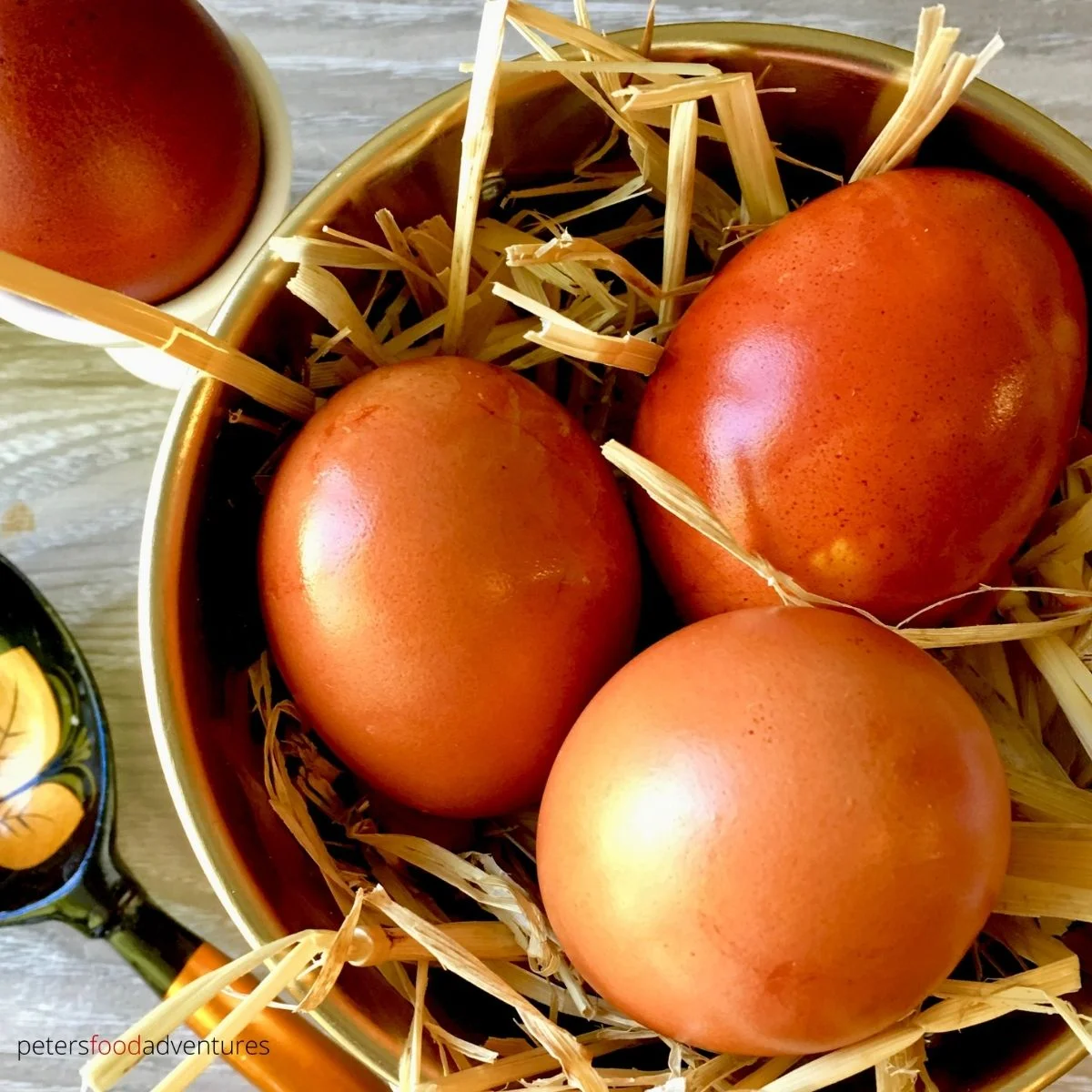
Red Easter Eggs are hard-boiled eggs coloured with onion skins, a traditional natural dye used in Greek and other Orthodox and Slavic Easter celebrations. The simple method makes a batch of richly tinted eggs with ingredients you may already have at home.
Ingredients
- Peels from 12 yellow onions (enough to fill the pan)yellow onion peels
- Enough to cover the onion peels and eggswater
- 1 dozen, at room temperatureuncooked eggs
Instructions
- 1
Boil the peels
Put the onion peels in a saucepan with water and bring it to a boil. Simmer for about 15–30 minutes.
- 2
Add the eggs
Let the onion dye cool to around room temperature. Place the room-temperature eggs in the pan among the peels, making sure they are fully covered with water; add more water if needed.
- 3
Cook and cool
Bring the pan to a boil and cook the eggs in the dye for about 10 minutes. Cover the pan and leave the eggs to cool in the liquid. For a deeper colour, refrigerate them in the dye overnight.
- 4
Lift and dry
Use a slotted spoon to remove the eggs, then leave them to dry.
- 5
Oil and chill
Gently rub the eggs with a little cooking oil to give them a shine. Keep them refrigerated until you are ready to eat them on Easter morning.
What are red Easter eggs?
Red Easter eggs are hard-boiled eggs coloured with a dye made from onion skins. Red eggs have a place in Greek Orthodox Easter traditions, as well as in other Orthodox and Slavic customs.
This version uses a long simmer with onion peels to make the dye, then cooks the eggs in the same liquid. The colour can deepen if the eggs stay in the dye overnight.
Nutrition and macros by portion
The nutrition label shows one serving as written: 72 calories, 6g protein, 0g carbs, 5g fat.
| Portion | Adjustment | kcal | Protein | Carbs | Fat |
|---|---|---|---|---|---|
| Lighter | Serve with extra vegetables | 50 kcal | 4g | 0g | 3g |
| This serving | As written | 72 kcal | 6g | 0g | 5g |
| Hungry | Add another egg | 108 kcal | 9g | 1g | 7g |
The eggs provide most of the protein and fat, while their carbohydrate content is very low; the onion skins contribute little to the portion. Pair an egg with vegetables and a serving of bread or another grain for a more complete plate.
Making the onion dye
Onion peels: Use enough to fill the pan, as the recipe relies on a generous quantity of skins to colour the water. Simmer them for 15–30 minutes before adding the eggs.
Water: Cover the peels while making the dye, then check again once the eggs are in the pan. The eggs need to remain submerged for an even coating.
Getting even colour
Room-temperature eggs: Starting with eggs at room temperature follows the recipe and avoids putting cold eggs straight into hot liquid. Add them only after the onion dye has cooled to around room temperature.
Longer contact: The eggs cook for about 10 minutes in the dye, then cool in the pan. For a deeper shade, leave them in the liquid overnight in the fridge.
Checking doneness and handling
Cooking time: Bring the pan to a boil, cook the eggs for about 10 minutes, then cover it and let the eggs cool in the dye. Use a slotted spoon to lift them out when you are ready to dry them.
Drying: Let the eggs dry before rubbing them with oil. Handle them gently, since the shells can crack or the coloured surface can be marked.
Finishing the eggs
Oil: Rub each dry egg gently with a little cooking oil to add shine. Use just enough to coat the shell lightly.
Serving: These eggs are made for an Easter table and can be served chilled or brought out shortly before eating. Keep them refrigerated until then.
Serving ideas
Serve the eggs as part of an Easter spread with bread, salads or other dishes already on the table. Their mild flavour makes them easy to pair with savoury sides.
For a simple snack, peel an egg and season it to taste. If serving the whole batch over time, return unused eggs to the fridge promptly.
Recipe notes & tips
- Use a pan large enough to keep the eggs covered with water.
- Let the dye cool to around room temperature before adding the eggs.
- Check the water level after placing the eggs in the pan and top it up if needed.
- For a deeper colour, leave the eggs in the dye overnight in the fridge.
- Dry the eggs before rubbing them gently with cooking oil.
Variations
- Deeper red: Leave the cooked eggs in the dye overnight in the fridge.
- More eggs: Scale up the onion peels and water so the larger batch stays covered.
- Glossy finish: Rub each fully dry egg with a small amount of cooking oil.
- Easter platter: Serve the eggs with bread and savoury sides for a shared meal.
Common mistakes to avoid
- Adding cold eggs: Let them reach room temperature before placing them in the cooled dye.
- Exposed eggs: Add enough water to keep every egg fully submerged.
- Dye too hot: Cool the onion liquid to around room temperature before adding the eggs.
- Expecting a deeper shade straight away: Leave the eggs in the dye overnight in the fridge.
- Oiling damp shells: Let the eggs dry first so the finish is more even.
How to store
Keep the cooked eggs refrigerated until ready to eat, and return any leftovers to the fridge promptly. For a deeper colour, the recipe recommends leaving them in the dye overnight in the fridge.
Frequently asked questions
Can I leave the eggs in the dye overnight?
Yes. Once the eggs have cooked, cover the pan and refrigerate them in the dye overnight for a deeper colour.
Do the eggs need to be at room temperature?
The recipe calls for room-temperature eggs. It also asks you to cool the onion dye to around room temperature before adding them.
How long should the onion peels boil?
Simmer the peels in water for about 15–30 minutes before adding the eggs.
How long do the eggs cook in the dye?
Bring the pan to a boil and cook the eggs for about 10 minutes. Then cover the pan and let them cool in the liquid.
Why rub the eggs with oil?
A gentle rub with a little cooking oil gives the dry shells a shine. Apply it after the eggs have dried.
Do I need to refrigerate the eggs?
Yes. Keep them refrigerated until you are ready to eat them, as directed in the recipe.
Cook it from the original
This recipe comes from petersfoodadventures.com. Their page has the author’s own photos, notes and tips — the best place to cook it from.
Open the recipe on petersfoodadventures.com