
Cajun Smothered Chicken
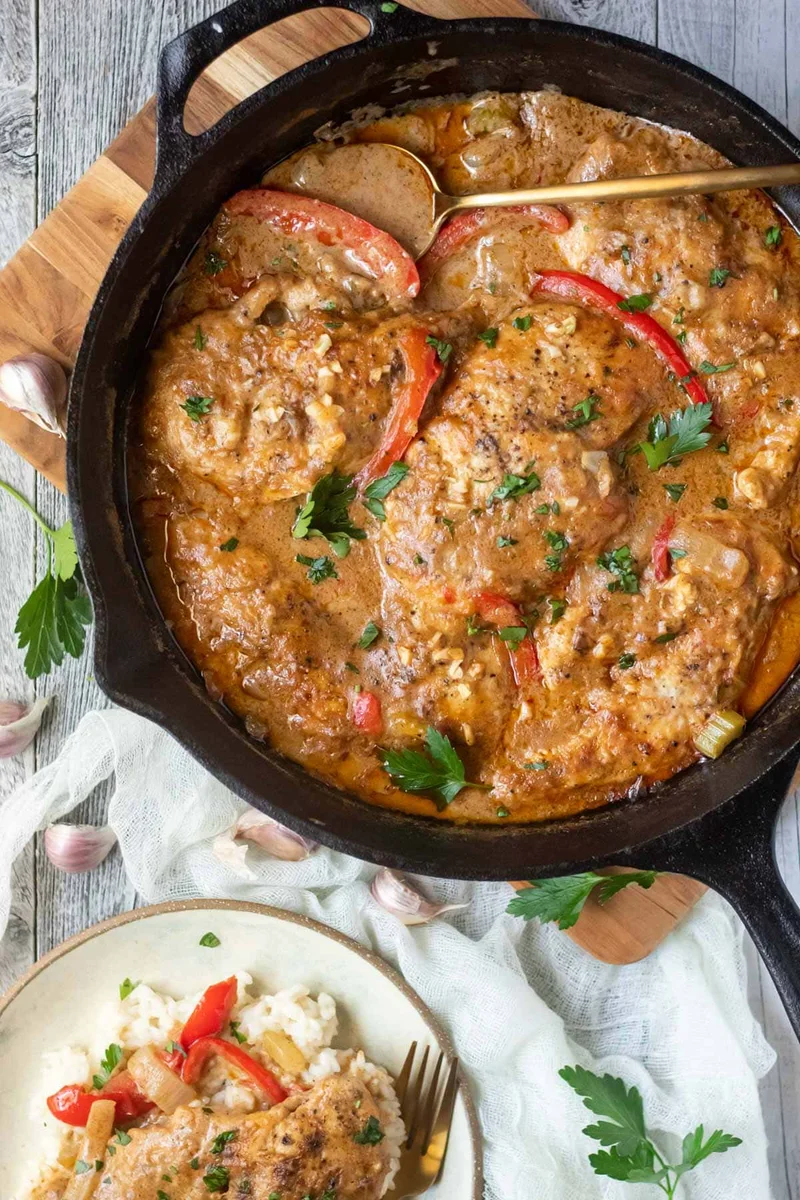
Cajun-style smothered chicken pairs lightly floured, pan-fried chicken breasts with a creamy gravy full of onion, pepper and celery. It makes a comforting one-pan main, especially served over rice to catch the sauce.
Ingredients
- 60 mlextra-virgin olive oil
- 900 gthinly sliced boneless, skinless chicken breasts
- to tastesalt and cracked black pepper
- about 80 g, divided (½ cup plus 2 tablespoons)plain flour
- 28 gunsalted butter
- 1 smallyellow onion, cut into thin strips
- 1 mediumred bell pepper, deseeded and cut into thin strips
- 1 stickcelery, sliced into half-moons
- 3 clovesgarlic, minced
- 710 mlchicken stock
- 15 mlWorcestershire sauce
- 60 mlhalf-and-half or whole milk
- ½ teaspoononion powder
- ½ teaspoongarlic powder
- ½ teaspoonsmoked paprika
- ¼–½ teaspooncayenne pepper
Instructions
- 1
Heat the oil
Warm 60 ml olive oil in a 30 cm cast-iron or other large, heavy-based frying pan over a medium-high heat.
- 2
Brown the chicken
Season both sides of the chicken with salt and pepper. Coat it lightly in flour, shaking off the excess, then fry in the hot oil for 5–7 minutes per side, until golden brown. Transfer the chicken to a plate lined with kitchen paper.
- 3
Soften the vegetables
Melt the butter in the same pan. Add the onion, pepper and celery and cook for 3–5 minutes, stirring with a wooden spoon and scraping up the browned bits. Add the garlic and cook for 1 minute, until fragrant.
- 4
Make the gravy
Stir in 2 tablespoons flour and cook for 1–2 minutes. Gradually pour in the chicken stock while stirring constantly to prevent lumps. Mix in the Worcestershire sauce and half-and-half, then add the onion powder, garlic powder, smoked paprika and cayenne. Reduce the heat to medium, season with salt and pepper to taste, and simmer for 2–3 minutes.
- 5
Simmer the chicken
Return the chicken to the pan and cover. Simmer for 15–20 minutes, until the gravy has thickened and the chicken is tender. Serve over white rice with the gravy spooned on top.
What is Cajun smothered chicken?
Smothered chicken is a Southern-style dish in which browned chicken finishes cooking in a savoury gravy. Cajun cooking is associated with Louisiana, and this version brings in a gently spiced gravy with the classic onion, celery and pepper combination.
Lightly flouring the chicken gives it a golden surface, while the same pan is used to build a gravy from the browned bits and softened vegetables. The chicken then simmers in the sauce, taking on flavour as it becomes tender.
Nutrition and macros by portion
The nutrition label shows one serving as written: 365 calories, 37g protein, 16g carbs, 17g fat.
| Portion | Adjustment | kcal | Protein | Carbs | Fat |
|---|---|---|---|---|---|
| Lighter | Use less rice | 255 kcal | 26g | 11g | 12g |
| This serving | As written | 365 kcal | 37g | 16g | 17g |
| Hungry | Add extra rice | 548 kcal | 56g | 25g | 25g |
The chicken provides most of the protein, while the flour and rice served alongside contribute carbohydrates. Olive oil, butter and half-and-half supply much of the fat. For a balanced plate, serve a moderate amount of rice with a generous helping of green vegetables.
The chicken and flour
Thin chicken breasts: These cook relatively quickly and fit neatly into the gravy. If some pieces are much thicker than others, they may need different amounts of time to cook through.
Light coating: Flour the chicken just before frying and shake away excess. A thin layer browns more evenly and leaves less loose flour in the pan.
Building flavour in the pan
Browned bits: After frying the chicken, use the butter and vegetables to loosen the tasty browned residue from the pan. Scrape the base as you stir so those bits become part of the gravy.
Vegetable base: Give the onion, pepper and celery 3–5 minutes to start softening before adding the garlic. The garlic cooks briefly so it becomes fragrant without burning.
Getting a smooth gravy
Flour roux: Stir the additional flour into the butter and vegetables for 1–2 minutes before adding liquid. This helps it blend into the gravy rather than tasting raw.
Gradual stock: Pour in the stock while stirring continuously. Adding it steadily and whisking or stirring well helps prevent lumps; if any form, keep stirring as the gravy simmers.
Spice and texture
Cayenne: The ¼–½ teaspoon range lets you choose a milder or hotter result. Start at the lower amount if you prefer less heat.
Doneness: The recipe's guide is a 15–20 minute covered simmer, with tender chicken and thickened gravy as the cues. Keep the heat at a gentle simmer rather than letting the sauce boil hard.
Serving the chicken
White rice: Serve the chicken on rice and spoon plenty of gravy over both. The rice absorbs the sauce and makes this a satisfying main meal.
On the side: A green vegetable, such as green beans or broccoli, adds a fresh contrast to the creamy gravy. Keep it simply cooked so it does not compete with the seasoned sauce.
Recipe notes & tips
- Pat the chicken dry before seasoning so the flour coating adheres more evenly.
- Shake off excess flour to help the chicken brown rather than leave a thick coating in the pan.
- Use a large pan so the chicken can brown without crowding.
- Stir the stock in steadily to keep the gravy smooth.
- Keep the covered gravy at a gentle simmer while the chicken cooks.
- Taste the gravy before serving and adjust the salt, pepper or cayenne if needed.
Variations
- More heat: Use the full ½ teaspoon of cayenne for a spicier gravy.
- Milder sauce: Use ¼ teaspoon cayenne or leave it out.
- Whole milk: Swap the half-and-half for the whole milk option in the ingredients.
- Extra vegetables: Add more sliced bell pepper or celery while softening the vegetables.
- Herb finish: Scatter chopped parsley over the chicken just before serving.
Common mistakes to avoid
- Crowded pan: Chicken can steam instead of browning; cook it in batches if needed.
- Too much flour: A heavy coating can turn gummy; shake off the excess before frying.
- Adding stock too quickly: The gravy may become lumpy; pour steadily while stirring constantly.
- Burnt garlic: It can taste bitter; add it after the other vegetables have softened and cook for only 1 minute.
- Hard boiling: The gravy can reduce too quickly; lower the heat and maintain a gentle simmer.
- Skipping the scrape: Browned bits add flavour; loosen them from the pan as the vegetables cook.
How to store
Refrigerate leftovers in a covered container for up to 3 days. Reheat gently in a covered pan over a low heat, adding a splash of stock or water if the gravy has thickened; ensure the chicken is piping hot throughout.
Frequently asked questions
Can I use chicken thighs instead?
Boneless, skinless thighs can be used, though their cooking time may differ from thinly sliced breasts. Simmer until the chicken is tender and cooked through.
How can I tell when the chicken is done?
Follow the recipe's 15–20 minute simmer and check that the chicken is tender and cooked through at its thickest point. Avoid relying on the gravy's thickness alone.
Can I make the gravy without half-and-half?
Yes. The ingredient list gives whole milk as an alternative. The sauce may be a little less rich.
How do I keep the gravy from going lumpy?
Cook the flour in the pan for 1–2 minutes, then pour the stock in gradually while stirring constantly. Keep stirring as the sauce comes to a simmer.
What should I serve with it?
White rice is suggested in the method and works well with the gravy. Add a simply cooked green vegetable on the side if you like.
Cook it from the original
This recipe comes from pinkowlkitchen.com. Their page has the author’s own photos, notes and tips — the best place to cook it from.
Open the recipe on pinkowlkitchen.com