
Bread Pudding with Dark Chocolate and Green Tea Powder
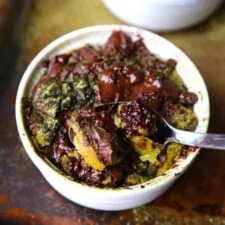
This American-style bread pudding layers challah soaked in a gently sweet green tea custard with pieces of dark chocolate. Toasting the bread first helps it hold its shape while it absorbs the custard.
Ingredients
- 57 g (2 oz)dark chocolate, roughly chopped (about 60% cocoa)
- 2 cups (about 120 g)challah bread, crusts removed and broken into bite-sized pieces
- 180 ml (¾ cup)milk (1% or 2%)
- 60 ml (¼ cup)double cream
- 25 g (2 tablespoons)granulated white sugar
- 4 g (1 teaspoon), or 2.5 ml (½ teaspoon) vanilla extractvanilla sugar
- 1 largeegg, beaten
- 2 tablespoonsgreen tea powder
Instructions
- 1
Preheat the oven
Heat the oven to 175°C (350°F).
- 2
Toast the bread
Arrange the challah pieces on a baking tray and bake for 5 minutes. Remove them and set aside, then lower the oven temperature to 165°C (325°F).
- 3
Whisk the custard
Meanwhile, whisk the milk, double cream, sugar, vanilla sugar and beaten egg together in a large bowl.
- 4
Make tea paste
Put 2 teaspoons of green tea powder in a small cup. Add about 30 ml (2 tablespoons) of the milk mixture and stir until smooth, then mix the paste into the large bowl.
- 5
Soak the bread
Add the bread pieces to the bowl and toss gently until coated. Refrigerate for 30 minutes.
- 6
Layer the puddings
Lightly coat 2 ramekins with cooking spray. Add a couple of spoonfuls of the bread mixture to each, top with a thin layer of chocolate, then add another layer of bread mixture. Finish with the remaining chocolate and set the ramekins on a baking tray.
- 7
Bake in water
Pour about 2.5 cm (1 inch) of water into the baking tray and bake the ramekins for 40 minutes.
- 8
Finish and serve
When the puddings are done, sprinkle the remaining green tea powder over the tops. Serve hot or cold.
What is bread pudding?
Bread pudding is a baked dessert made by soaking bread in a sweetened egg-and-milk mixture, then baking it until set. It has roots in practical home cooking, where leftover bread could be turned into a comforting pudding.
This version uses challah, a rich, slightly sweet bread, with dark chocolate and green tea powder. Toasting the bread before soaking helps it take on the custard without immediately falling apart.
Nutrition and macros by portion
The nutrition label shows one serving as written: 570 calories, 15g protein, 70g carbs, 25g fat.
| Portion | Adjustment | kcal | Protein | Carbs | Fat |
|---|---|---|---|---|---|
| Lighter | Use less chocolate | 399 kcal | 10g | 49g | 18g |
| This serving | As written | 570 kcal | 15g | 70g | 25g |
| Hungry | Add another portion | 855 kcal | 22g | 105g | 38g |
The challah and sugar provide most of the carbohydrates, while the chocolate, cream and egg contribute much of the fat; the egg, milk and bread also supply protein. To balance the plate, serve a ramekin with fresh fruit rather than adding another rich topping.
Choosing the ingredients
Challah: Its soft, enriched texture makes a tender pudding and complements the chocolate. Removing the crusts keeps the pieces soft and consistent.
Chocolate: Roughly chopped dark chocolate creates distinct pockets between the layers. A chocolate around 60% cocoa gives the pudding a pronounced chocolate flavour alongside the sweet custard.
Green tea powder: The recipe uses some powder in the custard and saves the rest for the finish. Whisking a small amount with custard first makes it easier to blend smoothly.
Why toast the challah first?
A brief 5-minute bake dries the bread's surface and gives it a little more structure. That helps the pieces absorb custard while staying recognisable in the finished pudding.
Keep to the short toasting time: the bread will bake again after soaking, so it does not need to brown or become crisp at this stage.
Getting a smooth tea custard
Tea powder: Stirring 2 teaspoons with a little of the milk mixture into a paste is the key step for avoiding dry clumps. Mix the paste thoroughly into the larger bowl before adding the bread.
Soaking: Toss gently so the challah is coated, then refrigerate it for 30 minutes as directed. This gives the bread time to take up the custard before it is layered into the ramekins.
Layering and baking
Chocolate layers: Divide the bread mixture and chocolate between the layers, finishing with the remaining chocolate on top. This distributes the chocolate through the pudding rather than leaving it all at the bottom.
Water bath: Adding about 2.5 cm (1 inch) of water to the tray surrounds the ramekins during baking. Take care not to splash water into them when moving the tray.
How to tell when it is done
Bake the ramekins for 40 minutes at 165°C (325°F), following the recipe's timing. The centre should look set rather than liquid when the puddings are ready.
The recipe serves the pudding either hot or cold. Sprinkle the reserved tea powder over the tops just before serving for a clear finishing layer.
Serving ideas
The pudding is rich enough to serve on its own, especially while warm and the chocolate is soft. For a simple contrast, pair it with fresh berries or sliced fruit.
If serving cold, let the ramekins cool first and chill them covered. Add the finishing green tea powder shortly before serving so it remains visible on top.
Recipe notes & tips
- Remove the challah crusts before breaking the bread into bite-sized pieces.
- Toast the bread for 5 minutes, then lower the oven temperature before preparing to bake the puddings.
- Make a smooth green tea paste with a little custard before stirring it into the full bowl.
- Toss the bread gently so the pieces stay intact while they are coated.
- Pour the water into the baking tray carefully to avoid splashing it into the ramekins.
- Dust with the remaining green tea powder just before serving.
Variations
- Use vanilla extract: Replace the vanilla sugar with ½ teaspoon of vanilla extract, as suggested in the ingredient list.
- Change the chocolate: Choose another dark chocolate percentage for a sweeter or more intense chocolate layer.
- Serve with berries: Add fresh berries alongside each ramekin for a fruity contrast.
- Make a larger dish: Layer the mixture in a suitably sized baking dish instead of individual ramekins, allowing for a different baking time.
- Adjust the tea finish: Use less of the reserved powder on top for a milder green tea flavour.
Common mistakes to avoid
- Skipping the toast: Untoasted bread may soften more quickly; bake the challah pieces for the stated 5 minutes first.
- Clumpy tea powder: Adding it straight to the full bowl can leave lumps; mix it into a small amount of custard to form a paste.
- Rough tossing: Vigorous mixing can break up the soaked bread; fold and toss gently until coated.
- Uneven chocolate layers: Adding all the chocolate in one place concentrates it; spread it between the bread layers and over the top.
- Splashing the water bath: Pouring carelessly can wet the puddings; add the water to the tray gently.
How to store
Cool the puddings, cover the ramekins and refrigerate for up to 3 days. Reheat in the oven until warmed through, or serve chilled as the recipe allows.
Frequently asked questions
Can I use vanilla extract instead of vanilla sugar?
Yes. The recipe gives ½ teaspoon of vanilla extract as an alternative to 1 teaspoon of vanilla sugar.
Why does the method use only 2 teaspoons of green tea powder?
The method mixes 2 teaspoons into the custard and reserves the rest for sprinkling over the finished puddings. The ingredient list gives 2 tablespoons in total.
Do I need to remove the challah crusts?
Yes, the recipe calls for crustless challah. Removing the crusts helps keep the pudding's texture soft and even.
Can I prepare the pudding ahead?
You can soak the bread mixture in the refrigerator for the stated 30 minutes before assembling and baking. For longer storage, keep the finished, cooled puddings covered in the fridge.
Can I serve bread pudding cold?
Yes. The recipe says to serve it hot or cold; chill the puddings after they have cooled if you prefer them cold.
What does the water in the baking tray do?
It forms a water bath around the ramekins during baking. Add about 2.5 cm (1 inch) of water to the tray, taking care not to splash any into the puddings.
Cook it from the original
This recipe comes from pickledplum.com. Their page has the author’s own photos, notes and tips — the best place to cook it from.
Open the recipe on pickledplum.com