
Greek Salad
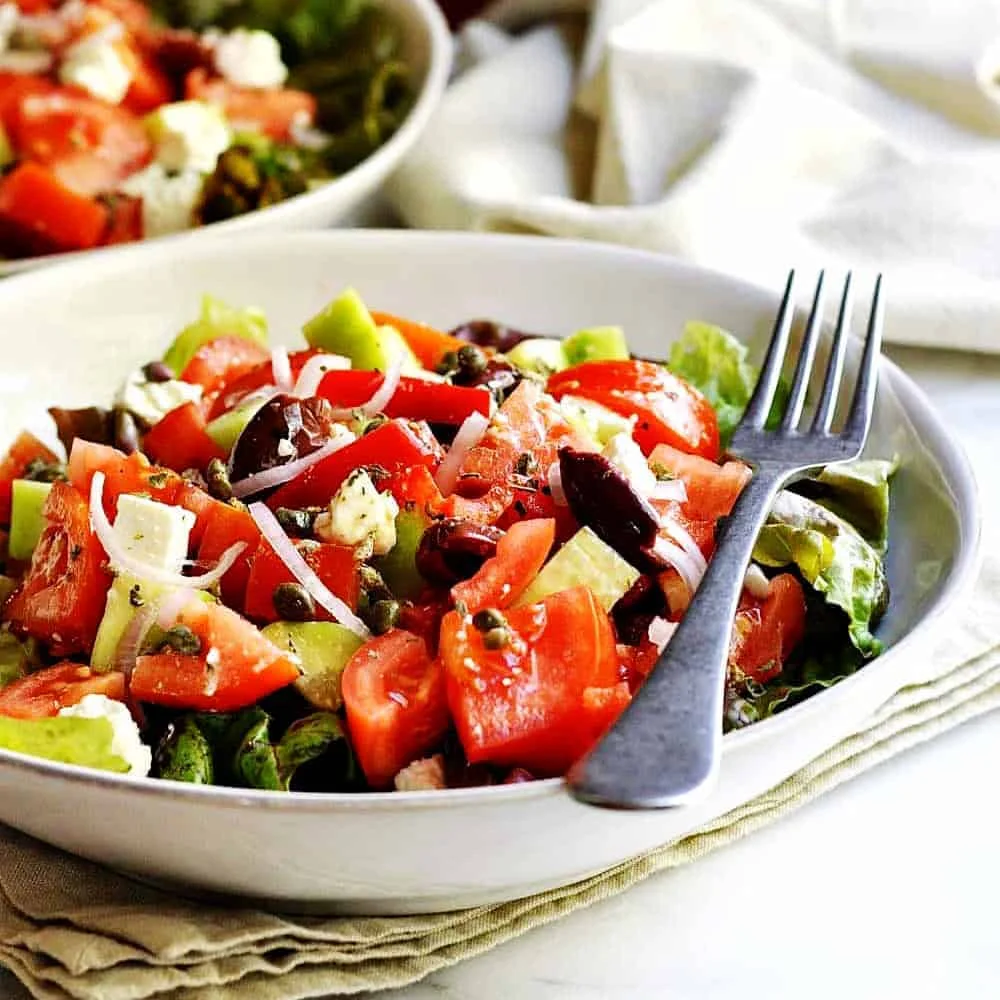
This Greek salad combines juicy tomatoes, crunchy cucumber and pepper, briny olives and capers, and feta with a simple oregano vinaigrette. It comes together in 15 minutes, making it a colourful side or a light meal.
Ingredients
- 60 ml (¼ cup)red wine vinegar
- 1 teaspoondried oregano, plus more for sprinkling on top if desired
- 120 ml (½ cup), or moreextra virgin olive oil
- to tastesalt and freshly ground black pepper
- 4 largeplum tomatoes, diced
- 2 largecucumbers, diced and peeled if necessary
- 1 largered bell pepper, thinly sliced
- 1 mediumshallot, thinly sliced and separated into rings
- 24pitted Kalamata olives, halved
- 200 g (7 oz)feta cheese, finely diced or crumbled
- 1 tablespooncapers, rinsed and drained
- 140 g (5 oz), optionalbutter lettuce leaves, torn into bite-size pieces
Instructions
- 1
Whisk the dressing
In a medium bowl, whisk the red wine vinegar and oregano together. Slowly pour in the olive oil while whisking continuously, until the dressing emulsifies. Season with salt and pepper to taste, then set aside.
- 2
Combine the salad
Put the tomatoes, cucumbers, red pepper, shallot, olives, feta and capers in a large salad bowl.
- 3
Dress and toss
Whisk the dressing again, then pour over as much as you like. Toss gently to combine and sprinkle with extra dried oregano if desired.
- 4
Add the lettuce
If using the butter lettuce, divide it evenly among 6 individual bowls and top with the Greek salad. Serve.
What is Greek salad?
Greek salad is a combination of fresh vegetables, olives and feta, usually brought together with olive oil and herbs. Its ingredients reflect familiar Greek flavours: ripe tomatoes, cucumber, briny olives and tangy cheese.
This version adds red wine vinegar, capers and shallot to its oregano dressing and salad mix. Butter lettuce is optional; leaving it out keeps the vegetables and feta at the centre.
Nutrition and macros by portion
The nutrition label shows one serving as written: 288 calories, 6g protein, 8g carbs, 26g fat.
| Portion | Adjustment | kcal | Protein | Carbs | Fat |
|---|---|---|---|---|---|
| Lighter | Use less olive oil | 202 kcal | 4g | 6g | 18g |
| This serving | As written | 288 kcal | 6g | 8g | 26g |
| Hungry | Add grilled chicken | 432 kcal | 9g | 12g | 39g |
The tomatoes and other vegetables contribute most of the carbohydrates, while the olive oil and feta provide much of the fat. Feta also contributes some protein, though the listed 6 g per serving is modest; pair the salad with grilled chicken, fish or beans for a more substantial plate.
Build a balanced vinaigrette
Vinegar first: whisking the oregano with red wine vinegar helps distribute the herb through the dressing. Add the olive oil in a slow stream while continuing to whisk so the mixture emulsifies.
Taste last: feta, olives and capers are already savoury, so season the dressing carefully. You can add more olive oil if you prefer a milder dressing.
Choose vegetables for contrast
Tomatoes and cucumber: use ripe tomatoes and firm cucumbers for a mix of juicy and crisp textures. Peel the cucumbers if their skins are tough.
Pepper and shallot: thin slices make them easy to eat alongside the larger pieces of tomato and cucumber. Separate the shallot rings so they spread through the bowl.
Keep the cheese and briny ingredients in balance
Feta: finely diced or crumbled feta distributes its salty, tangy flavour throughout the salad. Cut or crumble it gently so it keeps some texture.
Olives and capers: halving the olives makes them easier to pick up with the other ingredients. Rinse and drain the capers before adding them to avoid excess brine in the bowl.
Toss gently before serving
A gentle toss coats the vegetables without breaking them down or smearing the feta. Whisk the dressing again just before pouring, since it may separate while standing.
The recipe calls for the desired amount of dressing rather than requiring all of it. Add it gradually, then finish with a little extra oregano if you like.
Serve it as a side or light meal
For individual servings, put the optional butter lettuce in six bowls and spoon the dressed salad over the top. Without lettuce, serve it straight from the large salad bowl.
It pairs well with grilled fish, chicken or warm bread. For a more substantial meal, serve it alongside a protein-rich main.
Recipe notes & tips
- Cut the vegetables to similar, fork-friendly sizes so they are easy to eat together.
- Add the dressing a little at a time and stop when the salad is lightly coated.
- Drain the capers well after rinsing to keep extra liquid out of the bowl.
- Use ripe tomatoes for the juiciest flavour.
- Keep the butter lettuce separate until serving if you want it to stay crisp.
Variations
- Add fresh herbs: Scatter over chopped parsley or mint for another fresh note.
- Use a different onion: Substitute thinly sliced red onion for the shallot.
- Add chickpeas: Fold in drained chickpeas to make the salad more filling.
- Change the cheese: Use a block of feta and crumble it coarsely for larger pieces.
- Skip the lettuce: Leave it out for a salad centred on vegetables, olives and feta.
Common mistakes to avoid
- Adding all the dressing at once: Pour it in gradually so the salad does not become overly wet.
- Overmixing: Toss gently to keep the tomatoes intact and the feta from turning pasty.
- Using tough cucumber skins: Peel the cucumbers if the skin is thick or unpleasant to eat.
- Forgetting to rinse capers: Rinse and drain them first to moderate their briny flavour.
- Seasoning heavily at the start: Taste after adding the feta, olives and capers before adjusting the salt.
How to store
Store leftovers in an airtight container in the fridge and eat within 1–2 days. The vegetables will soften as they sit, especially once dressed; for the best texture, keep the dressing and lettuce separate until serving. This salad is best served cold rather than reheated.
Frequently asked questions
Can I make Greek salad ahead of time?
You can chop the vegetables and prepare the dressing ahead, then store them separately in the fridge. Combine and dress the salad shortly before serving for the best texture.
Can I leave out the butter lettuce?
Yes. The lettuce is optional, and the salad can be served on its own in a large bowl.
How much dressing should I use?
Add enough to coat the ingredients lightly, tasting as you go. You may not need the entire amount.
Do I need to peel the cucumbers?
Peel them if the skins are tough; otherwise, they can be diced with the skin on.
How can I make this salad a fuller meal?
Serve it with grilled chicken, fish or chickpeas. Warm bread alongside is another simple way to make the meal more substantial.
Cook it from the original
This recipe comes from pinchandswirl.com. Their page has the author’s own photos, notes and tips — the best place to cook it from.
Open the recipe on pinchandswirl.com