
Turkey Broth
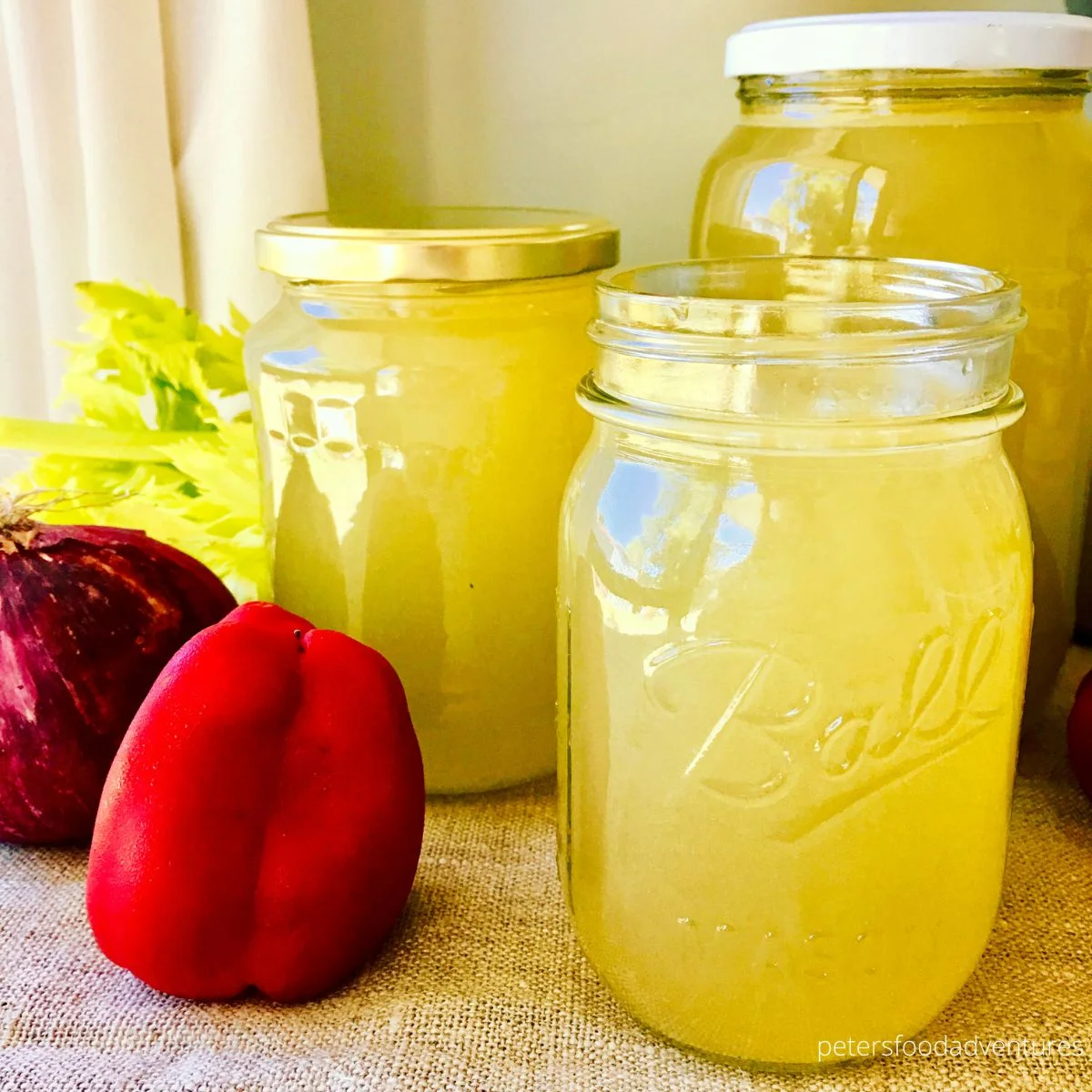
Turkey broth turns a leftover roast turkey carcass into a savoury stock for soups, sauces and other recipes. A long, gentle simmer draws flavour from the bones, vegetables and herbs, and the finished broth can be frozen for later.
Ingredients
- 1turkey carcass
- 4 litreswater
- 1, chopped in halfonion
- 5 clovesgarlic
- 2bay leaves
- 2 stalkscelery
- 1, chopped in halfcarrot
- 10peppercorns
- 2 sprigsparsley and thyme
- to tastesalt and pepper
Instructions
- 1
Add the carcass
Put the turkey carcass in a large stockpot or Dutch oven. Break it into smaller pieces if needed to fit.
- 2
Add the aromatics
Add the onion, including its peel, along with the garlic, celery, carrot, bay leaves, peppercorns and fresh herbs.
- 3
Simmer the broth
Pour in the water and bring it to the boil. Lower the heat and simmer for at least 4 hours; simmering for longer, up to 10 hours, will develop more flavour.
- 4
Strain the liquid
Lift out any large pieces of turkey, then strain the broth through a colander into a bowl. For a clearer result, strain it again through cheesecloth.
- 5
Season and chill
Season with salt and pepper to taste. Refrigerate the broth until you are ready to use it.
What is turkey broth?
Turkey broth is a savoury liquid made by simmering a turkey carcass with water and flavouring ingredients. It is a practical American-style way to make use of the bones left after a holiday roast, though versions of poultry stock are cooked in many cuisines.
This version keeps the flavourings simple: onion, garlic, celery, carrot, herbs and peppercorns. A long simmer gives the ingredients time to flavour the water, while straining leaves a versatile base for other dishes.
Nutrition and macros by portion
The nutrition label shows one serving as written: 50 calories, 5g protein, 2g carbs, 2g fat.
| Portion | Adjustment | kcal | Protein | Carbs | Fat |
|---|---|---|---|---|---|
| Lighter | Skim the chilled broth | 35 kcal | 4g | 1g | 1g |
| This serving | As written | 50 kcal | 5g | 2g | 2g |
| Hungry | Use a larger bowl | 75 kcal | 8g | 3g | 3g |
The turkey carcass contributes most of the protein and some fat, while the vegetables add a small amount of carbohydrate; the water itself adds none. For a more filling meal, use the broth in a soup with vegetables and a source of grains or beans.
The carcass and aromatics
Carcass: break it down only as much as needed to fit the pot, keeping the bones and any attached meat for the simmer.
Vegetables and herbs: the onion, garlic, celery, carrot, bay leaves, parsley and thyme provide the broth's savoury, aromatic character. The recipe calls for leaving the onion peel on.
Keep the simmer gentle
Starting point: bring the pot to the boil, then reduce the heat for the long cook. A gentle simmer is easier to manage than a vigorous boil and helps keep the broth from sloshing or reducing too quickly.
Timing: simmer for at least 4 hours, as directed, or for up to 10 hours for a longer extraction. Check occasionally and keep the ingredients covered with liquid.
Straining and clarity
First pass: strain through a colander into a bowl to separate the liquid from the carcass and vegetables. Take care when handling the hot pot and broth.
For a clearer broth: pass the liquid through cheesecloth after the colander. This extra straining is optional and removes smaller particles.
Season after straining
Salt: add it to taste once the broth has been strained. This makes it easier to control seasoning, particularly if you plan to reduce the broth or use it in a recipe that is already salted.
Pepper: the peppercorns flavour the broth as it cooks, while the final seasoning step lets you adjust the finished liquid to suit how you will use it.
Ways to use the broth
Soups and grains: use the broth as the cooking liquid for soup, rice or other grains, adjusting the salt in the finished dish.
Serving ideas: pair a broth-based soup with bread or a sandwich for a simple meal. Its mild savoury flavour also works as a base for sauces and stews.
Recipe notes & tips
- Use a stockpot large enough to hold the carcass and 4 litres of water.
- Break the carcass into manageable pieces before adding it to the pot.
- Keep the vegetables and herbs submerged as the broth simmers.
- Strain the broth carefully, especially if the pot is heavy.
- Chill the strained broth promptly and refrigerate it until needed.
- Freeze the broth in portions that suit the recipes you usually make.
Variations
- Add extra herbs: include more parsley or thyme if you have them to hand.
- Use whole peppercorns: keep them whole as listed so they are easy to strain out.
- Make it clearer: pass the strained broth through cheesecloth for a second time.
- Leave it unsalted: season only when you use the broth if you want more control in later recipes.
Common mistakes to avoid
- Boiling hard: lower the heat after bringing the water to the boil and let the broth simmer gently.
- Overfilling the pot: choose a pot that can hold the carcass and water without reaching the rim.
- Adding too much salt early: season after straining so the broth is easier to adjust.
- Skipping the strain: pour the broth through a colander to separate it from the bones and vegetables.
- Handling it while very hot: take care when lifting the carcass and pouring the liquid.
How to store
Refrigerate the strained broth in a covered container and use it within 3–4 days. For longer storage, freeze it in suitable portions; thaw in the fridge and reheat in a saucepan until hot.
Frequently asked questions
How long should I simmer turkey broth?
Simmer it for at least 4 hours. The recipe allows for a longer simmer, up to 10 hours, for more developed flavour.
Can I leave the onion peel on?
Yes. The method specifically includes the onion with its peel; strain the broth well before using it.
How do I make the broth clearer?
After the first pass through a colander, strain it again through cheesecloth.
When should I add the salt?
Season after straining, as the recipe directs. This lets you taste the finished broth before adjusting it.
Can I freeze turkey broth?
Yes. Cool and portion the strained broth into freezer-safe containers, leaving room for expansion.
What can I make with turkey broth?
Use it as a base for soups, stews and sauces, or as a savoury cooking liquid for grains.
Cook it from the original
This recipe comes from petersfoodadventures.com. Their page has the author’s own photos, notes and tips — the best place to cook it from.
Open the recipe on petersfoodadventures.com