
Tzatziki
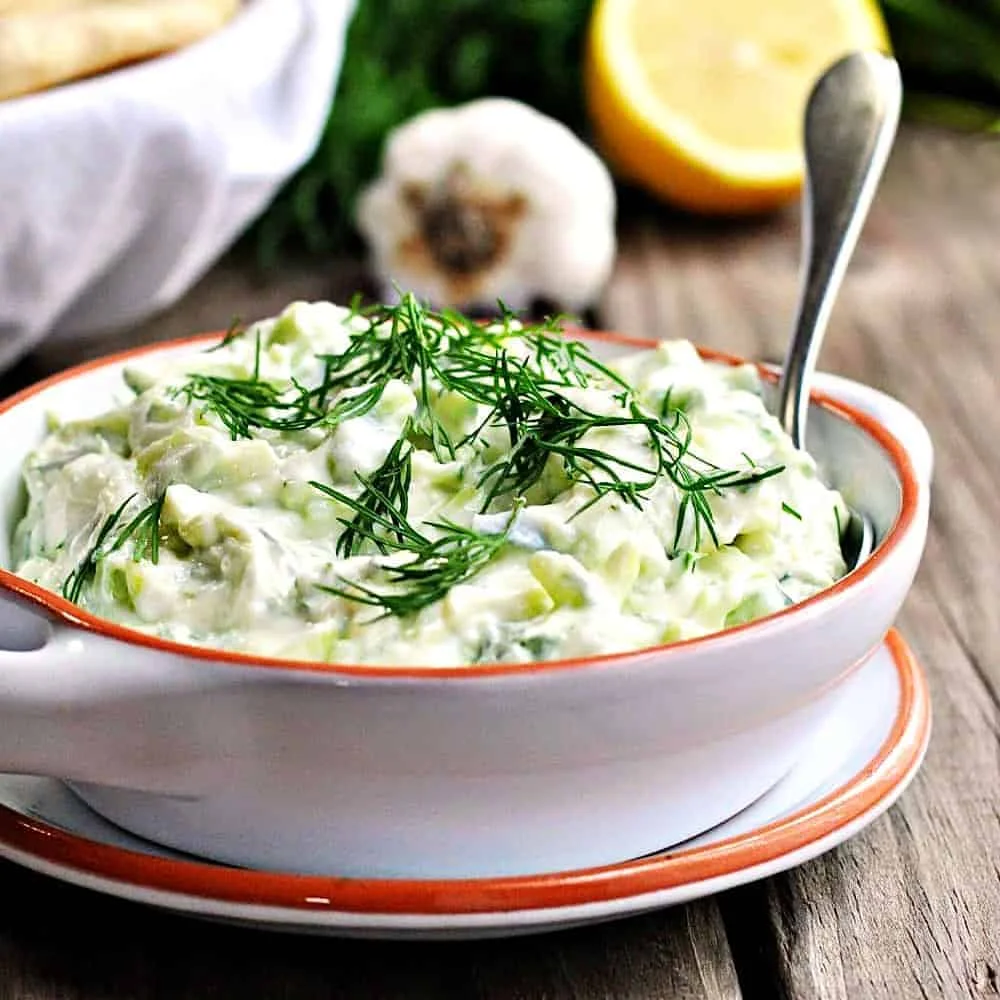
Tzatziki is a cool, creamy dip made with strained yoghurt, cucumber, garlic, lemon and dill. Serve it chilled as a Mediterranean-style accompaniment to grilled food, flatbreads or vegetables.
Ingredients
- 480 ml (2 cups)full-fat plain yoghurt
- 1/2English cucumber
- 5 ml (1 teaspoon)kosher salt
- 30 ml (2 tablespoons)extra-virgin olive oil
- 22.5 ml (1 1/2 tablespoons; about 1/2 lemon)fresh lemon juice
- 15 ml (1 tablespoon)fresh dill, minced
- 2 clovesgarlic, minced
Instructions
- 1
Strain the yoghurt
Set a coffee filter or a double layer of cheesecloth over an empty container. Pour in the yoghurt, cover and refrigerate overnight while it drains; about 240 ml (1 cup) of liquid will collect.
- 2
Drain the cucumber
Shred the cucumber and place it in a fine-mesh strainer over an empty container. Cover and refrigerate overnight, allowing a few tablespoons of liquid to drain.
- 3
Mix and chill
In a medium bowl, stir together the strained yoghurt, drained cucumber, salt, olive oil, lemon juice, dill and garlic. Cover and refrigerate for at least an hour so the flavours meld, then serve chilled.
What is tzatziki?
Tzatziki is a chilled yoghurt and cucumber dip associated with Greek cuisine and enjoyed across the eastern Mediterranean. Its appeal comes from the contrast between tangy yoghurt, fresh cucumber, aromatic garlic and herbs.
This version uses dill and lemon for a fresh, bright flavour. Straining the yoghurt and draining the cucumber help keep the dip thick rather than watery.
Nutrition and macros by portion
The nutrition label shows one serving as written: 291 calories, 9g protein, 15g carbs, 22g fat.
| Portion | Adjustment | kcal | Protein | Carbs | Fat |
|---|---|---|---|---|---|
| Lighter | Use less olive oil | 204 kcal | 6g | 11g | 15g |
| This serving | As written | 291 kcal | 9g | 15g | 22g |
| Hungry | Serve with extra flatbread | 437 kcal | 14g | 23g | 33g |
The yoghurt provides much of the protein and some of the carbohydrate, while olive oil and full-fat yoghurt contribute most of the fat. Cucumber adds freshness and volume; serve a portion with vegetables and a protein-rich main to make a balanced plate.
Why strain the yoghurt?
Thick yoghurt: draining away excess liquid gives the dip a richer, spoonable consistency. A coffee filter or double layer of cheesecloth works as a simple strainer.
Time: the recipe allows the yoghurt to drain overnight in the fridge. Leave room beneath the filter or cloth for the liquid to collect.
Getting the cucumber right
Shredding: grate the cucumber finely so it mixes evenly through the yoghurt. The method calls for an English cucumber, which has a tender skin and a mild flavour.
Draining: cucumber releases plenty of liquid, so let the shreds sit in a fine-mesh strainer overnight. This helps the finished dip stay thick.
Balancing the flavours
Lemon and salt: these season the yoghurt and cucumber, while olive oil adds richness. Stir them in with the other ingredients rather than adding them separately.
Garlic and dill: minced garlic brings a savoury bite, and fresh dill adds a herbal note. Chilling the mixed dip for at least an hour gives these flavours time to mingle.
Serving and texture
Chill: serve the tzatziki cold, straight from the fridge. It should be thick enough to scoop or spoon alongside a meal.
Pairings: try it with grilled vegetables, flatbread or grilled meat, or use it as a dip for raw vegetables. Its cool, tangy character also works well beside warmly spiced dishes.
Recipe notes & tips
- Use a container deep enough to catch the liquid draining from the yoghurt.
- Keep both the yoghurt and cucumber covered while they drain in the fridge overnight.
- Drain the cucumber well before mixing it into the yoghurt to avoid a loose dip.
- Mince the garlic finely so its flavour is distributed throughout the mixture.
- Allow at least an hour of chilling after mixing for the flavours to meld.
Variations
- Fresh mint: replace some or all of the dill with finely chopped mint.
- Extra lemon: add a little more lemon juice for a sharper, tangier dip.
- Peppery finish: add a pinch of black pepper when mixing the ingredients.
- Cucumber texture: chop the drained cucumber instead of shredding it for a chunkier dip.
Common mistakes to avoid
- Skipping the yoghurt straining: the dip may be thin; drain the yoghurt overnight as directed.
- Leaving cucumber undrained: excess liquid can loosen the mixture; let it drain overnight in a fine-mesh strainer.
- Using a shallow container: draining liquid may overflow; choose a container with enough space beneath the strainer.
- Serving it immediately: the garlic and dill may taste less integrated; chill the mixed dip for at least an hour.
How to store
Keep the tzatziki covered in the fridge and use within 2–3 days for the best texture and flavour. Stir before serving if any liquid separates; it is intended to be served chilled rather than reheated.
Frequently asked questions
Can I make tzatziki without straining the yoghurt overnight?
Straining gives the dip its thick texture, so skipping it may leave the mixture looser. If you are short on time, use thick Greek-style yoghurt, though the result may differ.
Why is my tzatziki watery?
The yoghurt or cucumber may not have drained enough. Drain both as directed, and pour off any liquid that collects after chilling.
Can I prepare tzatziki ahead of time?
Yes. The yoghurt and cucumber are each refrigerated overnight, and the mixed dip needs at least an hour to chill. Keep it covered in the fridge until serving.
What can I serve with tzatziki?
Serve it with flatbread, raw vegetables, grilled vegetables or grilled meat. It also makes a cool accompaniment to warmly spiced dishes.
Cook it from the original
This recipe comes from pinchandswirl.com. Their page has the author’s own photos, notes and tips — the best place to cook it from.
Open the recipe on pinchandswirl.com