
Cold Borscht - Svekolnik (Свекольник)
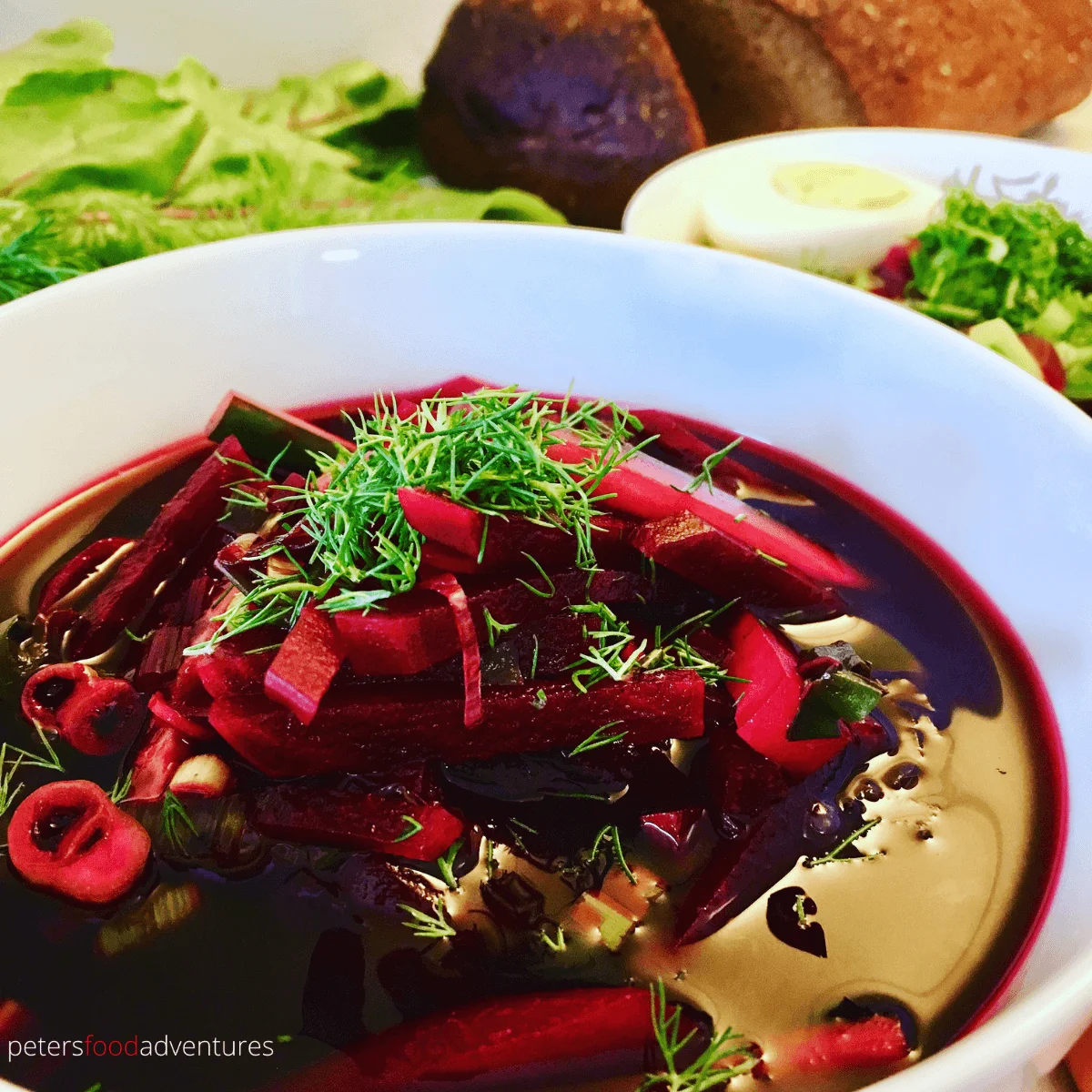
Svekolnik is a chilled Russian beet soup with potatoes, cucumber, dill and a gently tangy broth. Make it ahead for a refreshing summer meal, serving it with rye bread and optional egg and sour cream.
Ingredients
- 4 mediumbeetroots (with leaves if available)
- 2 mediumpotatoes
- 2 clovesgarlic, minced
- 1spring onion, sliced
- 2fresh pickling cucumbers, not pickled
- 2 tablespoonsvinegar
- ½ teaspoonsugar
- ½ teaspoonsalt
- to tastesour cream (omit for vegan)
- 4 tablespoonschopped dill
- 2hard-boiled eggs (optional; omit for vegan)
- about 1.5 litres (6 cups)water
Instructions
- 1
Prepare vegetables
Peel the beetroots and cut them into thin julienne strips. Finely chop any beet leaves and set them aside. Peel the potatoes and cut them into julienne strips.
- 2
Simmer the broth
Put the beetroots and potatoes in a saucepan with about 1.5 litres (6 cups) of water, the vinegar and minced garlic. Bring to the boil, then simmer for about 20 minutes, until the vegetables are tender.
- 3
Add the leaves
Stir in the beet leaves, sugar and salt, then cook for a further 2 minutes. Put the soup in the fridge to cool.
- 4
Slice cucumber
Cut the cucumbers into thin, long strips, roughly the same size as the beetroot strips, and set aside.
- 5
Prepare eggs
Peel the hard-boiled eggs and cut them in half. Keep them to garnish the bowls when serving.
- 6
Mix the soup
Take the cold beet broth from the fridge. Stir in the sliced spring onion, cucumber and chopped dill. Taste and add more sugar or salt if needed.
- 7
Chill and serve
Chill the soup in the fridge for a few hours, until all the vegetables are cold. Serve garnished with the eggs and sour cream, alongside Russian rye bread.
What is svekolnik?
Svekolnik is a Russian cold beet soup, made by cooling a cooked beet broth and adding fresh vegetables and herbs. It belongs to a wider tradition of chilled summer soups, enjoyed when a hot meal is less appealing.
This version builds its colour and flavour around beetroot, with potatoes cooked in the broth and cucumber and dill stirred in later. Egg and sour cream are optional garnishes, so the soup can also be served vegan.
Nutrition and macros by portion
The nutrition label shows one serving as written: 150 calories, 6g protein, 29g carbs, 2g fat.
| Portion | Adjustment | kcal | Protein | Carbs | Fat |
|---|---|---|---|---|---|
| Lighter | Skip egg and sour cream | 105 kcal | 4g | 20g | 1g |
| This serving | As written | 150 kcal | 6g | 29g | 2g |
| Hungry | Add rye bread | 225 kcal | 9g | 44g | 3g |
Most of the carbohydrates come from the potatoes and beetroot, while the egg and optional sour cream contribute protein and fat. Serve a bowl with rye bread for a more substantial meal, or add extra cucumber and beet leaves for more vegetables.
Build the beet broth
Beetroot and potatoes: cut them into similar thin strips so they cook evenly and are easy to eat in a spoonful. The beetroot gives the broth its vivid colour as it simmers.
Vinegar and garlic: these go into the pan with the vegetables and water, adding tang and savoury depth to the base. Beet leaves, when available, are added near the end rather than simmered for the full cooking time.
Keep the vegetables distinct
Cooked vegetables: simmer the beetroot and potatoes until tender, then cool the broth before adding the remaining ingredients. This gives the soup time to become properly cold without wilting the fresh additions.
Fresh additions: cucumber, spring onion and dill are stirred into the chilled broth. Cutting the cucumber into fine strips gives it a similar shape to the beetroot and keeps each spoonful balanced.
Check the texture and seasoning
Tenderness: after about 20 minutes of simmering, test a strip of beetroot and potato; both should be tender enough to bite easily. If they are not ready, continue simmering until they are.
Balance: once the soup is cold and mixed, taste it before serving. Add a little more salt or sugar if needed, as chilling can make flavours seem less pronounced.
Plan the chilling time
First cool the cooked broth in the fridge, then allow a few more hours for the finished soup to chill with the cucumber, spring onion and dill mixed in. The recipe gives no exact total time, so allow enough time for both stages.
For a more efficient make-ahead, cook the broth earlier and keep it chilled until you are ready to mix in the fresh vegetables and herbs.
Serve with simple accompaniments
Garnishes: add a halved hard-boiled egg and a spoonful of sour cream to each bowl if using them. Leave both off for a vegan serving.
On the side: Russian rye bread is suggested with the soup. Its hearty texture makes a useful contrast to the cold, brothy vegetables.
Recipe notes & tips
- Cut the beetroot and potatoes into strips of similar thickness so they cook at the same rate.
- Use gloves or wash your hands promptly after handling beetroot to avoid staining.
- Chop the beet leaves finely so they mix easily into the broth.
- Wait until the broth is cold before stirring in the cucumber, spring onion and dill.
- Taste the finished chilled soup before adding extra salt or sugar.
- Keep the egg and sour cream as optional garnishes so each bowl can be served to suit.
Variations
- Vegan bowls: leave out the egg and sour cream for a fully plant-based serving.
- Beet leaves: include the leaves when available, or leave them out if the beetroots come without them.
- Extra dill: add more chopped dill at serving for a stronger herbal flavour.
- More tang: adjust the vinegar to taste for a sharper broth.
- Rye bread: serve with Russian rye bread as suggested for a heartier meal.
Common mistakes to avoid
- Uneven strips: thick pieces may take longer to soften; cut the beetroot and potatoes into similar-sized julienne.
- Undercooked vegetables: check both beetroot and potato for tenderness before adding the leaves.
- Adding fresh vegetables too early: cucumber and herbs lose their fresh character if stirred into hot broth; wait until it is cold.
- Serving too soon: the recipe calls for a few hours of chilling; allow time for the vegetables to become cold.
- Skipping the final taste: chilling can soften the impression of seasoning, so check the salt and sugar before serving.
How to store
Keep the soup covered in the fridge and eat it within 2–3 days. Serve it cold; there is no need to reheat it. Store egg and sour cream separately and add them when serving.
Frequently asked questions
Can I make svekolnik vegan?
Yes. Omit the optional hard-boiled eggs and sour cream; the beet soup itself is made with vegetables, water and seasonings.
Do I need beet leaves?
No. Use them if they come with the beetroots, or leave them out if not available.
How long should I chill the soup?
The recipe recommends chilling it for a few hours before serving, until the vegetables are cold.
Can I use pickled cucumbers?
The recipe specifies fresh pickling cucumbers, not pickled ones. Use fresh cucumbers for the intended crisp texture.
How do I know when the beetroot and potatoes are cooked?
After about 20 minutes of simmering, check that both are tender when bitten. Continue cooking if they still feel firm.
What should I serve with cold borscht?
Serve it with Russian rye bread, and add egg and sour cream as garnishes if desired.
Cook it from the original
This recipe comes from petersfoodadventures.com. Their page has the author’s own photos, notes and tips — the best place to cook it from.
Open the recipe on petersfoodadventures.com