
Buckwheat Porridge Kasha
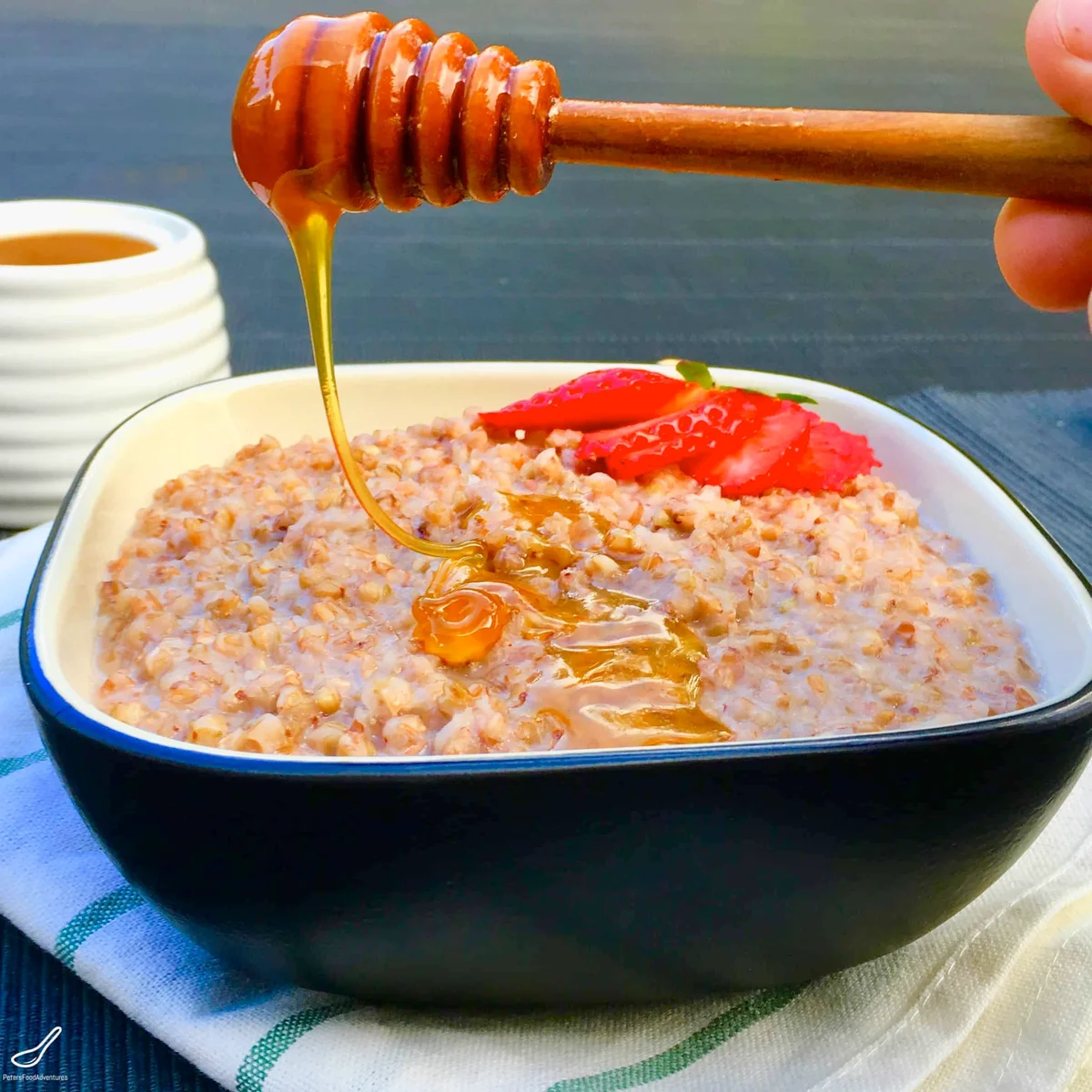
Buckwheat porridge, or kasha, is a comforting Russian and Eastern European breakfast made with tender roasted groats and milk. This simple stovetop version is ready in about 20 minutes and can be finished with honey and fresh fruit.
Ingredients
- 170 g (1 cup)roasted buckwheat groats
- 480 ml (2 cups)boiling water
- 2.5 g (½ teaspoon)salt
- 14 g (2 teaspoons)honey or sugar
- 28 g (2 tablespoons)butter
- 480–720 ml (2–3 cups)milk
Instructions
- 1
Rinse the groats
Rinse the roasted buckwheat as you would rice. Put it in a medium saucepan with 1 tablespoon of butter and the boiling water.
- 2
Cook until tender
Bring the mixture to a boil, then turn the heat down to a simmer. Cover and cook for about 15 minutes, until the groats are tender. Stir in the salt, 1 tablespoon of butter and the honey.
- 3
Warm with milk
Stir the milk into the cooked buckwheat and return the pan to the heat to warm through. Serve with honey and fresh fruit.
What is buckwheat kasha?
Kasha is a broad name for cooked grains or groats in Eastern European cooking; grechka refers specifically to buckwheat. This Russian-style breakfast turns roasted buckwheat into a soft, savoury-sweet porridge with milk.
Roasted groats bring a toasty flavour, while butter enriches the pot and honey adds sweetness. The result is a straightforward breakfast that can be adjusted at the table.
Nutrition and macros by portion
The nutrition label shows one serving as written: 610 calories, 21g protein, 81g carbs, 25g fat.
| Portion | Adjustment | kcal | Protein | Carbs | Fat |
|---|---|---|---|---|---|
| Lighter | Use less butter | 427 kcal | 15g | 57g | 18g |
| This serving | As written | 610 kcal | 21g | 81g | 25g |
| Hungry | Use three cups of milk | 915 kcal | 32g | 122g | 38g |
Buckwheat provides most of the carbohydrates and some of the fibre and protein; milk adds protein and more carbohydrates, while butter contributes much of the fat. For a more balanced plate, serve a smaller bowl with extra fresh fruit and a protein-rich side such as plain yoghurt.
Choose the right buckwheat
Roasted groats: use toasted buckwheat, often labelled kasha, for the characteristic nutty taste and colour. Unroasted buckwheat will taste milder and may cook differently.
Rinsing: wash the groats under cool water as you would rice, then drain them well before adding them to the pan.
Cook the groats gently
Start with boiling water: adding it to the pan gets the cooking going promptly. Once the mixture boils, lower the heat and keep the saucepan covered for the stated 15 minutes.
Doneness: the groats should be tender, with the water absorbed. If they still feel firm, continue cooking gently until tender.
Add the milk at the end
Milk choice: the recipe allows 2–3 cups, so use the lower amount for a thicker porridge or more for a looser bowl. Stir it in after the groats are cooked.
Warm through: heat the mixture until warm rather than letting it boil hard. This keeps the finish creamy and makes it easier to adjust the consistency.
Balance the sweetness
Sweetener: honey gives the porridge a floral sweetness, while sugar makes a more neutral choice. You can keep the amount modest and add more at the table if needed.
Fruit: fresh fruit brings colour and a bright contrast to the warm, buttery groats. Add it just before serving so it stays fresh.
Serve it for breakfast
Toppings: serve the porridge warm with a little extra honey and fresh fruit, as suggested in the method. A small knob of butter can also be added if you like a richer bowl.
Pairing: enjoy it on its own or alongside plain yoghurt or eggs for a more substantial breakfast.
Recipe notes & tips
- Drain the rinsed groats well so excess water does not change the cooking balance.
- Keep the saucepan covered while the buckwheat simmers.
- Stir the groats into the milk gently so they keep their shape.
- Begin with 2 cups of milk and add more if you prefer a looser porridge.
- Taste before serving and adjust the honey to suit your preference.
Variations
- Use sugar: swap the honey for the same amount of sugar for a plainer sweetness.
- Add cinnamon: stir a pinch into the finished porridge for a warm spice note.
- Top with berries: scatter fresh berries over each bowl just before serving.
- Make it richer: use the full 3 cups of milk for a softer, creamier consistency.
- Add dried fruit: stir a small handful into the warm porridge for extra sweetness.
Common mistakes to avoid
- Skipping the rinse: rinse the groats like rice before cooking to wash them clean.
- Cooking too quickly: keep the heat low after boiling so the groats simmer rather than scorch.
- Lifting the lid often: leave the pan covered during the 15-minute cook so the groats cook evenly.
- Adding all the milk too soon: stir it in only after the buckwheat is tender.
- Boiling hard after adding milk: warm the porridge gently to avoid an uneven, overly thick finish.
How to store
Refrigerate leftovers in a covered container for up to 3 days. Reheat gently in a saucepan or microwave, stirring in a splash of milk to loosen the porridge.
Frequently asked questions
Can I use unroasted buckwheat?
Yes, but it will have a milder flavour than roasted groats. Follow the same method and check for tenderness as it cooks.
How do I know when the buckwheat is cooked?
After about 15 minutes, the groats should be tender and the boiling water absorbed. If they are still firm, cook them gently for a little longer.
Can I make the porridge thicker?
Yes. Start with 2 cups of milk and add only enough to reach the consistency you like.
Can I make it without honey?
Yes. Use sugar instead, as the recipe suggests, or leave out the sweetener and add honey to taste at serving.
Can I prepare it ahead?
You can cook it ahead and refrigerate it for up to 3 days. Reheat it gently with a splash of milk to restore a softer texture.
Cook it from the original
This recipe comes from petersfoodadventures.com. Their page has the author’s own photos, notes and tips — the best place to cook it from.
Open the recipe on petersfoodadventures.com