
Panang Curry
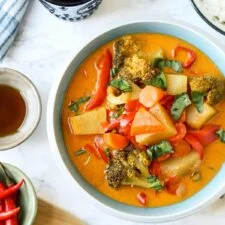
Panang curry is a creamy, gently sweet curry with a nutty edge and a little heat. This vegetable-packed version comes together in 27 minutes and is easy to adjust to your preferred spice level.
Ingredients
- 1 tablespoon (15 ml)vegetable oil
- 1 smallonion, chopped
- 1red bell pepper, cored and thinly sliced
- 1 large (about 130 g; about 1 cup)carrot, peeled and chopped into bite-sized pieces
- 1 large (about 150 g; about 1 cup)potato, peeled and chopped into bite-sized pieces
- 2 cups (about 180 g)broccoli, chopped
- 2–4 tablespoons (30–60 ml)Panang curry paste
- 1 can, 14 oz (about 400 g)coconut milk
- 1/4 cup (60 ml)water
- 1–2 tablespoons (15–30 ml)fish sauce or soy sauce for a vegan version
- 1 1/2 tablespoons (about 23 g)natural creamy peanut butter
- 1 1/2 teaspoons (7.5 ml)tamarind paste or lemon juice
- 1 teaspoon (about 4 g)coconut sugar
- A handfulbasil leaves, chopped (optional)
- To servejasmine rice
Instructions
- 1
Soften the onion
Heat the oil in a medium-sized pot over medium-high heat. Add the onion and cook for 4–5 minutes, until soft and translucent.
- 2
Cook the vegetables
Add the bell pepper, carrot, potato and broccoli. Cook for 5 minutes, until the vegetables are softened but still have some crunch.
- 3
Simmer the curry
Stir in 2 tablespoons of curry paste to start, adding more if you want a spicier curry. Pour in the coconut milk, water and fish sauce, bring to a bubbling simmer, then cover and simmer for 10 minutes.
- 4
Finish the sauce
Turn off the heat and stir in the peanut butter, tamarind paste, coconut sugar and chopped basil. For a vegan version using lemon juice, add it at this stage.
- 5
Serve with rice
Serve the curry with jasmine rice.
What is Panang curry?
Panang curry is a rich, coconut-based curry associated with Thai cooking, known for its rounded sweetness, fragrant curry paste and nutty flavour. This version is listed as Malaysian cuisine and brings those creamy, sweet-and-savoury notes together with a generous mix of vegetables.
Peanut butter gives the sauce extra body, while tamarind or lemon juice adds a tangy counterpoint. The curry paste lets you control how pungent and spicy the finished dish is.
Nutrition and macros by portion
The nutrition label shows one serving as written: 297 calories, 4g protein, 23g carbs, 21g fat.
| Portion | Adjustment | kcal | Protein | Carbs | Fat |
|---|---|---|---|---|---|
| Lighter | Less rice, more broccoli | 208 kcal | 3g | 16g | 14g |
| This serving | As written | 297 kcal | 4g | 23g | 21g |
| Hungry | Larger rice portion | 446 kcal | 7g | 34g | 31g |
The rice, potato, carrot and sugar contribute most of the carbohydrates, while coconut milk, oil and peanut butter supply much of the fat. The vegetables and peanut butter add some protein, with fish sauce or soy sauce contributing flavour and sodium. Serve a moderate scoop of rice alongside a generous portion of the vegetable curry to balance the plate.
Choosing the curry paste
Start with 2 tablespoons of Panang curry paste, then taste the sauce before adding more. Paste strength varies, so increasing it gradually is the simplest way to keep the heat in check.
Check the ingredients if you need the curry to be vegan: curry pastes can vary, and this recipe also offers soy sauce instead of fish sauce.
Cut the vegetables evenly
Potato and carrot: cut them into bite-sized pieces of similar size so they cook at a similar pace during the short simmer.
Broccoli and pepper: keep the pieces substantial enough to hold their shape. The initial cook is brief, so the vegetables should soften without becoming limp.
Build a creamy sauce
Simmering the coconut milk with the curry paste and seasonings gives the vegetables time to cook while the flavours combine. Keep the pot covered for the 10-minute simmer specified in the method.
Off the heat: stir in the peanut butter, tamarind or lemon juice, sugar and basil at the end. This keeps the finishing ingredients distinct and lets the peanut butter blend into the hot sauce.
Check the texture and timing
The vegetables should be tender enough to bite but still retain some crunch, as intended by the brief first cook. Check a piece of potato and carrot towards the end of simmering; if they need more time, continue until they reach the texture you like.
The recipe takes 27 minutes in total, including 4–5 minutes for the onion, 5 minutes for the vegetables and 10 minutes of covered simmering.
Serve it with rice
Jasmine rice is the suggested accompaniment, soaking up the coconut curry sauce and making the dish more substantial. Spoon the curry over freshly cooked rice or serve the rice alongside it.
For a simple plate, let the vegetables and sauce take up most of the serving, with rice alongside. The curry is also easy to portion into bowls for a relaxed meal.
Recipe notes & tips
- Chop the potato and carrot evenly so they cook at roughly the same rate.
- Begin with 2 tablespoons of curry paste and add more only after tasting.
- Stir the peanut butter in off the heat to help it blend smoothly into the sauce.
- Use soy sauce instead of fish sauce for a vegan-friendly alternative, and check the curry paste label.
- Have the jasmine rice ready to serve when the curry finishes simmering.
- Add the basil at the end so its flavour stays fresh.
Variations
- Adjust the heat: add more Panang curry paste gradually for a spicier bowl.
- Make it vegan: use soy sauce in place of fish sauce and check that the curry paste is vegan.
- Change the greens: replace some or all of the broccoli with another quick-cooking vegetable.
- Use lemon juice: substitute it for tamarind paste for a similar tangy finish.
- Add more basil: increase the optional basil for a more pronounced herbal note.
Common mistakes to avoid
- Adding all the curry paste at once: start with 2 tablespoons and taste before increasing it.
- Cutting the root vegetables too large: smaller, even bite-sized pieces cook more reliably in the short simmer.
- Overcooking the vegetables: check their texture after simmering and stop when they are tender but still hold some bite.
- Boiling hard: bring the sauce to a bubbling simmer, then cover and keep it at a simmer for 10 minutes.
- Adding the peanut butter too early: stir it in after turning off the heat so it incorporates into the finished sauce.
How to store
Refrigerate leftover curry in a covered container and use within 3–4 days. Reheat gently in a saucepan, stirring occasionally; add a splash of water if the sauce has thickened. Store rice separately where possible and reheat it until steaming hot.
Frequently asked questions
How spicy is Panang curry?
The heat depends on the curry paste. Start with 2 tablespoons as directed, then taste and add more if you want a spicier curry.
Can I make this curry vegan?
Use soy sauce instead of fish sauce and check that the Panang curry paste contains no animal-derived ingredients. The method suggests adding the lemon juice at the finishing stage.
Can I use lemon juice instead of tamarind paste?
Yes. The recipe gives lemon juice as an alternative; stir it in at the end with the peanut butter, sugar and basil.
How do I know when the vegetables are done?
They should be softened but still have some bite. Check a piece of potato and carrot after the 10-minute simmer and cook a little longer if needed.
What should I serve with Panang curry?
Serve it with jasmine rice, as suggested in the recipe. The rice pairs well with the creamy sauce.
Can I prepare the curry ahead?
You can cook it ahead and refrigerate it in a covered container. Reheat it gently and loosen the sauce with a little water if necessary.
Cook it from the original
This recipe comes from pickledplum.com. Their page has the author’s own photos, notes and tips — the best place to cook it from.
Open the recipe on pickledplum.com