
Herb Roasted Chicken
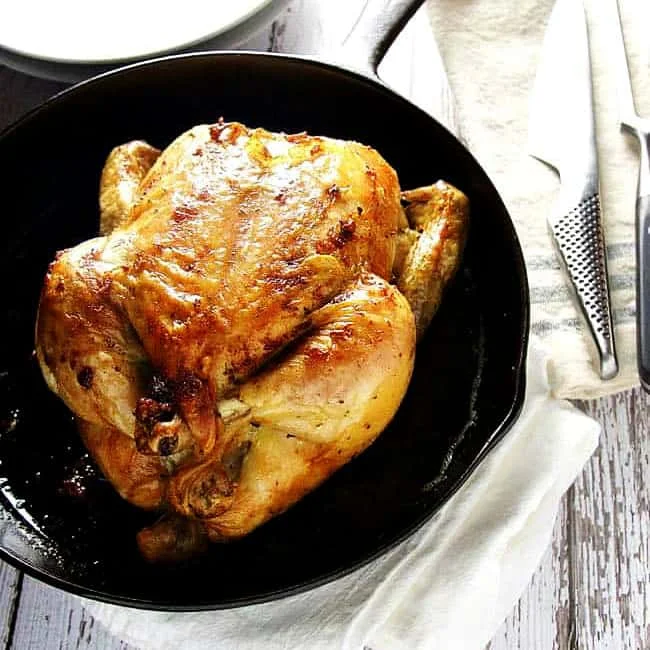
This herb-roasted chicken is seasoned simply with herb salt and black pepper, then roasted in a hot cast-iron pan for crisp skin and juicy meat. The overnight uncovered rest takes a little planning but leaves very little hands-on work on roasting day.
Ingredients
- 2.27 kg (5 lb)whole chicken, patted dry
- 30 ml (2 tablespoons)herb salt
- to tastefreshly ground black pepper
Instructions
- 1
Set up the rack
The evening before roasting, place a flat baking or cooling rack inside a rimmed baking sheet.
- 2
Season the chicken
Set the chicken on the rack, breast-side up. Sprinkle the herb salt over it and rub it lightly over the breast, legs and thighs. Season with freshly ground black pepper.
- 3
Chill uncovered
Refrigerate the chicken uncovered for 12 to 24 hours to help the skin become extra crisp.
- 4
Bring to room temperature
Take the chicken out of the refrigerator one hour before roasting.
- 5
Heat the pan
When ready to roast, put a 25 cm (10-inch) cast-iron skillet on the oven's centre rack. Preheat the oven to 230°C (450°F).
- 6
Start roasting
Once the oven has reached temperature, carefully place the chicken breast-side up in the very hot skillet. It should sizzle.
- 7
Turn the chicken
After 30 minutes, lower the oven temperature to 220°C (425°F). Turn the chicken so its back is facing up.
- 8
Finish roasting
After 20 minutes, turn the chicken again so it is breast-side up, then roast for a further 20 minutes.
- 9
Rest the chicken
Remove the chicken from the oven and leave it to rest for 15 minutes before carving.
- 10
Carve and serve
Carve the chicken and serve.
What is herb-roasted chicken?
Roast chicken is a familiar centrepiece in many home-cooking traditions: a whole bird cooked in the oven and served carved. This version keeps the seasoning straightforward, letting herb salt and black pepper complement the chicken.
The defining technique is to salt the bird ahead and leave it uncovered in the fridge. That gives the surface time to dry before it meets the hot pan, helping the skin roast crisp.
Nutrition and macros by portion
The nutrition label shows one serving as written: 292 calories, 25g protein, 0g carbs, 20g fat.
| Portion | Adjustment | kcal | Protein | Carbs | Fat |
|---|---|---|---|---|---|
| Lighter | More vegetables, less skin | 204 kcal | 18g | 0g | 14g |
| This serving | As written | 292 kcal | 25g | 0g | 20g |
| Hungry | Larger chicken portion | 438 kcal | 38g | 0g | 30g |
Most of the protein comes from the chicken, while the skin contributes much of its fat; the listed ingredients contain no meaningful carbohydrate source. Pair a portion with vegetables and a modest serving of potatoes or another starch for a more balanced plate.
Seasoning and preparation
Dry chicken: patting the bird dry before seasoning helps avoid adding surface moisture. Rub the herb salt gently over the breast, legs and thighs so the seasoning is spread across the main portions.
Uncovered chill: set the rack over a rimmed baking sheet to allow air around the chicken while catching drips. Leave it in the refrigerator for 12 to 24 hours, as directed.
The hot-pan method
Preheat the skillet: the cast-iron pan goes into the oven as it heats to 230°C. Handle it carefully when hot, and lower the chicken into it breast-side up.
Listen for the sizzle: the hot pan gives the chicken an immediate start on browning. Keep the breast facing up for the first 30 minutes, then turn the bird back-side up for 20 minutes before turning it breast-side up again.
Timing and doneness
Plan ahead: the chicken needs 12 to 24 hours uncovered in the refrigerator and one hour out of the fridge before roasting. The oven sequence is 30 minutes at 230°C, 20 minutes at 220°C with the back up, then 20 more minutes breast-side up.
Rest before carving: allow 15 minutes after roasting for the chicken to settle before you carve it. The recipe does not give a separate internal-temperature target, so use a suitable food thermometer if you need to check doneness.
What to serve alongside
Vegetables: serve the chicken with roasted or steamed vegetables for colour and a lighter contrast to the crisp skin. Choose sides that can be prepared while the bird rests.
Starchy sides: potatoes, bread or rice make the meal more substantial and work well with the savoury juices. Add a green salad if you want a fresh, crisp element on the plate.
Carving and serving
Rest first: wait the full 15 minutes before carving so the meat is easier to handle. Keep the chicken on a board that can catch its juices.
Serve promptly: carve into portions and bring the chicken to the table while the skin is still crisp. Spoon over any juices collected during carving if you like.
Recipe notes & tips
- Use a rimmed baking sheet beneath the rack to catch drips during the uncovered chill.
- Leave the chicken uncovered in the fridge for at least 12 hours, and no longer than 24 hours as specified.
- Take care when placing the chicken into the preheated cast-iron skillet.
- Keep to the specified turning sequence so each side gets its time in the oven.
- Allow the chicken to rest for 15 minutes before carving.
Variations
- Extra herbs: add your preferred dried herbs to the herb salt before seasoning.
- Citrus aroma: serve with lemon wedges for a fresh squeeze at the table.
- Garlic side: serve roasted garlic alongside the carved chicken.
- Vegetable pairing: roast vegetables separately and serve them with the chicken.
- Peppery finish: add freshly ground black pepper at the table if you want a stronger pepper flavour.
Common mistakes to avoid
- Skipping the uncovered chill: the skin may not dry as well; refrigerate the seasoned chicken on a rack for 12 to 24 hours.
- Crowding the rack: airflow around the bird is useful; use a rack that fits inside a rimmed baking sheet.
- Handling the hot pan carelessly: cast iron is very hot after preheating; take care when lowering in the chicken.
- Missing a turn: follow the 30-minute and 20-minute intervals so the chicken changes position as directed.
- Carving immediately: the juices can run out; rest the chicken for 15 minutes first.
How to store
Refrigerate leftover chicken in a covered container within two hours of serving and use within 3 to 4 days. Reheat portions until steaming hot; the skin may soften after storage.
Frequently asked questions
Can I season the chicken the morning I roast it?
The method calls for seasoning it the evening before and chilling it uncovered for 12 to 24 hours. That advance drying is part of how the recipe aims for crisp skin.
Why does the chicken need to be uncovered in the fridge?
Leaving it uncovered allows the skin to dry rather than trapping moisture around the bird. Keep it on a rack over a rimmed baking sheet.
Why preheat the cast-iron pan?
The recipe places the chicken into the already-hot pan so it starts sizzling as soon as it goes into the oven. Handle the skillet carefully.
Can I use a different oven-proof pan?
The recipe specifies a 25 cm (10-inch) oven-proof pan, preferably cast iron. Choose a pan that can safely withstand the oven temperature and fit the chicken.
How long should the chicken rest?
Rest it for 15 minutes after removing it from the oven, then carve and serve.
Can I make this without herb salt?
Herb salt is the recipe's main seasoning, so replacing it will change the flavour. If using a different seasoning, account for its salt content rather than adding an equivalent amount blindly.
Cook it from the original
This recipe comes from pinchandswirl.com. Their page has the author’s own photos, notes and tips — the best place to cook it from.
Open the recipe on pinchandswirl.com