
Baby Back Ribs (Japanese Style)
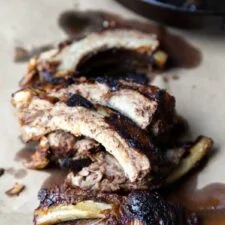
These Japanese-style baby back ribs are marinated with sake, red wine, soy sauce and a savoury ketchup-based mixture, then browned and simmered until tender. They make a flavourful main course for a relaxed dinner, with rice or vegetables alongside.
Ingredients
- 454 g (1 pound)baby back ribs
- 15 ml (1 tablespoon)rapeseed or vegetable oil
- 75 ml (5 tablespoons)sake
- ¼onion, grated
- 1 clovegarlic, grated
- 80 ml (⅓ cup)red wine
- 45 ml (3 tablespoons)ketchup
- 15 ml (1 tablespoon)soy sauce
- 5 ml (1 teaspoon)salt
- 1 pinchblack pepper
Instructions
- 1
Mix the marinade
Put all the marinade ingredients into a resealable food bag.
- 2
Marinate the ribs
Add the ribs, seal the bag and refrigerate for 1 hour.
- 3
Brown the ribs
Warm the oil in a large pan over low heat, then raise the heat to medium. Add the ribs and cook for about 4 minutes on each side.
- 4
Simmer with sake
Once the pork is golden brown, turn the heat down to low and add the sake. Cover the pan and simmer gently for 1 hour.
- 5
Turn and check
Stir occasionally and turn the ribs over. If they are starting to char, add 30 ml (2 tablespoons) of sake.
- 6
Reduce the liquid
Turn the heat up to high and cook until the liquid has evaporated.
- 7
Serve warm
Serve the ribs warm.
What are Japanese-style ribs?
This is a Japanese-style take on pork ribs, rather than a claim to one definitive traditional preparation. Sake and soy sauce give the marinade a savoury base, while red wine, ketchup, onion and garlic build a rounded, tangy flavour.
The ribs are browned first, then covered and simmered on the hob. That combination brings colour to the meat before the longer, gentler cooking.
Nutrition and macros by portion
The nutrition label shows one serving as written: 224 calories, 24g protein, 6g carbs, 8g fat.
| Portion | Adjustment | kcal | Protein | Carbs | Fat |
|---|---|---|---|---|---|
| Lighter | Add greens, smaller rib portion | 157 kcal | 17g | 4g | 6g |
| This serving | As written | 224 kcal | 24g | 6g | 8g |
| Hungry | Serve with extra rice | 336 kcal | 36g | 9g | 12g |
The ribs provide most of the protein and fat, while the ketchup, onion and wine contribute some of the carbohydrate. Pair a serving with rice for a more substantial plate, or add plenty of vegetables alongside.
The marinade ingredients
Sake and soy sauce: these supply the recipe’s distinctly Japanese-leaning savoury notes. Grated onion and garlic spread their flavour through the marinade.
Red wine and ketchup: together they add depth and a sweet-tart edge. Keep the ingredient proportions as listed so the sauce stays balanced.
Marinating and browning
Marinating: give the ribs the full hour in the fridge so the mixture has time to coat the meat. Seal the bag and turn it if needed to distribute the marinade.
Browning: start the pan over low heat, then raise it to medium as directed. Cook the ribs for about 4 minutes on each side, looking for a golden surface.
Simmer gently
Low heat: after adding sake, cover the pan and simmer for an hour. A gentle simmer helps prevent the sauce from catching while the ribs cook.
Check the pan occasionally and turn the ribs. If they begin to char, add the specified 30 ml of sake.
When the sauce is reduced
The final high-heat stage is brief: cook until the liquid is gone, keeping a close eye on the pan as it reduces. The ribs should be coated with the concentrated cooking juices rather than sitting in a pool of sauce.
The method lists an hour of marinating and an hour of simmering, in addition to browning and reducing. Allow for that timing when planning the meal.
What to serve with the ribs
Plain rice is a simple partner for the savoury, reduced sauce. Steamed greens or lightly cooked vegetables add freshness and contrast.
Serve the ribs warm, with any remaining sauce from the pan spooned over the meat or rice.
Recipe notes & tips
- Use a resealable food bag that fits the ribs so they stay coated in the marinade.
- Refrigerate the ribs throughout the 1-hour marinating time.
- Give the ribs space in the pan so they can brown on both sides.
- Keep the heat low during the covered simmer and check the pan occasionally.
- Watch closely once you raise the heat to reduce the liquid, as it can catch as it evaporates.
Variations
- Add ginger: grate a little into the marinade for a warm, aromatic note.
- Use white wine: substitute it for the red wine while keeping the quantity the same.
- Bring the heat: add a little chilli to the marinade for a spicy edge.
- Serve with rice: spoon the reduced pan sauce over rice alongside the ribs.
- Add greens: serve with steamed greens for a fresh contrast.
Common mistakes to avoid
- Skipping the marinade: give the ribs the full hour in the fridge so they are coated in the seasoned mixture.
- Rushing the browning: cook about 4 minutes per side and look for a golden surface before adding sake.
- Cooking too hot: keep the covered simmer low to help avoid charring.
- Leaving the pan unattended: stir occasionally and turn the ribs during the simmer.
- Reducing without watching: stay by the pan during the final high-heat stage so the sauce does not catch.
How to store
Refrigerate leftovers in a covered container and use within 3 days. Reheat gently in a covered pan until piping hot, adding a splash of water or sake if the sauce has become too thick.
Frequently asked questions
How long does this recipe take?
The listed total time is 65 minutes, but the method itself includes 1 hour of marinating and 1 hour of simmering, plus browning and reducing. Allow for the longer time described in the steps.
Can I marinate the ribs for longer?
Yes, you can leave them in the fridge for longer than an hour, provided the bag remains sealed and refrigerated. The recipe specifies a 1-hour minimum.
What if the ribs start to char?
Add 30 ml (2 tablespoons) of sake as directed, and keep the heat low during the covered simmer.
Can I use a different cut of pork?
The recipe is written for baby back ribs. Other cuts may need a different cooking time, so check that they are tender before moving on to the reduction stage.
What should I serve with Japanese-style ribs?
Rice works well with the savoury sauce, and steamed greens or other vegetables make a good accompaniment.
Cook it from the original
This recipe comes from pickledplum.com. Their page has the author’s own photos, notes and tips — the best place to cook it from.
Open the recipe on pickledplum.com