
Pork Belly Ramen
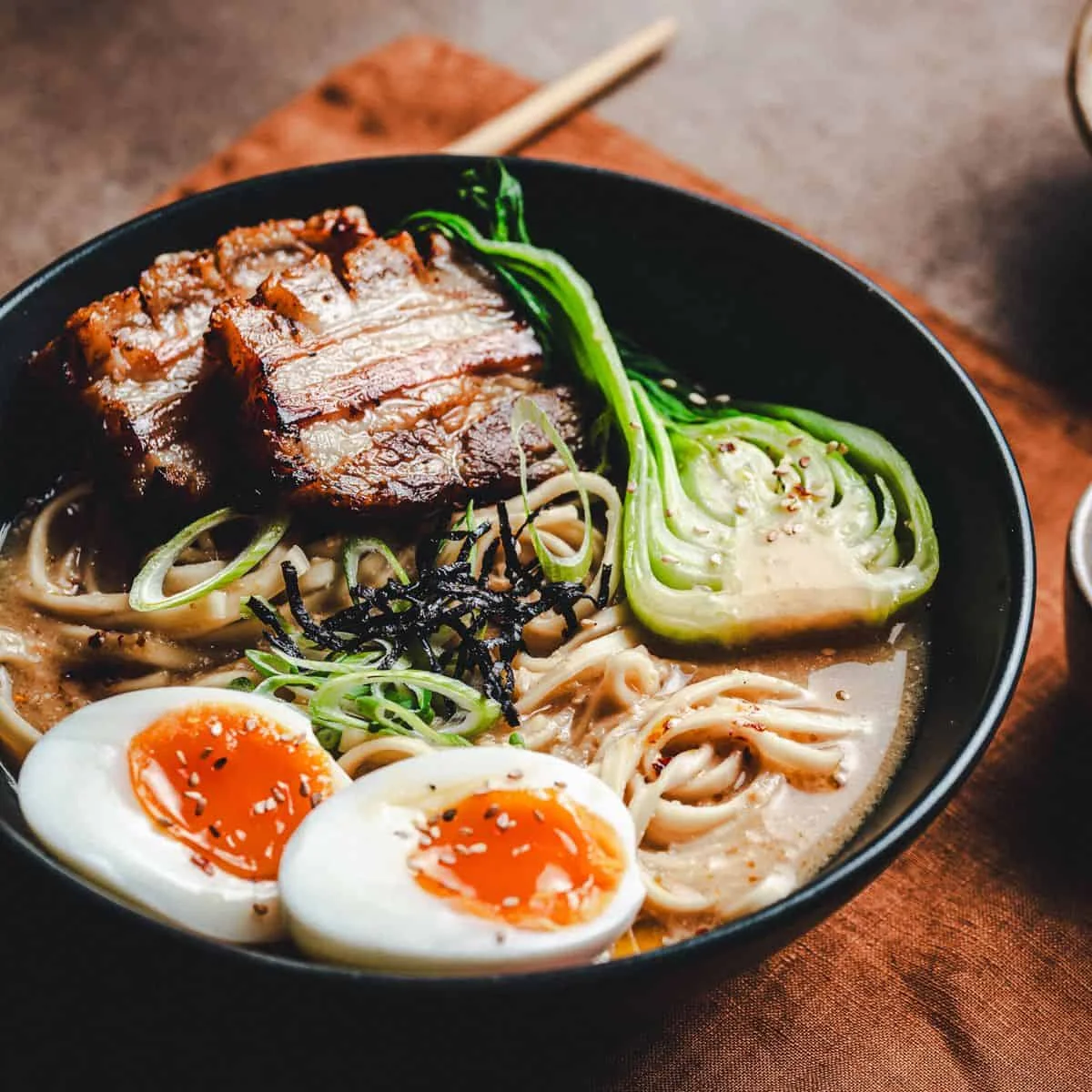
A bowl of ramen with a delicate ginger, soy and sesame broth, tender noodles and crisp-edged pork belly. Soft-cooked eggs, baby bok choy and fresh herbs bring plenty of texture and flavour.
Ingredients
- 1.42 litres (6 cups)chicken stock
- ½ recipeOven Roasted Crispy Pork Belly
- ½ recipeHomemade Ramen Noodles
- 2 headsbaby bok choy, sliced crosswise into thin ribbons
- 1 teaspoonfresh ginger, grated
- 1 tablespoonsoy sauce
- 2 teaspoonstoasted sesame oil
- 4 largeeggs, cooked to your preferred doneness and halved
- As desiredsriracha
- As desiredgreen onions, chopped
- As desiredfresh coriander, chopped
- As desiredThai basil, chopped
Instructions
- 1
Boil the stock
Bring the chicken stock to the boil.
- 2
Crisp the pork
Meanwhile, cut the cooked pork belly into lengthways slices about 3 mm (⅛ inch) thick. Fry them in a pan over a medium heat until the edges are crisp, about 5 minutes. Transfer to kitchen paper to drain.
- 3
Cook the noodles
Add the ramen noodles to the boiling stock and cook for 1 minute, or longer if using dried ramen noodles. Add the bok choy and ginger, bring back to the boil and cook for 1 minute more. Take the pan off the heat and stir in the soy sauce and sesame oil.
- 4
Assemble the bowls
Divide the ramen between 4 bowls. Top each with two egg halves, a quarter of the pork belly, and sriracha, green onions, coriander and Thai basil to taste. Serve.
What is pork belly ramen?
Ramen is a Japanese noodle soup, commonly served with broth and toppings. This version pairs a light chicken-stock broth with pork belly, eggs, greens and herbs.
Crisping the pork separately just before serving helps keep its edges from going soft in the soup. Ginger, soy sauce and sesame oil season the broth without obscuring the toppings.
Nutrition and macros by portion
The nutrition label shows one serving as written: 707 calories, 27g protein, 50g carbs, 43g fat.
| Portion | Adjustment | kcal | Protein | Carbs | Fat |
|---|---|---|---|---|---|
| Lighter | Less pork belly | 495 kcal | 19g | 35g | 30g |
| This serving | As written | 707 kcal | 27g | 50g | 43g |
| Hungry | More noodles | 1061 kcal | 41g | 75g | 65g |
The noodles supply most of the carbohydrates, while pork belly and sesame oil contribute much of the fat; the pork, eggs and chicken stock provide protein. Add extra bok choy or serve a side of vegetables to balance the bowl with more greens.
The pork belly makes the difference
Crispy pork: Cut the cooked belly into thin strips and fry them until the edges crisp, about 5 minutes. This final pan-fry is the key to giving the pork some contrast against the broth.
Timing: Cook the pork while the stock comes to the boil, then set it aside on kitchen paper. Add it to the bowls at the end rather than simmering it in the soup.
Noodles and greens
Fresh noodles: The method allows for homemade ramen noodles and gives them 1 minute in the boiling broth. Dried noodles may need longer, so follow their packet instructions for doneness.
Bok choy: Thin ribbons cook quickly, so they go into the broth after the noodles have had their first minute. The recipe gives them a further minute of cooking.
Seasoning the broth
Ginger: Grated fresh ginger goes in with the bok choy, giving it a brief simmer in the stock.
Soy and sesame: Stir both in after taking the pan off the heat. This keeps them as finishing seasonings rather than boiling them with the broth.
Getting the eggs ready
Eggs: Cook them to your preferred doneness before halving them. The recipe uses two halves per bowl, so prepare all four eggs before serving.
Assembly: Divide the noodles and broth between the bowls, then arrange the eggs and crisp pork on top. Finish with the fresh herbs and as much sriracha as you like.
What to serve with it
This ramen is served as a complete bowl, with noodles, pork, eggs and baby bok choy. Green onions, coriander and Thai basil add fresh flavour, while sriracha brings heat.
For a more substantial meal, serve a larger portion of ramen. Keep extra herbs and sriracha available at the table so everyone can adjust their own bowl.
Recipe notes & tips
- Slice the cooked pork belly lengthways into thin strips so the edges crisp quickly.
- Use a medium heat to fry the pork and watch for crisp edges, about 5 minutes.
- Keep the bok choy sliced into thin ribbons so it cooks in the short simmer.
- If using dried ramen noodles, allow longer than the 1 minute given for homemade noodles.
- Stir the soy sauce and sesame oil into the broth after taking it off the heat.
- Add the pork to each bowl just before serving to preserve its crisp edges.
Variations
- Adjust the heat: Add more or less sriracha to suit your preference.
- Change the herbs: Use whichever combination of coriander, green onions and Thai basil you enjoy.
- Use cooked pork belly: The method also works with another cooked pork belly in place of the named recipe.
- Choose your noodles: Use dried ramen noodles, allowing extra cooking time as needed.
- Set egg doneness: Cook the eggs to your preferred consistency before halving them.
Common mistakes to avoid
- Simmering the pork in the broth: It can lose its crisp edges; fry it separately and add it to the bowls at the end.
- Adding soy and sesame too early: Stir them in after removing the broth from the heat, as directed.
- Overcooking the bok choy: It needs only 1 minute after the ginger and greens go into the broth.
- Assuming dried noodles take 1 minute: Cook them for longer if needed to reach your preferred doneness.
- Skipping the draining step: Set the fried pork on kitchen paper before assembling the bowls.
How to store
For the best texture, keep leftover broth, noodles and toppings separate in covered containers in the fridge and use within 3 days. Reheat the broth and noodles until hot, then add the pork and fresh herbs just before serving; the pork may not remain crisp after storage.
Frequently asked questions
Can I use dried ramen noodles?
Yes. The recipe allows for dried noodles, which may need longer than the 1 minute specified for homemade noodles. Check their packet instructions for the cooking time.
How do I keep the pork belly crispy?
Fry the cooked pork in a pan over a medium heat until its edges are crisp, about 5 minutes. Add it to the bowls just before serving rather than simmering it in the broth.
Can I use other cooked pork belly?
Yes. The method specifically allows for other cooked pork belly in place of the Oven Roasted Crispy Pork Belly.
When should I add the soy sauce and sesame oil?
Take the broth off the heat first, then stir them in. The recipe adds both after the noodles, bok choy and ginger have cooked.
How many eggs go in each bowl?
Use two halves per bowl: the recipe calls for 4 large eggs, halved, for 4 servings.
Can I adjust the spice?
Yes. Add sriracha to each bowl as desired, so the heat can be tailored to individual preference.
Cook it from the original
This recipe comes from pinchandswirl.com. Their page has the author’s own photos, notes and tips — the best place to cook it from.
Open the recipe on pinchandswirl.com