
Sweet Piroshki with Apricots (Пирожки с абрикосами)
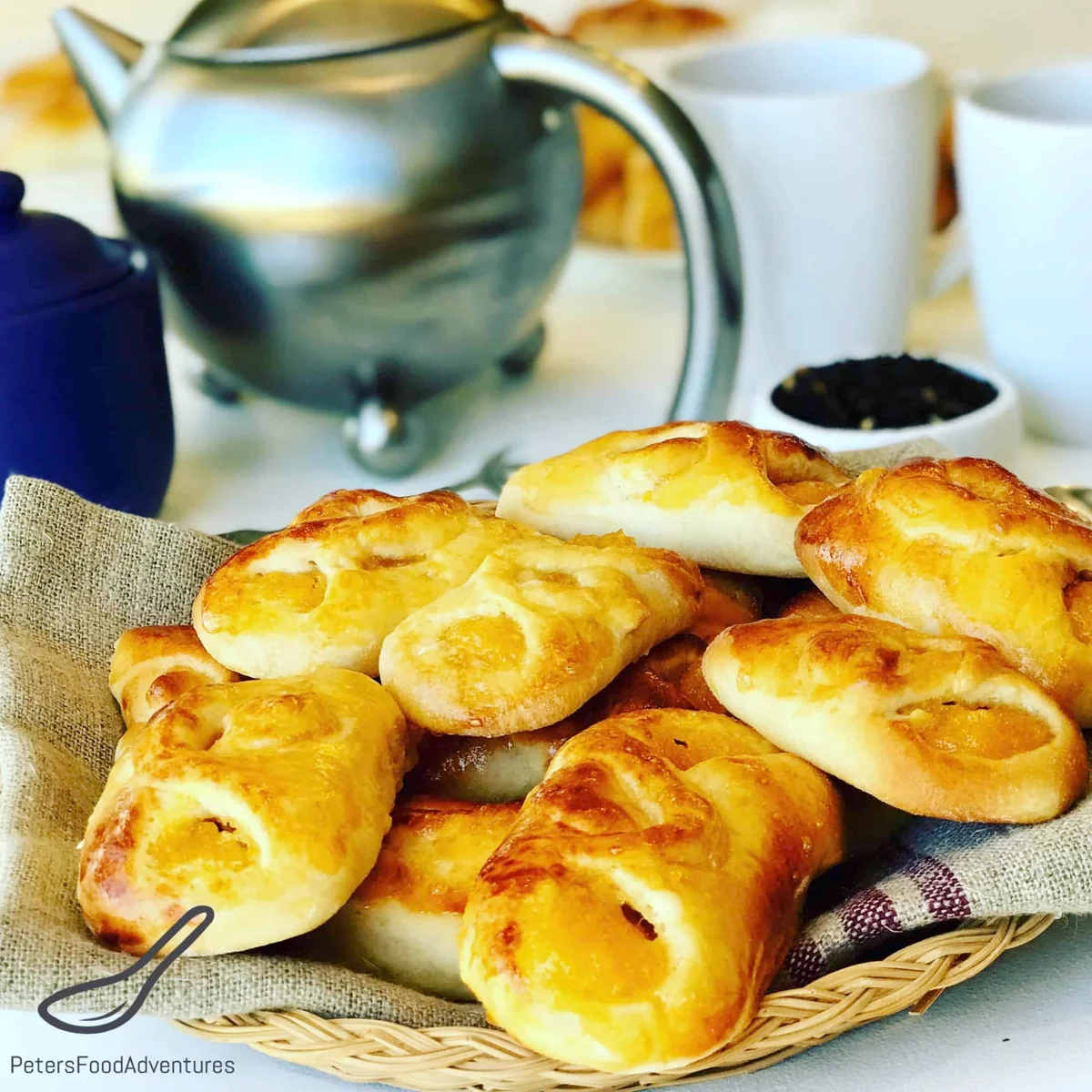
These Eastern European sweet piroshki are soft yeast-dough pastries filled with a thick, gently tangy apricot mixture. They take a little time to rise, but make a lovely batch of hand-held treats for sharing.
Ingredients
- 240 ml (1 cup)lukewarm milk
- 2 mediumeggs
- 100 g (8 tablespoons)sugar
- 1 pinchsalt
- 15 ml (1 tablespoon)sour cream, at room temperature
- 57 g (4 tablespoons)melted butter
- 5 ml (1 teaspoon)vanilla
- 400 g (3⅓ cups)plain flour
- 6 g (2 teaspoons)bread machine yeast
- 250 gdried apricots
- 50 g (¼ cup)sugar
- As needed to cover the apricotswater
- 2 egg yolks and 5 ml (1 teaspoon)egg wash: egg yolks and whipping cream
Instructions
- 1
Rehydrate apricots
The night before, put the dried apricots in a small saucepan and add enough water to cover them. Bring to the boil, take the pan off the heat, cover and leave to cool overnight. In the morning, drain the apricots and mash or blend them; add sugar to taste until the filling is thick, like apricot jam. Apricot jam can also be added.
- 2
Make the dough
Add the sweet-dough ingredients to a bread machine in the order listed and run the dough programme, which takes about 90 minutes. Alternatively, prepare the dough by hand using the traditional method shown in the video.
- 3
Divide the dough
When the dough is ready, turn it onto a lightly floured surface and knead gently. Roll it into a long sausage shape, then cut it into golf-ball-sized pieces, or pinch off pieces by hand; the recipe should make 24–30. Cover the pieces you are not using with cling film so they do not dry out.
- 4
Shape the rounds
Roll each dough ball into a circle about 6 mm (¼ inch) thick, using only a little flour on the work surface.
- 5
Fill and plait
Put about 1 tablespoon of apricot filling in the centre of each circle. Cut slits on both sides of the filling, then pull the edges across the filling and through the slit on the opposite side.
- 6
Proof the piroshki
Arrange the piroshki on a greased baking tray lined with baking paper. Leave them in a warm place for about 40 minutes, until doubled in size.
- 7
Brush and bake
Carefully brush the piroshki with the egg wash. Bake in an oven preheated to 180°C (350°F) for 10–15 minutes, until golden brown, then cool on a wire rack.
What are sweet piroshki?
Piroshki are filled pastries associated with Eastern European cooking, made in many shapes and with savoury or sweet fillings. This version uses a yeasted dough and dried apricots softened into a thick, jam-like centre.
The soft, enriched dough balances the concentrated fruit filling, while the crossed-over slits make each pastry distinctive and help enclose the filling.
Nutrition and macros by portion
The nutrition label shows one serving as written: 120 calories, 3g protein, 21g carbs, 3g fat.
| Portion | Adjustment | kcal | Protein | Carbs | Fat |
|---|---|---|---|---|---|
| Lighter | Use less sugar | 84 kcal | 2g | 15g | 2g |
| This serving | As written | 120 kcal | 3g | 21g | 3g |
| Hungry | Serve two piroshki | 180 kcal | 5g | 32g | 5g |
The flour and sugar provide most of the carbohydrates, while butter, egg yolks and sour cream contribute much of the fat; eggs, milk and flour provide some protein. Pair one piroshki with plain yoghurt or fruit for a more balanced snack.
A thick apricot filling
Rehydrating the apricots overnight softens them for mashing and gives the filling a spreadable texture. Drain them before mashing so the mixture does not become watery.
Sweetness: taste the mashed fruit before adding sugar, then add the listed sugar to taste. Aim for a thick consistency that stays in place when spooned onto the dough.
Work gently with the dough
Light flouring: use just enough to prevent sticking when kneading and rolling. Too much flour can make the dough difficult to seal and the finished pastries less tender.
Keep covered: cover dough pieces you are not shaping with cling film to stop their surfaces drying while you work through the batch.
Shape and seal
Even rounds: roll the pieces to about 6 mm thick so they are sturdy enough to hold the filling but still bake through easily.
Crossed edges: place about 1 tablespoon of filling in the centre and thread the cut edges through opposite slits. Keep the filling away from the edges to make shaping easier.
Proofing and doneness
The shaped pastries need about 40 minutes in a warm place, or until doubled in size. The rise can take longer if the room is cool, so use the dough’s size as your cue.
Bake at 180°C for 10–15 minutes. Look for a golden surface, then move the piroshki to a wire rack to cool.
Serving and timing
The apricots need to soak overnight, and the bread-machine dough cycle takes about 90 minutes; allow another 40 minutes for the shaped pastries to rise, plus baking time. The recipe does not give a total elapsed time.
Serve the piroshki warm or at room temperature with tea or coffee. Their sweet fruit filling also pairs well with plain yoghurt alongside.
Recipe notes & tips
- Start soaking the apricots the night before you plan to bake.
- Drain the fruit well before mashing so the filling stays thick.
- Use a food processor or stick blender for a smooth filling, or mash by hand for more texture.
- Keep unshaped dough pieces covered while you form the pastries.
- Use a lightly floured surface so excess flour does not interfere with sealing.
- Leave space between pastries on the tray so they can rise without touching.
Variations
- Use prunes: replace the apricots with dried prunes and prepare them in the same way.
- Add jam: mix a little apricot jam into the mashed fruit for a more spreadable filling.
- Adjust the sweetness: add sugar gradually and stop when the fruit tastes right to you.
- Change the shape: pinch the edges closed instead of crossing them for a simpler finish.
Common mistakes to avoid
- Watery filling: drain the rehydrated apricots thoroughly before mashing.
- Too much flour: flour the worktop sparingly to keep the dough soft and easy to seal.
- Dry dough pieces: cover the pieces you are not shaping with cling film.
- Overfilled pastries: use about 1 tablespoon of filling and keep it centred.
- Under-proofed dough: wait until the shaped pastries have doubled before baking.
- Overbaking: check from 10 minutes and take them out once golden brown.
How to store
Once cool, store the piroshki in an airtight container at room temperature for up to 2 days, or freeze them for up to 2 months. Reheat from thawed in a low oven until warmed through.
Frequently asked questions
Can I prepare the apricot filling in advance?
Yes. The recipe already calls for soaking the apricots overnight; you can mash the drained fruit then and keep the filling covered in the refrigerator until needed.
Can I use apricot jam instead of dried apricots?
The method notes that apricot jam can be added. Use a thick jam so it is less likely to run out during shaping and baking.
How many piroshki does this recipe make?
The method says to expect about 24–30 pieces. The serving count supplied for the recipe is 30.
How do I know the piroshki have risen enough?
After about 40 minutes in a warm place, they should have doubled in size. If they have not, leave them to rise longer before baking.
Can I make the dough without a bread machine?
Yes. The recipe suggests preparing it by the traditional method shown in the video, though it does not provide a separate hand-mixing method.
Can I freeze the baked piroshki?
Yes. Cool them completely, pack them airtight and freeze. Thaw before reheating.
Cook it from the original
This recipe comes from petersfoodadventures.com. Their page has the author’s own photos, notes and tips — the best place to cook it from.
Open the recipe on petersfoodadventures.com