
Traditional Tomato Gazpacho
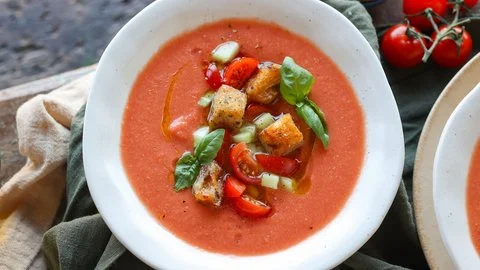
Traditional tomato gazpacho is a chilled, no-cook soup blended from ripe tomatoes, vegetables, bread and olive oil. Make it ahead so it has time to cool thoroughly before serving on a warm day.
Ingredients
- 6 mediumtomatoes
- 1red pepper
- 1/2cucumber
- 1 slicerustic bread
- 1/2 smallred onion
- 1 clovegarlic
- 60 ml (1/4 cup)extra-virgin olive oil
- 22.5 ml (1 1/2 tbsp)red wine vinegar
- 1/2 tspsalt
- 1/4 tspground black pepper
Instructions
- 1
Blend the vegetables
Put the tomatoes, red pepper, cucumber, bread, red onion and garlic in a blender. Blend to a chunky sauce, taking care not to overblend, which can dull the colour.
- 2
Add the seasoning
Add the olive oil, red wine vinegar, salt and black pepper. Blend until smooth.
- 3
Strain the soup
Pass the soup through a sieve to remove any remaining chunks.
- 4
Chill before serving
Refrigerate the gazpacho for at least 2 hours. Garnish as desired and serve.
What is gazpacho?
Gazpacho is a cold Spanish soup associated with Andalusia, where it makes a refreshing meal in warm weather. Its roots are often traced to older bread-based soups, with tomatoes becoming central after they arrived in Europe from the Americas.
This version blends tomato and other fresh vegetables with bread, then strains the mixture for a smoother finish. Olive oil and vinegar give it richness and a bright, tangy edge.
Nutrition and macros by portion
The nutrition label shows one serving as written: 194 calories, 3g protein, 15g carbs, 15g fat.
| Portion | Adjustment | kcal | Protein | Carbs | Fat |
|---|---|---|---|---|---|
| Lighter | Use less olive oil | 136 kcal | 2g | 10g | 10g |
| This serving | As written | 194 kcal | 3g | 15g | 15g |
| Hungry | Serve with extra bread | 291 kcal | 5g | 22g | 22g |
The tomatoes, pepper and bread provide most of the carbohydrates, while the olive oil is the main source of fat. The vegetables and bread contribute a little protein, but this is a light soup rather than a protein-rich main. Pair it with beans, eggs or another protein-rich food and some extra vegetables for a more substantial plate.
Choosing the ingredients
Ripe tomatoes: Use tomatoes that smell fragrant and feel juicy, as they provide most of the soup’s flavour and liquid.
Rustic bread: A slice helps give the blended vegetables body. A crusty loaf works well; remove very hard crust if your blender struggles with it.
Olive oil and vinegar: Extra-virgin olive oil adds richness, while red wine vinegar balances the ripe vegetables. Add them after the first blend, as the method directs.
Getting the texture right
First blend: Stop while the vegetables are still a little chunky. A brief initial blend also helps preserve the mixture’s fresh colour.
Final blend: Once the oil and seasonings are in, blend until smooth. Pass the soup through a sieve to catch any bits that remain.
Chilling and seasoning
Chill time: Give the gazpacho at least 2 hours in the fridge before serving; the recipe’s total time is 130 minutes. Keep it covered while it chills.
Final taste: Cold temperatures can make flavours seem less pronounced, so taste it before serving and adjust the seasoning to your preference.
Serving ideas
Garnishes: Serve it plain or add a little finely chopped tomato, cucumber or pepper for extra texture. A small drizzle of olive oil is another simple finish.
On the side: Bread makes a natural accompaniment, while a green salad can round out a light lunch.
A make-ahead soup
Gazpacho is convenient to prepare ahead because the chilling time is part of the process. Blend and strain it, then refrigerate until cold and ready to serve.
Give it a stir before ladling, as the ingredients may settle during storage.
Recipe notes & tips
- Use ripe, flavourful tomatoes for the best result.
- Blend the vegetables only until chunky at first to help keep the colour vibrant.
- Add the oil and vinegar after the initial blend, following the method.
- Strain the soup if you want a smoother texture.
- Chill for at least 2 hours before serving.
- Stir the gazpacho before serving if it has settled in the fridge.
Variations
- Cucumber garnish: Dice a little cucumber and scatter it over the soup before serving.
- Pepper garnish: Finely chop some red pepper for a crisp, colourful topping.
- Herb finish: Add chopped fresh parsley or basil just before serving.
- Smoother texture: Blend the vegetables thoroughly before straining for a more even soup.
- More vinegar: Add a little extra red wine vinegar to taste for a sharper finish.
Common mistakes to avoid
- Overblending at the start: The colour can become less vibrant, so stop when the mixture is still chunky.
- Skipping the sieve: Strain the soup to remove any remaining chunks if you want the method’s smooth finish.
- Serving it warm: Chill it in the fridge for at least 2 hours before serving.
- Adding all the seasonings at once: Blend the vegetables first, then add the oil, vinegar, salt and pepper as directed.
- Forgetting to stir: Mix the soup before serving if it has separated or settled during chilling.
How to store
Keep the gazpacho covered in the fridge and use within 3 days. Stir before serving; serve it cold rather than reheating.
Frequently asked questions
Can I make gazpacho ahead?
Yes. Prepare it through straining, then cover and refrigerate for at least 2 hours before serving.
Do I need to peel the tomatoes?
The recipe does not call for peeling them. Pass the blended soup through a sieve to remove remaining chunks.
Why is my gazpacho not smooth?
Blend the mixture until smooth after adding the oil and seasonings, then strain it to catch any remaining pieces.
Can I make gazpacho without bread?
You can omit the bread, though it contributes body to the soup and the texture will be thinner.
How long should gazpacho chill?
Chill it for at least 2 hours before serving.
Can I freeze gazpacho?
It is best served freshly chilled, as freezing and thawing can change the texture of the blended vegetables. Refrigerate leftovers instead.
Cook it from the original
This recipe comes from pickuplimes.com. Their page has the author’s own photos, notes and tips — the best place to cook it from.
Open the recipe on pickuplimes.com