
Chicken Adobo Recipe
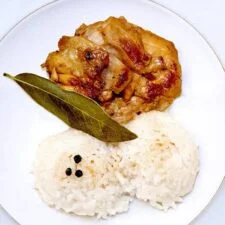
Filipino chicken adobo simmers chicken in a salty, tangy sauce of vinegar, soy sauce, garlic and peppercorns, then browns it for extra colour. It is a satisfying dish to serve with white rice, which soaks up the remaining sauce.
Ingredients
- 180 ml (¾ cup)water
- 120 ml (½ cup)distilled white vinegar
- 30 ml (2 tablespoons)soy sauce
- 3bay leaves
- 2.5 ml (½ teaspoon)whole peppercorns
- 2garlic cloves, crushed
- 7.5 ml (½ tablespoon)salt
- 4 or 5chicken thighs or drumsticks
- 15 ml (1 tablespoon)olive oil
- 25 g (2 tablespoons), optionalbrown sugar
Instructions
- 1
Mix the sauce
In a large pot, combine the water, vinegar, soy sauce, peppercorns, bay leaves, crushed garlic and salt. Stir, then taste the mixture to check that its balance suits you.
- 2
Adjust the flavour
Before adding the chicken, adjust the sauce with more vinegar, soy sauce or water as you like. For a sweeter sauce that will thicken into a glaze, add a little brown sugar, about 2 tablespoons.
- 3
Simmer the chicken
Add the chicken pieces and simmer uncovered over low heat for 25–30 minutes, until tender and cooked through, or until the internal temperature reaches 82°C (180°F).
- 4
Brown the pieces
Lift the chicken out of the pot and brown it in the olive oil in a large skillet over medium-high heat. As it is already cooked through, sear each side for about 2–3 minutes; a cast-iron skillet gives good browning.
- 5
Finish in sauce
Return the chicken to the pot with the oil and juices, and add the reserved sauce. Cover and simmer over medium heat until the sauce has reduced to your liking. Serve with white rice.
What is chicken adobo?
Adobo is a Filipino cooking tradition in which ingredients are simmered with a savoury, tangy mixture that commonly includes vinegar and soy sauce. Chicken adobo is one familiar version, with garlic and peppercorns adding depth to the sauce.
This recipe first simmers the chicken until tender, then browns it separately before returning it to the sauce. That two-stage method gives you both soft, sauce-infused meat and browned edges.
Nutrition and macros by portion
The nutrition label shows one serving as written: 488 calories, 60g protein, 13g carbs, 19g fat.
| Portion | Adjustment | kcal | Protein | Carbs | Fat |
|---|---|---|---|---|---|
| Lighter | Use less oil | 342 kcal | 42g | 9g | 14g |
| This serving | As written | 488 kcal | 60g | 13g | 19g |
| Hungry | Add more chicken | 732 kcal | 90g | 20g | 29g |
Chicken provides most of the protein, while the olive oil and any fat on the chicken contribute much of the fat. The sauce contributes some carbohydrates, particularly if you use the optional brown sugar; rice, if served, adds more carbohydrates. Pair the chicken and rice with a generous portion of vegetables to round out the plate.
The sauce ingredients
Vinegar and soy: vinegar supplies the sharp tang, while soy sauce brings saltiness and savoury flavour. Taste and adjust the mixture before the chicken goes in, as directed.
Garlic and spices: crushed garlic, bay leaves and whole peppercorns flavour the simmering liquid. The recipe includes salt as well, so taste carefully before adding extra soy sauce.
Brown sugar: this is optional and makes the sauce sweeter; it also helps it thicken into a glaze as it simmers. Leave it out if you prefer a sharper, less sweet sauce.
Simmer until tender
Keep the first simmer gentle and uncovered, and allow 25–30 minutes for the chicken to cook through. The recipe gives an internal temperature of 82°C (180°F) as an alternative doneness cue.
Chicken pieces can vary in size, so check the thickest part rather than relying on time alone. Avoid letting the sauce boil vigorously, which can make it reduce faster than intended.
Get a good brown
The chicken is cooked before it reaches the skillet, so the searing stage is for colour rather than cooking it from raw. Give each side about 2–3 minutes over medium-high heat.
A cast-iron skillet is recommended for browning, though the recipe notes that a non-stick pan can be used. Let the surface colour before turning the pieces.
Choose your sauce finish
Once the chicken is browned, return it to the pot with the oil and juices from the skillet. Cover and simmer over medium heat so the meat and sauce come together again.
The recipe leaves the final reduction to your preference: stop when there is enough sauce for serving, or continue simmering for a thicker coating. If you added sugar, keep an eye on the sauce as it thickens.
Serve with rice
White rice is the suggested accompaniment, and its mild flavour works well with the salty, tangy sauce. Spoon some of the sauce over the rice so it does not go to waste.
For a fuller plate, add a simple vegetable side. Serve the chicken while warm, with the bay leaves left out of the portions.
Recipe notes & tips
- Taste and adjust the sauce before adding the chicken, as the recipe directs.
- Use a large pot so the chicken pieces can sit in the simmering liquid.
- Keep the first simmer low and uncovered.
- Check the chicken's internal temperature in its thickest part.
- Brown the cooked chicken in batches if the skillet is crowded.
- Return the skillet juices to the pot along with the chicken.
Variations
- Sweeter sauce: Add the optional brown sugar to help create a sweeter, thicker glaze.
- Sharper flavour: Adjust the sauce with additional vinegar before adding the chicken.
- Milder sauce: Add water to the mixture before cooking to soften its intensity.
- Different pieces: Use chicken thighs or drumsticks, as suggested in the recipe.
- Rice bowl: Serve the chicken over white rice and spoon sauce over the top.
Common mistakes to avoid
- Adjusting too late: Balance the vinegar, soy sauce or water before adding the chicken.
- Boiling hard: Keep the chicken at a low simmer so the sauce does not reduce too quickly.
- Skipping the temperature check: Check the thickest part and use 82°C (180°F) as the recipe's doneness cue.
- Crowding the skillet: Brown the chicken in batches so the pieces can sear.
- Over-reducing the sauce: Simmer only until it reaches the amount and thickness you want.
How to store
Refrigerate leftovers in a covered container once cooled, and use within 3–4 days. Reheat gently in a covered pan with a splash of water if the sauce has become too thick, making sure the chicken is hot throughout.
Frequently asked questions
Can I leave out the brown sugar?
Yes. It is optional; without it, the sauce will be less sweet and may not thicken into as much of a glaze.
Can I use chicken thighs instead of drumsticks?
Yes. The recipe allows for either thighs or drumsticks, using 4 or 5 pieces.
How do I know when the chicken is done?
The recipe calls for tender, cooked-through chicken after 25–30 minutes of simmering, or an internal temperature of 82°C (180°F).
Why brown the chicken after simmering it?
The chicken is already cooked through at that point, so browning adds colour and a seared finish before it returns to the sauce.
What should I serve with chicken adobo?
White rice is the suggested accompaniment and is useful for soaking up the sauce. A simple vegetable side can also round out the meal.
Can I adjust the sauce?
Yes. Before adding the chicken, balance it with vinegar, soy sauce or water to suit your taste.
Cook it from the original
This recipe comes from pickledplum.com. Their page has the author’s own photos, notes and tips — the best place to cook it from.
Open the recipe on pickledplum.com