
Pastel de Dulce de Leche
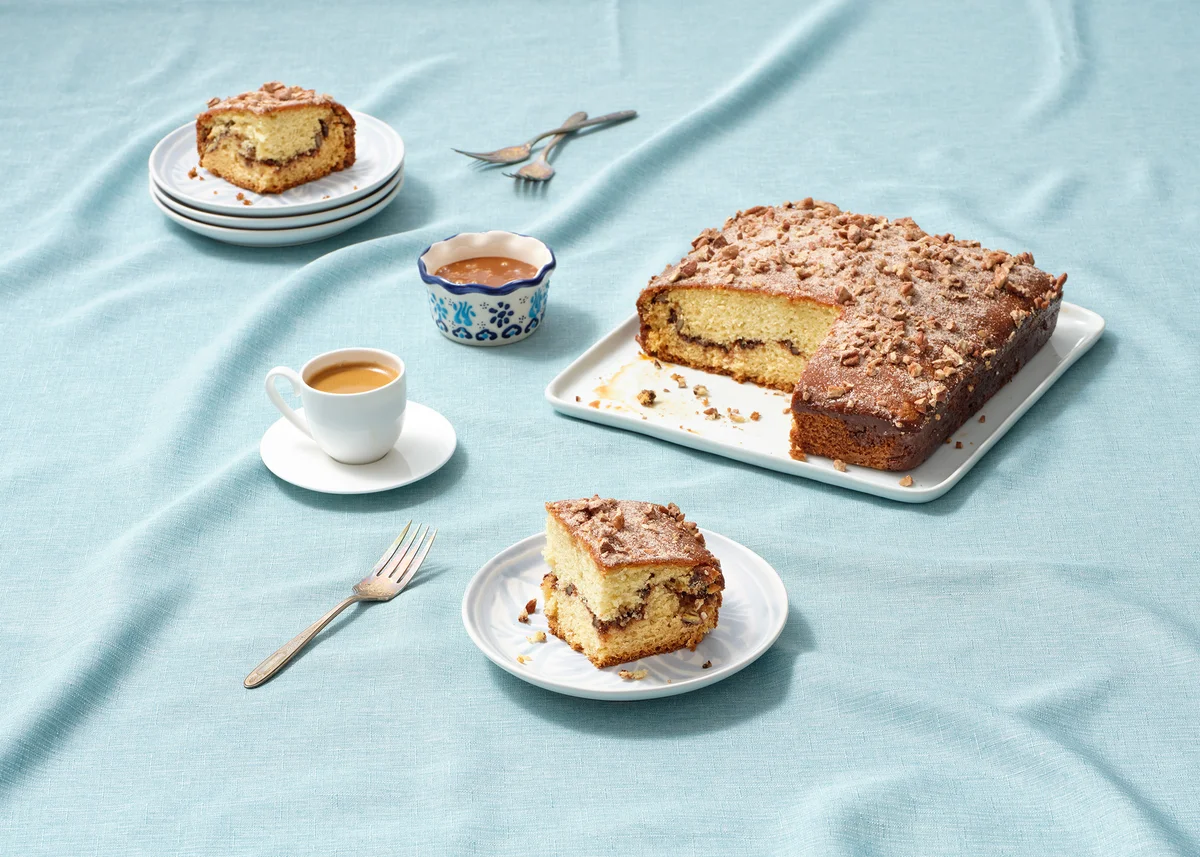
This Mexican-inspired coffee cake layers a tender sour-cream batter with a pecan and cinnamon crumble, then gets finished with cajeta or dulce de leche. It makes a generous tray to share with coffee or as an easy dessert.
Ingredients
- 300 g (2 1/2 cups)plain flour
- 1 1/4 teaspoonsbaking powder
- 1 1/4 teaspoonsbicarbonate of soda
- 3/4 teaspoonkosher salt
- 3Eggland’s Best eggs
- 300 g (1 1/4 cups)sour cream
- 1 tablespoon (15 ml)vanilla extract
- 142 g (10 tablespoons), plus extra for greasing the tinunsalted butter
- 250 g (1 1/4 cups)granulated sugar
- 85 g (3/4 cup), finely choppedpecans
- 2 teaspoonsground canela or true cinnamon
- 1 tablespoon (about 8 g)plain flour
- 67 g (1/3 cup)granulated sugar
- 120 ml (1/2 cup)cajeta or dulce de leche
Instructions
- 1
Preheat the oven
Heat the oven to 175°C (350°F), with a rack positioned in the middle.
- 2
Mix dry ingredients
In a medium bowl, combine the flour, baking powder, bicarbonate of soda and salt. In a small bowl, crack the eggs and mix them with the sour cream and vanilla.
- 3
Make the batter
Beat the butter in a stand mixer at medium speed for a couple of minutes, until completely softened. Lower the speed and add the sugar, beating until smooth and incorporated. Add the dry ingredients and egg mixture alternately, beating until fully combined, then set the batter aside.
- 4
Prepare the crumble
In a small bowl, mix the pecans, cinnamon, flour and sugar.
- 5
Layer the cake
Butter the bottom and sides of a 23 × 23 cm (9 × 9-inch) tin and line the base with baking parchment, leaving an overhang on two sides. Spread about half the batter evenly in the tin, then sprinkle on about half the crumble. Add the remaining batter and spread it gently without pressing it down. Cover with the remaining crumble, keeping back 1 tablespoon for the final topping.
- 6
Bake and drizzle
Bake for 40 minutes, until the top is golden. Take the cake out of the oven, drizzle the cajeta or dulce de leche over the top, and sprinkle on the reserved tablespoon of crumble.
- 7
Finish baking
Return the cake to the oven for another 5 to 8 minutes, until a wooden toothpick inserted in the centre comes out barely moist but not wet and the top has darkened a little more. Remove it from the oven and leave it to cool.
- 8
Lift from the tin
Once the cake is cool, run a dinner knife around its sides and use the parchment overhang to lift it onto a platter.
What is pastel de dulce de leche?
Pastel de dulce de leche is a Mexican-style coffee cake, made here as a layered, shareable bake rather than a frosted celebration cake. The recipe is associated with Pati’s Mexican Table and pairs a soft sour-cream cake with cinnamon, pecans and a caramel-like topping.
Sour cream enriches the batter and helps keep the crumb tender, while the two layers of pecan crumble add contrast. A final drizzle of cajeta or dulce de leche brings sweetness and a glossy finish.
Nutrition and macros by portion
The nutrition label shows one serving as written: 441 calories, 6g protein, 55g carbs, 22g fat.
| Portion | Adjustment | kcal | Protein | Carbs | Fat |
|---|---|---|---|---|---|
| Lighter | Smaller cake slice | 309 kcal | 4g | 39g | 15g |
| This serving | As written | 441 kcal | 6g | 55g | 22g |
| Hungry | Larger cake slice | 662 kcal | 9g | 83g | 33g |
Flour and sugar provide most of the carbohydrates, while butter, sour cream, pecans and the cajeta or dulce de leche contribute much of the fat. Eggs and pecans provide some protein, though this is primarily a sweet bake. For a more balanced plate, serve a slice with fresh fruit and plain yoghurt.
A tender sour-cream batter
Butter first: beat it until thoroughly softened before adding the sugar, so it blends smoothly rather than leaving firm pieces in the mixture.
Alternate additions: add the dry mixture and egg mixture in turns, beating until incorporated. This helps combine the batter without needing to overwork it.
Building the crumble layers
Even layers: spread roughly half the batter in the prepared tin, then scatter over half the crumble. Repeat, spreading the top batter gently so the first layer stays in place.
Reserve a spoonful: hold back 1 tablespoon of crumble for sprinkling on after the dulce de leche. That keeps some of the topping visible on the finished cake.
Getting the bake right
First bake: the cake spends 40 minutes in the oven before the caramel topping goes on. Look for a golden surface at this point.
Final check: after another 5 to 8 minutes, a wooden toothpick in the centre should come out barely moist, not wet. The top should darken a little more; allow the cake to cool before lifting it out.
Choosing the topping
Cajeta: use it for the version named in the original recipe; it is a Mexican caramel sauce traditionally made with goat’s milk.
Dulce de leche: this is the alternative listed in the recipe and gives a similar sweet, caramel-like finish. Whichever you choose, drizzle it over the cake after the first bake.
Serving and timing
The recipe takes 45 minutes in total, including 40 minutes for the first bake and a further 5 to 8 minutes to finish. Cooling time is additional, so allow the cake to cool before transferring it to a platter.
Serve it in slices with coffee or tea, or alongside fresh berries for a fresh contrast to the sweet topping.
Recipe notes & tips
- Bring the butter to room temperature so it softens thoroughly in the mixer.
- Line the tin with parchment overhanging two sides to make the cooled cake easier to lift.
- Spread the batter gently over the first crumble layer rather than pressing it down.
- Keep the reserved tablespoon of crumble aside until after adding the cajeta or dulce de leche.
- Start checking the centre at the lower end of the final 5-to-8-minute baking window.
- Let the cake cool fully before running a knife around the sides and lifting it out.
Variations
- Use either topping: choose cajeta or dulce de leche, as the recipe allows.
- Change the cinnamon: use ground canela or true cinnamon for the crumble.
- Toast the pecans: toast them briefly before chopping for a deeper nutty flavour.
- Add a fruit side: serve each slice with fresh berries for a tart contrast.
- Serve warm: cut a slice once the cake has cooled enough to handle, rather than waiting for it to reach room temperature.
Common mistakes to avoid
- Butter still firm: beat it until completely softened before adding the sugar.
- Overmixing the batter: stop once the dry and egg mixtures are fully incorporated.
- Pressing the top layer: spread the batter gently so the crumble beneath remains distinct.
- Adding the caramel too soon: drizzle it on after the initial 40-minute bake as directed.
- Removing the cake while hot: cool it first so it is easier to lift without breaking.
- Baking past doneness: check for a toothpick that is barely moist, not wet, during the final 5 to 8 minutes.
How to store
Store the cooled cake covered in an airtight container at room temperature for up to 2 days, or refrigerate it for up to 5 days. Bring slices to room temperature or warm them briefly before serving.
Frequently asked questions
Can I use dulce de leche instead of cajeta?
Yes. The recipe lists cajeta or dulce de leche, so either can be drizzled over the cake after its first bake.
What size tin should I use?
Use a 23 × 23 cm (9 × 9-inch) tin. Butter it and line the base with baking parchment, leaving an overhang on two sides.
How do I know when the cake is done?
After the final 5 to 8 minutes, a wooden toothpick inserted in the centre should come out barely moist but not wet, and the top should have darkened a little.
Why is the topping added in two stages?
The cake bakes for 40 minutes before the cajeta or dulce de leche is added, then goes back into the oven for another 5 to 8 minutes. The reserved tablespoon of crumble is sprinkled on at the same time as the drizzle.
Can I make the cake ahead?
Yes. Bake it, let it cool fully and store it covered. The recipe does not require serving it straight from the oven.
Cook it from the original
This recipe comes from patijinich.com. Their page has the author’s own photos, notes and tips — the best place to cook it from.
Open the recipe on patijinich.com