
Salsa Roja con Chile de Árbol y Ajo
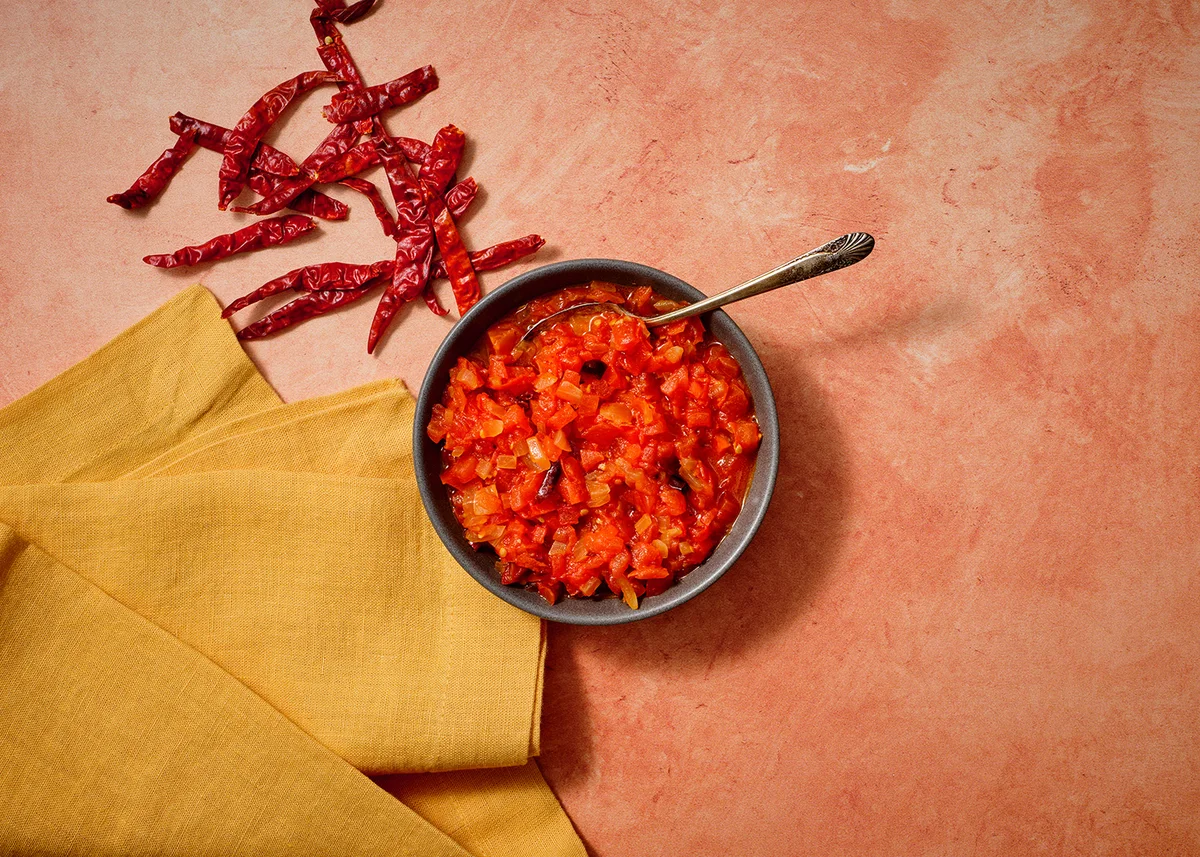
This Mexican salsa roja is a quick, cooked tomato sauce sharpened with árbol chillies and garlic. Make it when you want a punchy salsa with a soft, spoonable texture for serving alongside tacos, eggs or other savoury dishes.
Ingredients
- 30 ml (2 tablespoons)vegetable oil
- 4 to 5árbol chillies, stalks removed and chopped
- 3 to 4garlic cloves, finely chopped
- 40 g (1/4 cup)white onion, finely chopped
- 454 g (1 pound)ripe tomatoes, cored and finely chopped
- 4 ml (3/4 teaspoon), plus more to tastekosher salt
Instructions
- 1
Fry the aromatics
Heat the oil in a medium saucepan. Add the chopped árbol chillies and garlic, then cook for 1 minute, until fragrant and darker in colour.
- 2
Add vegetables
Stir in the onion, tomatoes and salt, then cover the saucepan.
- 3
Cook the salsa
Lower the heat to medium-low and cook for about 10 to 12 minutes, until the tomatoes are completely soft and cooked through and the salsa has come together.
What is salsa roja?
Salsa roja means red salsa in Spanish and describes a broad family of Mexican sauces made with red ingredients such as tomatoes and chillies. This version is cooked rather than served raw, so the tomatoes soften into a cohesive, spoonable sauce.
Árbol chillies bring a direct, warming heat, while garlic and onion add savoury depth. Cooking them briefly in oil before adding the tomatoes helps their flavours carry through the salsa.
Nutrition and macros by portion
The nutrition label shows one serving as written: 364 calories, 6g protein, 25g carbs, 27g fat.
| Portion | Adjustment | kcal | Protein | Carbs | Fat |
|---|---|---|---|---|---|
| Lighter | Use less vegetable oil | 255 kcal | 4g | 18g | 19g |
| This serving | As written | 364 kcal | 6g | 25g | 27g |
| Hungry | Serve with beans and rice | 546 kcal | 9g | 38g | 41g |
Most of the fat comes from the vegetable oil, while the tomatoes, onion, garlic and chillies supply most of the carbohydrates and fibre. The salsa provides little protein on its own, so serve it with beans, eggs or another protein-rich food and a filling side to make a more balanced plate.
The chilli and garlic
Árbol chillies: remove the stalks and chop them before they go into the pan. Their heat can vary, so use four for a milder batch or five for more intensity.
Garlic: chop it finely so it cooks quickly and distributes through the sauce. Keep it moving in the oil and add the other ingredients after a minute to prevent it catching.
Building the tomato base
Tomatoes: ripe tomatoes soften readily and provide the salsa’s body. Cores removed and the flesh finely chopped, they cook down more evenly within the short cooking time.
Onion: finely chopped white onion blends into the softened tomatoes instead of leaving large, crunchy pieces. Stir it in with the tomatoes and salt, as the method directs.
Cook until soft
The key cue is the tomatoes: they should be completely mushy and cooked through, with the oil, juices and softened vegetables forming a unified salsa. Begin checking at around 10 minutes; the method allows up to 12.
Keep the saucepan covered as it cooks, and maintain a medium-low heat after adding the tomatoes. If the salsa still looks like separate chunks, give it a little more time within the stated cooking range.
Seasoning and texture
Salt: the stated amount is a starting point, with more added to taste. Check the seasoning once the tomatoes have softened, when their flavour is easier to judge.
This recipe finishes as a soft, rustic salsa rather than a smooth purée. If you prefer a smoother texture, you can blend it after cooking, taking care with the hot contents.
Serving the salsa
Serve it with tacos, eggs, beans or grilled vegetables, or set it out as a warm accompaniment to a Mexican-style meal. Its chilli and garlic make it a particularly lively contrast to mild, creamy or starchy foods.
For a more substantial plate, pair the salsa with a source of protein and a filling side such as beans or rice. Taste it before serving and keep extra salt available at the table.
Recipe notes & tips
- Chop the tomatoes and aromatics before heating the oil so they are ready to add promptly.
- Use a medium saucepan with a lid to keep the tomatoes covered as they soften.
- Cook the garlic and chillies for only 1 minute before adding the remaining ingredients.
- Start with four árbol chillies if you are unsure how much heat you want.
- Taste the finished salsa before adding more salt.
Variations
- More heat: use five árbol chillies for a hotter batch.
- Milder salsa: use four chillies and remove their seeds if you prefer less heat.
- Smoother texture: blend the cooked salsa carefully after it has softened.
- Chunkier salsa: chop the tomatoes a little less finely and stop cooking once they are soft.
- Extra garlic: use four cloves for a more pronounced garlic flavour.
Common mistakes to avoid
- Burning the garlic: add the tomatoes after 1 minute, once the garlic is fragrant and darker in colour.
- Adding salt too early to judge: taste after the tomatoes have cooked down, then adjust to taste.
- Stopping while tomatoes are firm: cook until they are completely soft and cooked through.
- Using too much heat: reduce to medium-low after covering the pan so the salsa cooks gently.
- Handling hot salsa carelessly: let it cool before blending, and vent the blender if you choose to purée it.
How to store
Cool the salsa, transfer it to a sealed container and refrigerate for up to 3 days. Reheat gently in a saucepan until hot, stirring occasionally; add a small splash of water if it has thickened.
Frequently asked questions
How hot is this salsa?
Árbol chillies can give the salsa a noticeable heat, though their intensity varies. Use four rather than five if you want to keep it gentler.
Can I use a different chilli?
Yes, though the heat and flavour will change. Choose a dried red chilli with a similar level of heat, or use a milder option for a less fiery salsa.
Does the salsa need to be blended?
No. The method cooks the tomatoes until they soften into a rustic, spoonable salsa. Blend it only if you prefer a smoother consistency.
How do I know when it is ready?
After about 10 to 12 minutes, the tomatoes should be completely mushy and cooked through, and the ingredients should have come together as a sauce.
Can I make it ahead?
Yes. Refrigerate it in a sealed container and reheat gently when you are ready to serve.
Cook it from the original
This recipe comes from patijinich.com. Their page has the author’s own photos, notes and tips — the best place to cook it from.
Open the recipe on patijinich.com