
Tlacoyos de Masa Azul de Haba con Huevo y Nopales
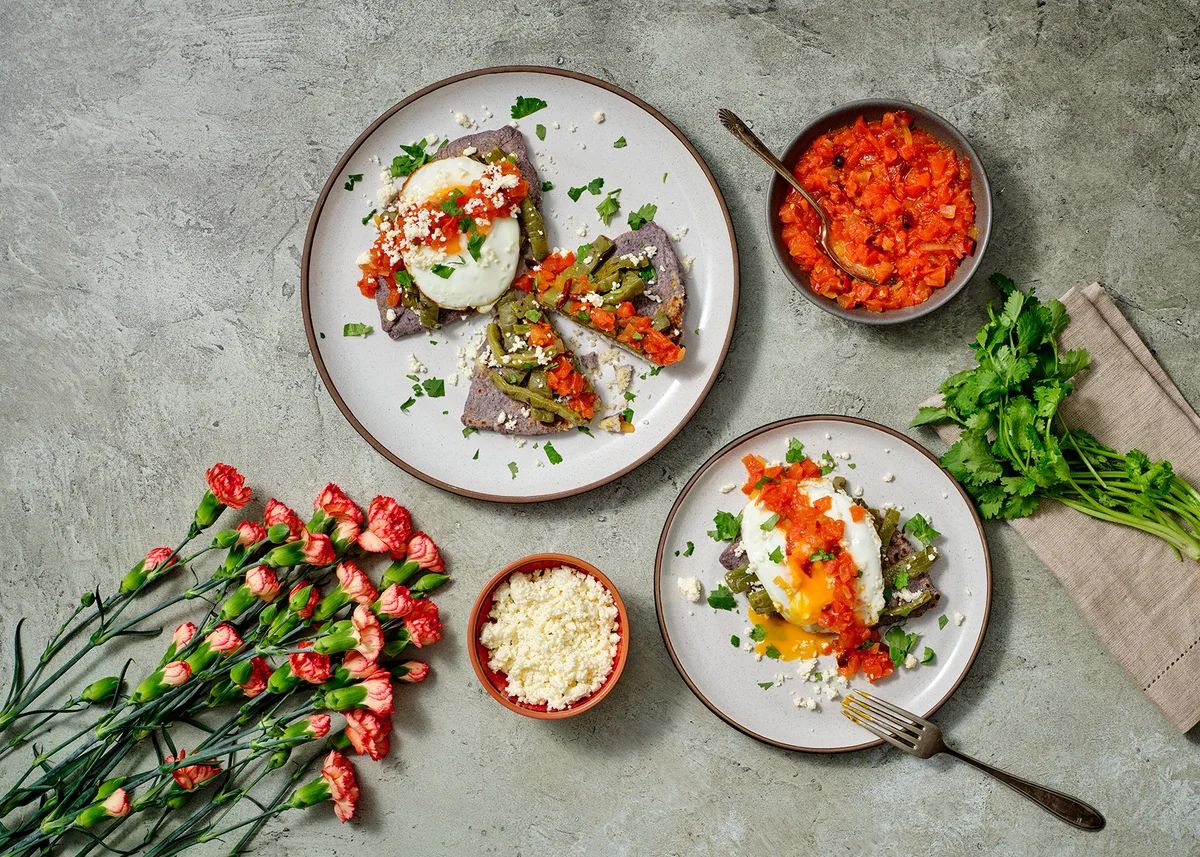
These Mexican blue-corn tlacoyos are thick, oval masa cakes filled with seasoned fava beans, then topped with nopales, a fried egg, salsa and fresh garnishes. They take a little preparation, but the separate components make a hearty, colourful meal for sharing.
Ingredients
- 190 g (1 cup)dried yellow fava beans, rinsed
- 45 ml (3 tablespoons)vegetable oil
- 1 thick slice, about 28 g (1 ounce)white onion
- 1jalapeño or serrano chilli, stemmed and finely chopped
- 2garlic cloves, peeled and finely chopped
- 2.5 ml (1/2 teaspoon)kosher salt
- 2.5 ml (1/2 teaspoon)coarsely ground black pepper
- 120 ml (1/2 cup)chicken or vegetable stock, or water, plus more if needed
- 15 ml (1 tablespoon)vegetable oil
- 450 g (1 pound)cactus paddles or nopales, cleaned and cut into strips 1.3 cm wide and 5–7.5 cm long
- 2.5 ml (1/2 teaspoon)kosher salt
- Juice of 1/2 lime, about 15 ml (1 tablespoon)lime
- 240 g (2 cups)blue masa harina
- 2.5 ml (1/2 teaspoon)kosher salt
- 360 ml (1 1/2 cups)water, plus more if needed
- 15 ml (1 tablespoon)vegetable oil or shortening
- 8eggs
- To tasteSalsa Roja con Chile de Árbol y Ajo or your favourite red salsa
- 60 g (1/2 cup)crumbled queso fresco
- 15 g (1/4 cup)finely chopped coriander
- About 40 g (1/4 cup)finely chopped white onion
Instructions
- 1
Soak and grind
Cover the fava beans generously with water in a bowl and leave to soak for 24 to 48 hours. Drain them, then pulse in a food processor until finely ground but not pasty. Scrape into a bowl and set aside.
- 2
Cook the filling
Heat 45 ml (3 tablespoons) oil in a frying pan over medium heat. Brown the onion slice on both sides, about 5 minutes, then remove and discard it. Add the chilli and garlic; stir for less than a minute, until fragrant. Stir in the ground favas, 2.5 ml (1/2 teaspoon) salt and the pepper, and cook for a couple of minutes, until the mixture starts to change colour. Add the stock, mix well and cook for 6 to 7 minutes, until the filling is cooked and forms a consistent, grainy paste. Scrape into a bowl, cover and set aside.
- 3
Cook the nopales
Heat 15 ml (1 tablespoon) oil in a large frying pan over medium heat. Add the nopales, sprinkle with 2.5 ml (1/2 teaspoon) salt and cook for 10 to 15 minutes, turning and stirring occasionally, until their slippery liquid has come out and evaporated and they are cooked but still snappy. Squeeze in the lime juice and cook for another minute, until it has dried up. Set aside.
- 4
Make the masa
Mix the masa harina and 2.5 ml (1/2 teaspoon) salt in a medium bowl. Add the water and knead for about 2 minutes, until combined, adding more water if the masa seems too dry. Knead in 15 ml (1 tablespoon) oil until thoroughly incorporated. Cover with a damp kitchen towel and leave to rest until ready to shape.
- 5
Heat the comal
Preheat a comal, cast-iron pan or non-stick frying pan over medium-low heat.
- 6
Shape the tlacoyos
Line a tortilla press with two pieces of plastic cut into rounds. Divide the masa into 8 pieces and roll each into a ball, moistening your hands with water as needed. Place one ball between the plastic in the press and press gently once or twice to make a thick tortilla about 6 mm (1/4 inch) thick and 13 cm (5 inches) across. Keep it in the press, add a couple of tablespoons of fava filling in the centre, fold it over like a quesadilla, then roll it gently in your hands into an oval, football-like shape. Press it gently between the plastic until about 1.3 cm (1/2 inch) thick, keeping it plump. You can also shape the tlacoyos by hand.
- 7
Cook the tlacoyos
Cook each tlacoyo on the comal for about 4 to 6 minutes per side, until the masa is cooked through and marked with brown spots. Continue with the remaining tlacoyos, keeping them wrapped in a clean kitchen towel or in a tortilla warmer.
- 8
Fry and assemble
Cook the eggs one at a time, sunny side up, to your preferred doneness. Top each tlacoyo with nopales, a fried egg, salsa, crumbled queso fresco, coriander and onion.
What are tlacoyos?
Tlacoyos are Mexican masa cakes, usually oval and thicker than tortillas, with a filling folded inside before they are cooked on a hot surface. Their roots are in central Mexican cooking, where masa-based foods have long been shaped and cooked by hand.
This version pairs blue masa with a savoury fava bean filling, then adds tangy nopales and a sunny-side-up egg. The combination gives each bite a mix of soft masa, grainy filling, crisp-edged cactus and fresh toppings.
Nutrition and macros by portion
The nutrition label shows one serving as written: 360 calories, 17g protein, 39g carbs, 16g fat.
| Portion | Adjustment | kcal | Protein | Carbs | Fat |
|---|---|---|---|---|---|
| Lighter | Use less oil and cheese | 252 kcal | 12g | 27g | 11g |
| This serving | As written | 360 kcal | 17g | 39g | 16g |
| Hungry | Add an extra tlacoyo | 540 kcal | 26g | 59g | 24g |
The masa harina and fava beans provide most of the carbohydrates, while the eggs and favas contribute protein. Oil, eggs and queso fresco supply much of the fat; salsa and fresh toppings add flavour without needing much extra. For a more balanced plate, serve a tlacoyo with extra vegetables or salad.
Build the fava filling
Soaking: The dried beans need 24 to 48 hours in water before they can be ground, so begin well ahead of the stated 40-minute cooking time.
Texture: Pulse the drained beans until finely ground, stopping before they turn into a smooth paste. Cooking them with stock or water brings the filling together while keeping it slightly grainy.
Cook nopales until snappy
Moisture: Nopales release a slippery liquid as they cook; give it time to evaporate in the pan rather than rushing to add the lime.
Finish: The recipe aims for cooked cactus that still has a little bite. Add the lime after most of the liquid has dried, then cook for another minute.
Keep the masa pliable
Water: Knead the water into the masa harina gradually and add a little more if the dough feels dry. It should hold together when pressed without crumbling.
Rest: Cover the dough with a damp towel while you prepare to shape it. This helps keep the masa from drying out as you work through the eight portions.
Fill and shape gently
Pressing: Aim for a thick tortilla, about 6 mm, before adding the filling. Keep the fava mixture in the centre so the edges can close around it.
Sealing: Fold the masa over the filling, then shape it into an oval and press lightly to about 1.3 cm thick. Handle it gently so the filling stays enclosed and the tlacoyo remains plump.
Look for brown spots
Heat: Medium-low gives the masa time to cook through without scorching the outside. Cook each side for about 4 to 6 minutes, watching for brown spots.
Doneness: The surface should look cooked and lightly browned, and the tlacoyo should feel set rather than doughy. Keep the finished ones wrapped in a towel or tortilla warmer as you cook the rest.
Serve straight from the comal
Toppings: Fry the eggs to your preferred doneness, then add one to each warm tlacoyo with nopales, salsa, queso fresco, coriander and onion.
On the side: Serve them as a substantial meal, or add a simple salad or extra vegetables alongside. Keep any extra salsa on the table so everyone can adjust the heat.
Recipe notes & tips
- Start soaking the beans at least 24 hours before you plan to cook.
- Pulse the beans in short bursts so they stay grainy rather than becoming a paste.
- Keep the masa covered with a damp towel while shaping the tlacoyos.
- If the masa cracks as you press it, moisten your hands and knead in a little more water.
- Let the nopales release and cook off their liquid before adding the lime juice.
- Cook the eggs just before serving so their yolks and edges are as you like them.
Variations
- Change the salsa: Use your favourite red salsa to set the level of heat.
- Use vegetable stock: Choose it instead of chicken stock to keep the filling vegetarian.
- Adjust the chilli: Choose a jalapeño for a milder filling or a serrano for more heat.
- Try shortening: Use shortening instead of vegetable oil in the masa.
- Add more herbs: Increase the coriander at the table for a fresher finish.
Common mistakes to avoid
- Skipping the soak: The dried favas need 24 to 48 hours in water, so plan ahead.
- Over-grinding the beans: Stop when they are finely ground to keep the filling from turning pasty.
- Dry masa: Add water a little at a time and knead until the dough holds together.
- Overfilling: Keep the filling in the centre and leave room to fold the masa closed.
- Pressing too thin: Keep the shaped tlacoyo about 1.3 cm thick so it stays plump.
- Turning the heat too high: Use medium-low heat so the masa can cook through before the surface burns.
How to store
Store leftover tlacoyos and toppings separately in airtight containers in the fridge for up to 3 days. Reheat the tlacoyos in a dry frying pan or on a comal over medium-low heat until hot; cook fresh eggs and add the toppings just before serving.
Frequently asked questions
How far ahead should I soak the fava beans?
Soak them for 24 to 48 hours, as directed. The recipe's 40-minute total time does not include this soaking period.
Can I shape the tlacoyos without a tortilla press?
Yes. The method allows you to shape them by hand. Flatten each masa ball, add filling in the centre, fold it closed and gently form it into an oval.
How do I know when the nopales are cooked?
Their slippery liquid should come out and then dry up, which takes about 10 to 15 minutes. They should be cooked but still snappy.
Can I use another type of masa harina?
The recipe specifies blue masa harina. Another masa harina may work, but the colour and flavour of the finished tlacoyos will differ.
Can I make the filling vegetarian?
Yes. Use vegetable stock or water instead of chicken stock. The recipe also allows water in the filling.
Can I prepare the components in advance?
You can cook the fava filling and nopales ahead and refrigerate them separately. Shape and cook the tlacoyos, then fry the eggs and assemble close to serving.
Cook it from the original
This recipe comes from patijinich.com. Their page has the author’s own photos, notes and tips — the best place to cook it from.
Open the recipe on patijinich.com