
Pumpkin Puree Curry
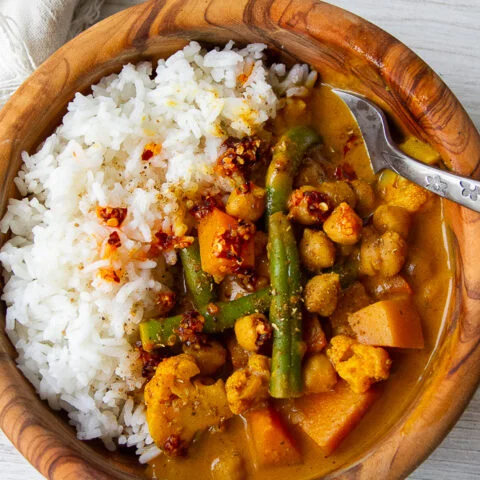
This pumpkin puree curry turns pumpkin, chickpeas and chopped vegetables into a warmly spiced, creamy one-pan meal. It is a practical way to use leftover vegetables and an open tin of pumpkin, ready in about 40 minutes.
Ingredients
- To serveSteamed rice or quinoa
- 15 ml (1 tablespoon)Ground coriander
- 15 ml (1 tablespoon), dividedGaram masala
- 15 ml (1 tablespoon)Sweet paprika
- 5 ml (1 teaspoon)Ground turmeric
- 5 ml (1 teaspoon)Ground cumin
- 7.5 ml (1½ teaspoons)Sea salt
- 60 ml (4 tablespoons)Coconut oil
- 30 ml (2 tablespoons)Dried minced onion
- 15 ml (1 tablespoon)Minced or grated fresh garlic
- 15 ml (1 tablespoon)Minced or grated fresh ginger
- 30 ml (2 tablespoons)Tomato purée
- 237 ml (1 cup)Pumpkin purée
- 475 ml (2 cups)Vegetable stock
- 680 g (1½ pounds)Chopped vegetables (see note)
- 1 × 425 g tin (15 oz), drainedChickpeas
- 120 ml (½ cup)Full-fat coconut milk
Instructions
- 1
Start the grains
If serving the curry with rice or quinoa, get it cooking first.
- 2
Mix the spices
In a small bowl, combine the coriander, 10 ml (2 teaspoons) of the garam masala, paprika, turmeric, cumin and salt. Set the spice mixture aside.
- 3
Heat the oil
Melt the coconut oil in a large, deep frying pan with a lid over a medium-high heat.
- 4
Cook the aromatics
Add the dried onion, garlic and ginger and cook for about 30 seconds. Add the reserved spices, stir, and cook for about 1 minute more.
- 5
Make the paste
Add the tomato purée and pumpkin purée to the pan. Stir until the spices are well incorporated and the mixture forms a paste, then cook for 1 minute.
- 6
Simmer the curry
Pour in the vegetable stock, then add the vegetables and chickpeas. Bring to the boil, lower the heat to medium-low and simmer gently, covered, for about 15 minutes or until the vegetables are tender.
- 7
Add coconut milk
Stir in the coconut milk and cook uncovered for a couple of minutes.
- 8
Finish and serve
Sprinkle the remaining garam masala over the curry and serve with your choice of grains.
What is pumpkin puree curry?
Curry is a broad name for spiced dishes with many regional styles, rather than one single recipe. This Indian-inspired version builds a sauce from pumpkin purée, warming spices and coconut milk.
Pumpkin makes the sauce smooth and gently sweet, while chickpeas and a generous amount of vegetables make it hearty. The flexible mix of chopped vegetables also makes this a useful recipe for odds and ends in the fridge.
Nutrition and macros by portion
The nutrition label shows one serving as written: 383 calories, 12g protein, 51g carbs, 16g fat.
| Portion | Adjustment | kcal | Protein | Carbs | Fat |
|---|---|---|---|---|---|
| Lighter | Use less coconut oil | 268 kcal | 8g | 36g | 11g |
| This serving | As written | 383 kcal | 12g | 51g | 16g |
| Hungry | Add extra rice | 575 kcal | 18g | 77g | 24g |
The rice or quinoa and chickpeas provide much of the carbohydrate, while the coconut oil and full-fat coconut milk contribute most of the fat. Chickpeas also provide protein, with smaller amounts coming from the vegetables and grains. For a balanced plate, serve a measured portion of grains alongside a generous share of the vegetable-rich curry.
Build the spice base
Dry spices: mixing them before they go into the pan helps distribute them evenly. The recipe reserves some garam masala for a final sprinkle, so divide it before adding the first portion.
Aromatics: dried onion, garlic and ginger briefly cook in the oil before the purées go in. Keep them moving and add the spice mixture after about 30 seconds so it has time to bloom without scorching.
Why use pumpkin purée?
Pumpkin purée gives the sauce body and helps the spices cling to the vegetables and chickpeas. Stir it thoroughly with the tomato purée and spices to make a cohesive paste before adding the stock.
Use plain pumpkin purée rather than sweetened or spiced pumpkin pie filling. The latter would change the seasoning and make the curry sweeter.
Choose and cut the vegetables
Vegetable mix: the recipe leaves this open, so use a combination that suits what you have. Choose vegetables that cook in a similar amount of time, or cut firmer ones smaller than quicker-cooking ones.
Even pieces: similarly sized chunks are more likely to become tender together during the covered 15-minute simmer. Check the largest piece before deciding the vegetables are ready.
Get the texture right
Covered simmer: keeping the lid on helps the vegetables cook through in the stock and pumpkin sauce. Aim for a gentle simmer rather than a vigorous boil.
Coconut finish: stir in the coconut milk once the vegetables are tender, then cook uncovered for a couple of minutes. The sauce should look creamy and coat the ingredients; the final garam masala adds a fresh aromatic finish.
Plan the timing and serving
Grains first: start the rice or quinoa before preparing the curry, as the method suggests. That way, it should be ready around the time the curry finishes.
To serve: spoon the curry over rice or alongside quinoa, with enough sauce in each portion. A simple side of fresh greens or a crisp salad can add contrast to the rich, creamy sauce.
Recipe notes & tips
- Measure out the garam masala first so the initial portion and finishing sprinkle are easy to keep separate.
- Cut firmer vegetables into smaller pieces so they cook through alongside softer ones.
- Let the spices cook briefly in the oil, but stir them often to prevent burning.
- Use plain pumpkin purée, not pumpkin pie filling.
- Check a large piece of vegetable for tenderness before taking the pan off the heat.
- Taste the curry before serving and adjust the seasoning if needed.
Variations
- Use seasonal vegetables: Swap in a similar weight of vegetables you have available, cutting them to suit their cooking time.
- Add leafy greens: Stir tender greens into the curry near the end so they wilt in the hot sauce.
- Change the grains: Serve it with rice or quinoa, as suggested in the recipe.
- Adjust the richness: Use a little less coconut milk for a less creamy finish.
- Make it hotter: Add chilli to the spice mixture to bring more heat to the sauce.
Common mistakes to avoid
- Burning the spices: Add them after the aromatics and keep stirring as they cook for about a minute.
- Uneven vegetable pieces: Cut the vegetables to similar sizes, or make firmer ones smaller.
- Using pumpkin pie filling: Choose plain pumpkin purée so the curry is not sweetened or pre-spiced.
- Boiling too hard: Lower the heat after bringing the mixture to the boil and keep it at a gentle simmer.
- Adding all the garam masala at once: Reserve part for the finishing sprinkle, as directed.
- Skipping the tenderness check: Test a larger vegetable piece before serving and continue simmering if needed.
How to store
Refrigerate leftover curry in a covered container and eat within 3 days. Reheat gently in a pan until piping hot, adding a splash of stock or water if the sauce has thickened; store rice or quinoa separately where possible.
Frequently asked questions
Can I use fresh pumpkin instead of pumpkin purée?
The recipe relies on pumpkin purée to form a smooth paste with the tomato and spices. Fresh pumpkin pieces would change the texture and cooking time, so use plain purée for the intended result.
Which vegetables work in this curry?
The recipe calls for 680 g of chopped vegetables without specifying a mix. Choose vegetables you enjoy and cut them to sizes that will become tender in about 15 minutes.
Can I make the curry ahead?
Yes. Cook the curry, cool it promptly and refrigerate it in a covered container; reheat it gently until piping hot. Cook the rice or quinoa separately for serving.
How can I tell when the vegetables are done?
Test one of the larger pieces with a fork. It should be tender, but not falling apart; if it is still firm, simmer the curry a little longer.
Can I serve it without rice or quinoa?
Yes. The grains are listed for serving rather than mixed into the curry. You can serve the curry on its own or choose another accompaniment.
Why is my sauce too thick?
The pumpkin purée and vegetables can make the sauce quite thick. Stir in a splash of stock or water until it reaches the consistency you like.
Cook it from the original
This recipe comes from perrysplate.com. Their page has the author’s own photos, notes and tips — the best place to cook it from.
Open the recipe on perrysplate.com