
Baked Salmon with Creamy Yogurt Dill Sauce
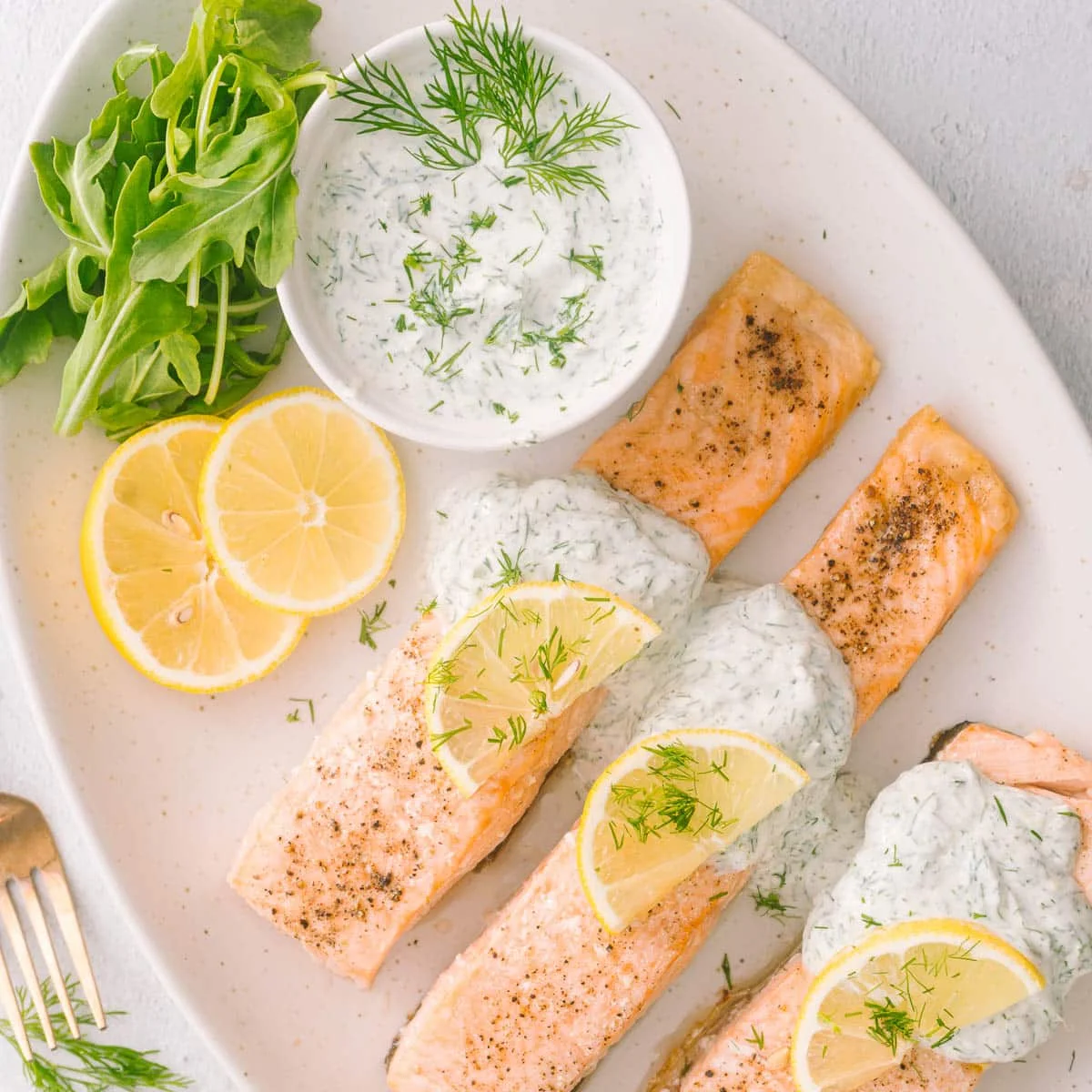
Oven-baked salmon is served with a bright, creamy sauce made from Greek yoghurt, lemon and fresh dill. It comes together in about 20 minutes, making it a straightforward dinner with plenty of fresh flavour.
Ingredients
- 4salmon fillets
- 30 ml (2 tablespoons)olive oil or another neutral oil
- to tastekosher salt
- to tasteblack pepper
- 245 g (1 cup)Greek yoghurt
- 1lemon, zested and juiced
- 15 g (½ cup, packed)fresh dill
- ½ teaspoonsalt
- ½ teaspoongarlic powder
- ⅓ teaspoonblack pepper
Instructions
- 1
Prepare the salmon
Heat the oven to 204°C (400°F). Brush both sides of the salmon lightly with oil, season the top with salt and pepper, then arrange the fillets in a single layer on a rimmed baking tray.
- 2
Bake the salmon
Bake for 12–15 minutes, until the salmon reaches an internal temperature of 57°C (135°F). If you like, grill the tops for the final 2 minutes.
- 3
Make the sauce
While the salmon bakes, prepare the dill sauce. Serve it over the salmon or alongside it.
- 4
Mix the sauce
Finely chop the dill and put it in a bowl with the remaining sauce ingredients. Stir to combine. Alternatively, remove the dill stems and blend the dill with the other ingredients for 30 seconds; chopping it first is not necessary.
What is baked salmon with dill sauce?
Baked salmon is a simple American-style dinner built around fish cooked in the oven and served with a fresh, creamy accompaniment. Here, Greek yoghurt, lemon and dill make a tangy sauce that contrasts with the rich salmon.
The method keeps the fish preparation simple and makes the sauce while it cooks, so both parts are ready in roughly the same window.
Nutrition and macros by portion
The nutrition label shows one serving as written: 265 calories, 28g protein, 5g carbs, 15g fat.
| Portion | Adjustment | kcal | Protein | Carbs | Fat |
|---|---|---|---|---|---|
| Lighter | Use less sauce | 186 kcal | 20g | 4g | 11g |
| This serving | As written | 265 kcal | 28g | 5g | 15g |
| Hungry | Add potatoes or rice | 398 kcal | 42g | 8g | 23g |
The salmon provides most of the protein and a substantial share of the fat, while the yoghurt also contributes protein and some fat. The small amount of carbohydrate mainly comes from the yoghurt and lemon; serve with vegetables and a suitable portion of potatoes or rice to round out the plate.
Choosing the ingredients
Salmon: Fillets of similar thickness are helpful because they tend to cook at a similar pace. Brush the fish with oil and season the top before baking.
Yoghurt: Greek yoghurt gives the sauce a thick, creamy base. Lemon zest and juice bring citrus flavour, while dill and garlic powder round it out.
Getting the salmon right
Temperature: Check the thickest part of a fillet with a thermometer and follow the recipe's target of 57°C (135°F). Start checking near the shorter end of the 12–15-minute baking time, as fillet thickness affects how quickly it cooks.
Finishing: The optional 2-minute grill adds colour to the top. Keep an eye on the fish during this final step.
Making a smooth dill sauce
Chopped dill: Mince the leaves finely so they are distributed through the yoghurt. Stir the ingredients together until evenly combined.
Blender method: For a smoother sauce, remove the dill stems and blend the ingredients for 30 seconds. There is no need to chop the dill first.
Serving the salmon
Sauce: Spoon the dill sauce over the fish just before serving, or put it in a small bowl on the side so everyone can add their own.
Accompaniments: Pair the salmon with potatoes, rice or bread for a more substantial meal, and add a green vegetable or salad for freshness.
Planning the timing
Oven time: The salmon bakes for 12–15 minutes, with up to 2 additional minutes under the grill if desired. Exact cooking time varies with the size and thickness of the fillets.
While it bakes: Mix the sauce during the oven time. This keeps the preparation efficient without requiring a separate cooking step for the sauce.
Recipe notes & tips
- Choose fillets of a similar thickness to help them finish baking at around the same time.
- Use a thermometer in the thickest part of the fish to check its temperature.
- Zest the lemon before juicing it so both parts are ready for the sauce.
- Taste the sauce after mixing and adjust the seasoning to suit your preference.
- If grilling the tops, watch closely during the final 2 minutes.
Variations
- Add cucumber: Finely grate and drain a little cucumber before stirring it into the yoghurt sauce.
- Use parsley: Replace some or all of the dill with finely chopped fresh parsley.
- Add mustard: Stir a little Dijon mustard into the sauce for a sharper flavour.
- Serve with greens: Pair the salmon with steamed green beans or a leafy salad.
- Make it smoother: Blend the sauce for 30 seconds after removing the dill stems.
Common mistakes to avoid
- Crowding the tray: Leave space around the fillets so they sit in a single layer.
- Guessing the doneness: Check the thickest part with a thermometer rather than relying on colour alone.
- Overcooking the fish: Begin checking at 12 minutes, since thinner fillets may cook sooner.
- Chopping dill with stems: Remove the stems for the blender method so the sauce blends evenly.
- Leaving the grill unattended: Watch the salmon closely during the optional final 2 minutes.
How to store
Refrigerate leftover salmon and sauce separately in covered containers and use within 3 days. Reheat the salmon gently until hot, or serve it cold; stir the sauce before serving and avoid heating it.
Frequently asked questions
Can I use dried dill instead of fresh?
Fresh dill gives the sauce its characteristic flavour and texture. Dried dill can be used if needed, but add it gradually and taste the sauce as you go.
Can I make the sauce ahead?
Yes. Mix it ahead and keep it covered in the refrigerator, then stir it before serving.
How do I know when the salmon is done?
Check the thickest part with a food thermometer; this recipe gives a target of 57°C (135°F). The timing will depend on the fillets' thickness.
Do I have to use a blender for the sauce?
No. Finely mince the dill and stir it with the other ingredients in a bowl. Blending for 30 seconds is an optional alternative.
Can I cook the salmon without the grill?
Yes. The grill step is optional; bake the salmon for 12–15 minutes and check its internal temperature.
What should I serve with this salmon?
Potatoes, rice or bread make filling accompaniments. A green vegetable or salad also works well with the lemon and dill sauce.
Cook it from the original
This recipe comes from peelwithzeal.com. Their page has the author’s own photos, notes and tips — the best place to cook it from.
Open the recipe on peelwithzeal.com